What Matters

Gram

Continuing George’s topic of random thoughts, I wanted to share some musings about my grandmother.

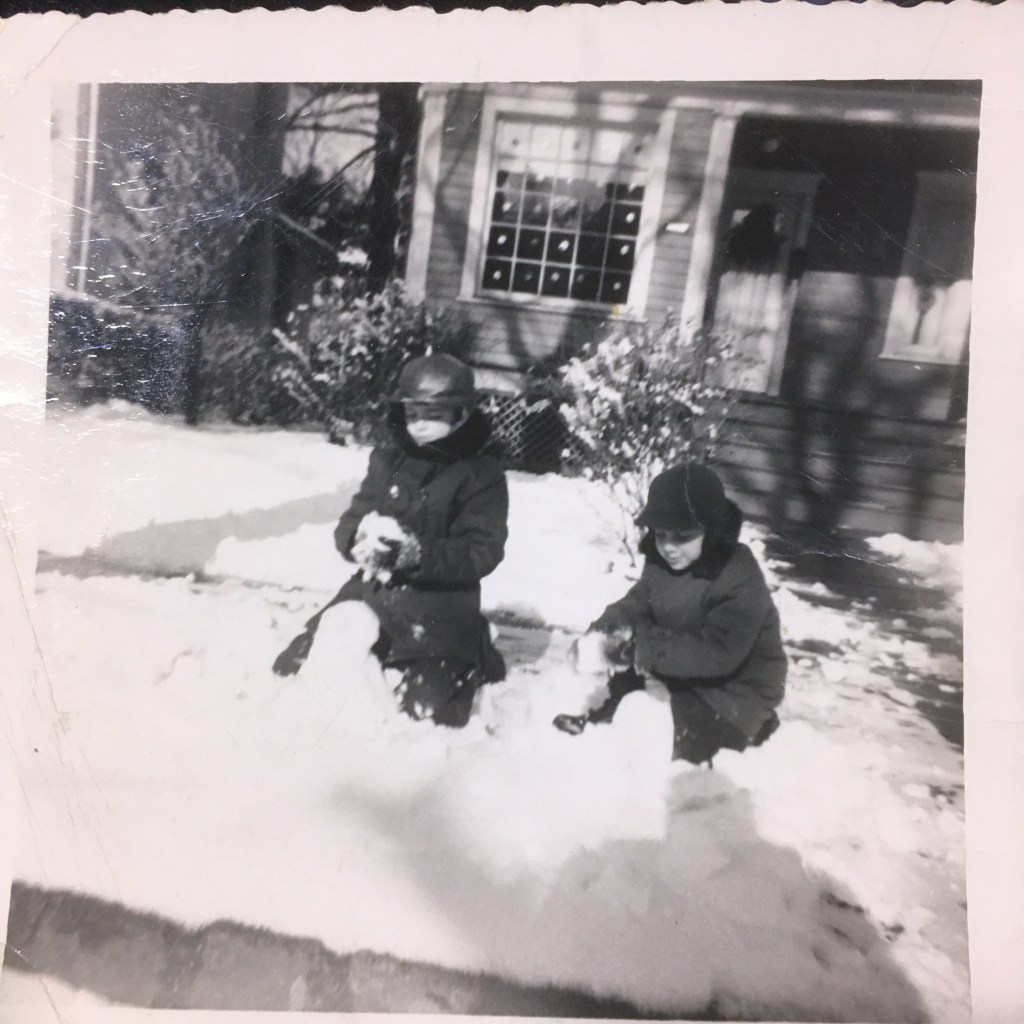
After the death of my grandfather, gram came to live with us and became an integral part of our family.  At sixty-nine, she was still a great cook, mobile, and strong-willed.  She could also sew everything and anything having been a seamstress in Bucharest Romania as a young girl.  At the time, we lived in a comfortable 4-bedroom ranch in a small but growing town in Westchester, just north of the Bronx where Gram and Grandpa raised their family.  Gram had her own room as did I.  My sisters bunked together and my mom had the master suite to herself as my father had disappeared from our lives leaving behind nothing but his empty side of the bed.

Gram was always there when we came home from school.  Food was her love language and there was always a snack or treat for us before we went out to play.  

In the summer of 1960 we lost our home to whom someone my father had sold the mortgage and we temporarily moved to a motel until the lease was up on my grandmother’s cottage.  In the fall, I went off to college, gram went to stay with my uncle in Long Island, and my mom and sisters rented a summer bungalow.  With only a kerosene heater for warmth, they managed and eventually moved into Gram’s 650 square foot, 2-bedroom, one bath cottage in mid-winter.  This is where I called home through college and into my first two years as a teacher.  Gram had one bedroom, my mom and sisters shared the other and I had the fold up bed stored in the living room closet.

Throughout my college years, grams health declined and she eventually became bedridden with rheumatoid arthritis.  She was no longer able to move around much and was unable to cook.  However, she could still hold a needle and thread and would often mend a tear or put on a button for us as needed.  It gave her great pleasure to be able to help us despite the struggle it was for her to use her fingers.

Gram had few things that motivated her to sit up or venture off her bed and into the kitchen or living room.  She loved good food and looked forward to my mom’s meals.  Of course it always needed a pinch more salt or slightly more sweetener, but she always ate it up.  And, every day at 3:00pm, Gram would will her body, aided by her small wooden cane, into a chair in the living room.  She would lean forward and pull out the on/off button on our 15” black and white TV and watch General Hospital.  How she loved that show.  She would laugh, get angry, call a particular character names, and become completely involved in the story as if it were really happening.  Her eyes would sparkle as she spoke aloud to them as if they could hear her warnings or displeasure with a decision they made.  I loved watching her watch her show.  Then, when it was over, she would use the tip of her cane to push in the button to turn off the TV and amble back to her bed hoping someone was home who wanted to hear what had just happened in the lives of those doctors and nurses.

Gram also loved money.  She loved seeing cash, feeling the bills in her fingers, and counting them one by one, over and over again.  This was the ritual every two weeks after I would get paid.  I would cash my check and bring home the bills for Gram to count.  She was thrilled that I had a regular job and was able to bring home what she considered to be a considerable amount of money on a regular basis.  But somehow it wasn’t real unless she could see it, feel it, and count it.  I still remember how animated she would get as I watched her lick her fingers to be sure she didn’t allow any bills to stick together as she checked and rechecked the amount.  

We didn’t have much during that time, but somehow Gram always gave us something to smile about and something to feel good about.  

A.K.A—Gamma

Baby Girl: Maria Matiacchio  ……Born June 21, circa 1881(birth records a little sketchy back then)  …..Cirigiliano, Basilicata, Italia.

A.K.A.— Gramma

Definition- unconditional love

Where do I start?  I never knew my grandfather.  He had had a stroke and was bedridden from before i was born til he passed away when I was 2.  My first memory of Gramma was when I was maybe three or four.  Gramma and my two aunts lived on the corner of 1st Ave and 23rd St on the Lower East Side in a 6 story walk up apartment building.  We lived a few blocks away then and every Sunday we would walk to their apartment for Sunday Dinner. I remember turning the corner and we could see Gramma sitting in her fire escaped kitchen window waiting for us to get close enough to throw down sugar cubes for my brother and I.  As silly as it sounds it was very exciting for us.  She said it gave us the strength to make it up the 6 flights of stairs!  I question the science there but if Gramma said it it had to be true!

She was unconditional love and I would feel totally safe wrapped on her lap, she in her house dress and b old lady black Italian shoes.  For some reason my dad was the patriarch of the family and relatives from far and near would come to see him to get permission to get married, or buy a house or move out of the area.  The only person who had any kind of authority over him was Gramma.  She was a tough old broad, and I mean that in the best of ways.  She loved American tv!  Her “shows” were sacrosanct and everything had to stop when The Millionaire came on and she would keep listening to hear someone walking up the stairs to the apartment with Mr. Anthony who she was convinced was going to give a check for her a million dollars.  She would always remind us that John Bears Fatipta would provide for us.  You have to be old enough to remember that show to know what that was.  And above all shows was her all time favorite….Hopalong Cassideetch!  You could not make a sound when good old Hoppy, as she called him, was on the tiny 13 inch screen with the rabbit ears on top.

Life was pretty simple back then and routine was rigidly enforced so we saw Gramma every Sunday til we finally moved out to the country when I was 5.  My folks wanted me out of the city before I started school and we bought a house in Flushing, Queens.  My dad soon after found an apartment for Gramma and the aunts two blocks away from our house, so I could now stop in and visit on my way home from school to see if they needed anything from Bohacks or the A&P just around the corner. 

She and I had a special bond.  On my 12th birthday, a few months before her death, she got me a miraculous medal.  Most Catholic kids in the city had miraculous medals, but this one was special.  My dad worked for a prominent doctor in NYC who had high end clients.  One client that my dad became very friendly with was Bishop Fulton J. Sheen. (He is currently up for saint hood).  He had a TV show called One Life to Live and he was a very controversial, sort of liberal, Catholic Bishop who was expected to become the next Cardinal for the city, but he did something to tick off the powers that were and Cardinal Spellman got the promotion.  My grandmother insisted that my medal be blessed by Bishop Sheen and so my little MIraculous Medal that to this day still hangs around my neck was blessed by Bishop Sheen.

Several months later, just before midnight we got a call from my aunts that Grandma was having one of her spells.  Dad and I rushed over to the apartment and even I knew as a 12 year old that this wasn’t just a spell.  Gramma was trying to hold on but I remember her saying good bye to my two aunts, my dad and then me.  She took my hand, squeezed it as bet she could and said good bye.  My dad got on the phone and called Bishop Sheen and within 45 minutes a limo pulled up in front of the apartment and His Eminency came rushing up to the apartment to give Gramma the last rights.  She passed quietly shortly after he finished and I saw my dad close Gramma’s eyes for the last time.  It was a very intimate moment and I will never forget my dad’s face, my aunts silently crying in each others’ arms and Bishop Sheen’s hand on my shoulder.  But for the last 52 years that medal hangs around my neck and at difficult times I still hold it in my hand and conjure up the one person who always made things better for me!

Pop

I envy Hen’s relationship with his Gram.  My maternal grandmother died when I was three or four and for a number of reasons we did not have a close relationship with our paternal grandparents. Luckily, our paternal grandpa was a treasure.

My grandfather was a man small of stature, but solid. He led a physical life – as a farm worker, shepherd, navy cook, iceman, and masonry contractor. He was an orphan, unschooled, who taught himself to read and write, both in Italian and English. As a young man, he prided himself on his luxuriant handlebar mustache – bright red. No wonder he loved my red-haired, blue-eyed brother so much! By the time we knew him, the mustache was trimmed and gray.

This man was always cheerful, whistling and singing Italian folk songs. But perhaps this was not always the case. In early pictures, you could sense a steely-eyed gaze. Grandpa had one distinguishing physical mark: his nose was crumpled with a pronounced scar, the result of a fight. Supposedly, his opponent had tried to bite his nose off. That had to be painful! I read somewhere that a guy had bees sting him all over his body to measure pain – and he reported that the nose was clearly the most painful place (thank heavens for such pioneering research).

Well, this is the stuff of legends — and hard to reconcile with the gentle, happy-go-lucky guy everyone call ‘Pop”. And when you think about it, what kind of fight results in someone trying to bite off your nose? I mean, seriously, who gets close enough to do that? Sounds like a last act of desperation. Let me ask you, would you want to bite off someone’s nose? Food for thought. Okay, enough about that…

I have many memories about Pop, although we did not see him regularly. He lived with my aunt, cousins and second-cousins in a stucco three story block building in Rockaway Beach – two blocks from the ocean.  The place looked like a white fort, built flush to the sidewalk with a courtyard behind the building. You entered the rear of the building through a stucco arch, which is generally where we would be greeted by Pop with an orange and a dime. He had an apartment in the back where he kept his fig tree and goat. 

So many stories: Pop was the one who had his own method of potty training (taught me to pee in a bottle – a habit I’ve since broken, but may be revived in further old age). He considered wine quite healthful, so he started my brother on 8 oz. glasses of wine – at seven years old (‘Mom, come quick!’). We had our first taste of raw goat’s milk from Pop’s goat. I remember him staking out the codfish on a board in the sun to make Baccala – salt dried codfish (another taste sensation – not!)

Pop used to make coffee in an open pot on the stove. He’d bring the water to boil, then add coffee grounds to the pot and liberally pour in Four Roses whiskey to make sure it all went into solution properly. I guess that’s how the pre-WWI Italian Navy rolled…

However, what I remember most about this man is how he took my brother and me aside for a discussion one day. In his broken English he told us “You be good men”. This was not a throw-away line – it was a moral imperative which we took – and still take — very seriously. It’s the prime value I assign to people: is this person a ‘good person’; am I acting like a good person? I hope so, because I’d like to please him. 

Anthropologists talk about the strength of the ‘skip-generation’ relationships. It makes some sense in that grandparents can be life coaches without the day-to-day authority issues parents have to deal with. My life coach kept it simple: ‘Be a good man’. I still have his beat up fedora and briar pipe…

Random Thoughts while Quarantined

Thinking for me was always a form of worry.  Even as a kid I used to worry about my dad coming home late a night after drinking with the men at the Knights of Columbus.  Or wondering if I would have to go to Mc Auliffe’s Tavern to bring him home for dinner.  But whenever I had a spare moment there would always be thoughts to fill the time.  It wasn’t all bad! I was a creative kid which would sometimes get me in trouble like the time Steven Bell from across the street and I decided to play mailman and we collected all the mail from the entire block and redelivered it to other people’s mailboxes. It was fun and we were just trying to see what it was like being mailmen. Unfortunately, our neighbors didn’t see the humor and Steve and I and my father redelivered the mail to the 30 or so houses on the block along with sincere apologies!  I decided I wouldn’t be a mailman even at age 6!   I did dumb stuff like this growing up, even after much thought that at the time seemed very logical!

Now some 70 years later I am still thinking a lot cause during this quarantine there isn’t much else to do.  My thoughts go back to those years sometimes and sometimes they look foreword.  There is a big bay window in my living room that looks over the neighborhood.  I stand in the window each morning just checking things out.  I have observed things I probably would not have noticed without this down time.    Everything is viewed through the lens of a street kid who grew up In NYC.   The first thing I realized is kids don’t play in the street anymore. We used to play catch or stick ball in the street, and when a car came somebody would yell, “Car,  Car,  C-A-R” and everyone would scatter to the sidewalk til it passed!  We picked sides by doing Boo Boo Boo, One Potato, Two potato…..we Used Spaulding balls and we always had a bucket attached to a pole to retrieve the ball after it rolled down into the sewer.  But the streets are quiet now and  empty.  There isn’t even much traffic!

Today,  I look for neighbors to wave to or yell to.  Just a connection to make me feel like part of the neighborhood- any kind of connection to help me feel like I belong.

Then my mind wanders to my family.  They have all passed except for my kids but now, with all this
time on my hands I have a bunch of questions for them.  Like I wonder if my grandparents ever became American citizens.  What made them settle in NYC?  I have a hundred questions for my dad about being on Iwo Jima during the war.  And how did he get to write a column in Semper Fi Magazine.  He never talked about the war.  And my brother who was 8 years older than I ( pre and post war babies)  said that he wasn’t the same dad who came home. They called it shell
shock back then not PTSD!  Later, he wrote a column in a little local magazine called The Gramercy Graphic in NYC.  My mom used to play the banjo!  I never asked her why.  My aunt was a tatter in a sweat shop on the lower east side. And another aunt, my mom’s sister, had a wing in the Mahanoy City Public Library named after her..  And I don’t know the answers to any of these questions!   

The remainder of my day’s thoughts move to life after Corona!  What will school look like?  Maybe kids will start playing in the streets again?  I imagine a world where people are kinder, more neighborly, helpful and friendly to one another. Unfortunately, the answers to these questions will be played out in the future.  I hope when it does that younger generations can look back and remember with fondness the way I remember stoop ball or I Declare War!

Ode to A Spaldeen

George’s memory has gotten me to thinking about street play. Perhaps many of us share the memory of playing stickball in the street… if the ball went two telephone poles it was a homerun… in a fly past the second baseman (if there was one) it was a double – and so on… Sometimes we would walk to the park a couple of blocks over and play two person stickball, using the cement wall as the backstop – drawing the strike zone in chalk. 

The one thing in common with many of the games – stoopball, stickball, or handball – was the gold standard Spaulding (or should I say the “pink standard”?). It bounced the best and felt just right in the hand – neither too hard nor too soft. We never bothered with the marketing name ‘hi-bounce’, but did call it the ‘spaldeen’. 

When we used the spaldeen for handball, it was usually Chinese handball – that is bouncing it once before it struck the wall. Sure I know, a real handball is black and much harder, but we used the Spaulding. However, we did watch the ‘old men’ play American handball (hit the wall on the fly) with their gloves and hard little black sphere rocketing around – looked fierce and painful to us eight year olds.

You could bring a Spaulding to school and play against the brick wall at recess or after school. I mean, the Spaulding wasn’t the be-all and end-all – it was simply a requirement. You had to have one. And of course, inevitably they would get lost.

Each week, my brother and I were granted a 75 cent allowance (do you realize that there isn’t even a ‘cents’ key on my qwerty keyboard anymore?) and our aim was to trek two miles into the hobby shop and buy a plastic WWII airplane model to build. The two of us would sit on our front stoop and glue it together. However, when the Spaulding was hit into the undeveloped lot, rolled into a storm sewer or landed in unfriendly territory – well – we’d have to divert part of allowance (was it 15 cents?) to getting a new one at the hobby shop and possibly forego the airplane model. I guess the Spaulding was like a utility for kids… we didn’t pay electric bills, but we had to have bounce energy.

I have read that the pink Spaulding ‘hi-bounce’ was discontinued in 1979 due to decreased popularity of stickball (or maybe it was the rise of disco), but it was reintroduced in 1999 in a variety of colors. Amazing that such a simple object can be the source of such enjoyment.

The New Thinking

George opens up another facet of this pandemic that also affects the majority of people around the word; what are we all thinking about during our minimal interactions and limited options for mobility? Are some of us simply contemplating more of the same kind of thoughts? Are some of us more reflective, now that we have fewer distractions and obligations? Are we turning to the past for comfort and guidance, or are we thinking this is the opportunity to break old habits and move forward?

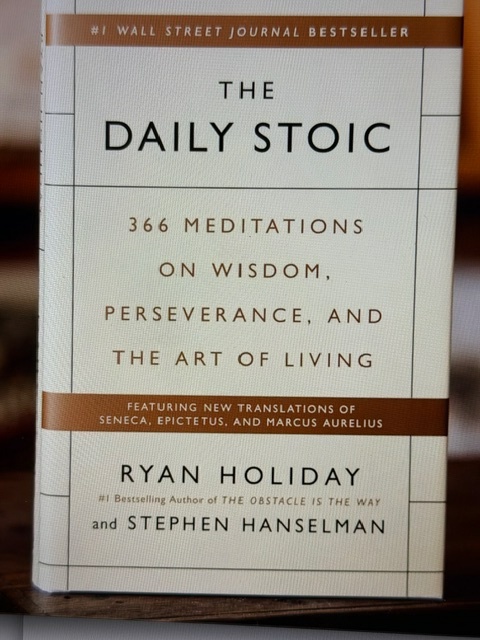
Depending on the day or my mood, I can accept responsibility for being in each of these categories. Most of the time though, I’m inclined to use this experience of isolation to rid myself of actions/reactions that don’t feel good. It is a perfect time to reflect. I find it easier to focus on what I’m doing and being present. My daily mediation (from The Daily Stoic – Ryan Holiday) is devoted to paying attention to a habit or behavior you wish to diminish or eliminate. The process involves setting your intention and then marking off each day you can accomplish it, extending your streak for as long as possible.  My progress is painfully slow but moving in the right direction.

But, like George, I also find myself drifting back to my childhood.  I recall many days of wandering about in nature, more often with my dog than with friends.  And today, as a senior citizen living in New York during the Coronavirus pandemic I spend my days wandering about in nature and only with my dog.  However, unlike my childhood, instead of sprinting down a hill or climbing a perfectly laddered sapling, I stroll down the hill and simply gaze up at the tree. Every once in a while though, as my boyish sense of adventure wells up in me, I smile and think, maybe tomorrow I’ll sprint and climb. But then I remember that I haven’t yet taught Duke how to fetch the first responders from my driveway and bring them to my side if I should fall and break a bone or two. Maybe tomorrow, I’ll teach Duke, or take a chance like I did when I was a kid.

I also think about how much I miss sharing my space and my adventures with friends and family. As much as I receive intense satisfaction from my daily escapades, it’s never as grand (this word’s for you Laur!) as sharing them with others.

And again, like George, I think about post stay-at-home life. I try not to think about my re-emergent world without hugs and handshakes. I remind myself to be grateful that I’ve lived a long and happy life without restrictions, extreme cautions, and with great freedom. And now, I’ll prepare myself for appreciating what remains.   At least that’s what I think right now.

Rinse and Repeat

I’m re-reading Ecclesiastes.

Even if you haven’t picked up a Bible, you know Ecclesiastes. You know it if you have listened to ‘Turn, Turn, Turn‘ by the Byrds, or have heard ‘there is nothing new under the sun’, ‘vanity — all is vanity’, and other familiar quotations which have come from this contentious book in the Old Testament. I say contentious, because it lays out the case for existential despair, without a clear message of hope.

I’m reading this now, because of an article written by Douglas Groothuis in Touchstone magazine. Dr. Groothuis is a professor of philosophy with a keen interest in epistemology: “the study of the nature, means, and scope of knowledge.” His thesis is that Ecclesiastes is an excellent treatise about obtaining wisdom and a good pivot for understanding our ignorance within a larger structure of knowledge.

The main voice in the narrative of Ecclesiastes is Qohelet, the Teacher, who claims to have been a king of Israel in Jerusalem (a ‘son of David’). He chronicles his search for knowledge and meaning, but concludes that it is all “chasing after the wind.”

In sum, Qohelet declares that there can be nothing new in this world (under the sun), where we all toil endlessly, live briefly, and are forgotten quickly. The old sun “pants” across the horizon in exhausted labor. The wicked may or may not prosper; the good may or may not suffer – all meet the same end. Individuals obsessed with material goods will never be satisfied with the goods they own.  In fact, there is no reward that can fully satisfy in this earthly existence.  He sees humankind as endlessly cycling through failed behaviors — rinse and repeat.

Qohelet describes his disappointment in chasing wisdom through either work or pleasure-seeking – and concludes that it might be better to have never lived, than to try to make sense of this world. He has no hope for succeeding generations — and seems resentful at God for instilling the concept of ‘eternity’ in the human mind, when our lives are so truncated.

Yikes! Not much to hold onto, here…

Yet, he is not entirely clear that his search was wasted effort. For instance, he settles for the conclusion that it is better to earn some wisdom, than to be a fool. He urges an epicurean approach to life by moderation of desire, cultivation of companionship, and enjoyment of daily bread. He says that although none of our existence makes sense, we should find joy in what is available – after all, it is a gift from God. He also says that what you turn your hand to – “do it with all your might”.

In other words, make your own meaning. Make it count. Live morally and purposely, even if God’s overall plan is inscrutable.

Happiness may be just under our feet

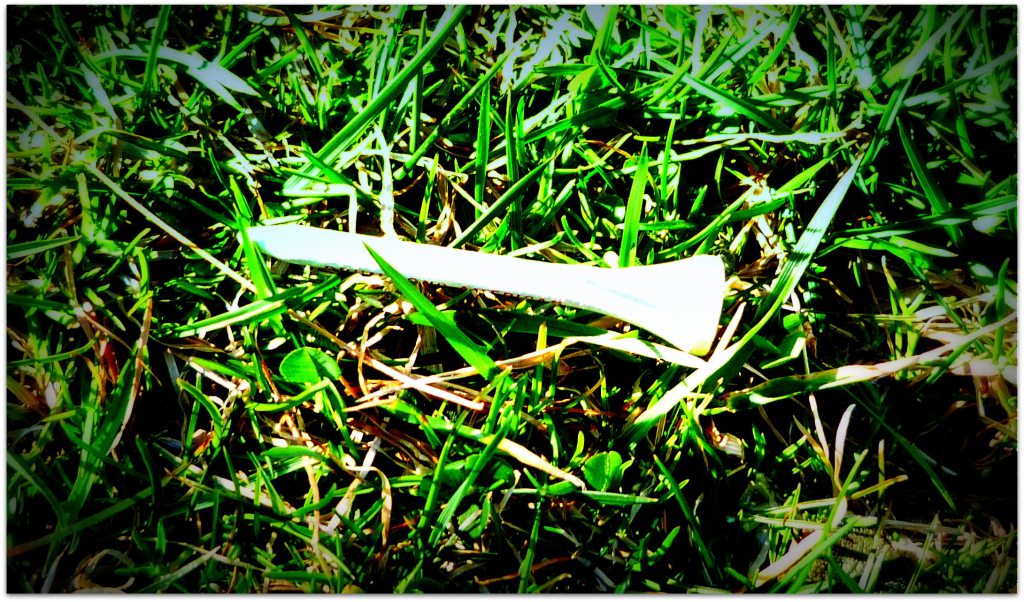
Qoholet tried to achieve ultimate understanding and determined it was an exercise in vanity. His fallback position is to find happiness in everyday activity. This starts to make sense for me. The happiest folks I have known find joy in all the ordinary things they experience. I used to play golf with a man who obtained delight in finding an unbroken golf tee on the grass. Don wasn’t a fool – he knew the difference between small and tall travails. But he chose to be open to all gifts under the sun. The interesting part is that the rest of our foursome delighted in his delight – he lifted us up. It’s catching. And maybe that is the hope for us who struggle under the sun.  James Oppenheim said:

“The foolish man seeks happiness in the distance

The wise man grows it under his feet.” I can live with that.

Fallback Position

Wal’s piece is timely.  In this moment of extreme caution and reduced freedoms, it is so easy to fall prey to feelings of loss and powerlessness.  Those of us with silver (or is it “slivers of”) hair, who have arrived at the point in our lives where we can travel, spend more time with friends, watch our carefully planned investments grow, find ourselves suddenly quarantined, fearful of catching germs that are more fatal to us than our children, and worried if we’ll be around long enough to recoup our financial losses.  Everyone’s world was turned upside down in a matter of weeks but with the hope and belief that in time we will return to the lives we knew.  But we “Over the Hill Gang” members are wondering if it will happen in the time we have remaining.

If our goal in life was to live mainly for this retirement period so that, after a life of hard work and frugal practices we could finally enjoy, we feel robbed, certain that life is unfair, even worse than Quohelet espoused.  (At least we had a plan and hope that in the end, we’d catch up and all would be sandy beaches, warm sunshine, and comfortable living.)

However, if we considered this fallback position to find happiness in every day choices, we’re in a very different place.  We have memories of times well spent and of contentment and joy.  Even now it’s not too late to initiate a mind-shift and focus on what we have rather than what we lost.  Whether it’s a temporary loss or long term, we can all find gains if we really want to. 

Many years ago I had cause to look back on my life to put in perspective whether it was a life, if ending, was well lived and complete, or found wanting.  I found peace in knowing that what I was able to accomplish and who I was able to be, was enough.  And while I am most happy and grateful that my time continues, that experience helped me shorten my moments of struggle with those things of which I have no control, and to spend more of my time with those things that I do.

Perhaps the response to Quohelet’s findings that seeking knowledge and meaning is all “chasing after the wind” is to adjust what we bring to the meaning of seek to allow for discovery along the way and not fixate on uncovering the source-answer to life.

Pessimism at It’s Height

I am not a Bible person.  That doesn’t mean I don’t believe in God.   It is clear to me that the Bible is not the word of God but was written by worldly beings as imperfect as you or I. They were almost like reporters of their times recording what was going on and trying to explain it.  Some of it even sounds like real fake news and preposterous to me.

But this guy, Quoholet, is the penultimate pessimist!  I thought I was pessimistic but I wither in comparison.  I am not claiming to have any stature like he had but come on!  Ultimately cycling through failed behaviors and nothing new under the sun?  Really?  That may fit if one lived forever but we know that isn’t true.  Our existence, if lucky, lasts for maybe 8 or 10 decades, a relatively short time in the scope of the age of the earth and the prehistoric record of life on it.  So perhaps cycles repeat themselves but we rarely live long enough to see that happen so to me, anyway, things seem new when they happen for the first time in my experience.  Is this sheltering in side and social distancing that is going on now not new to most of us?  It sure feels that way to me.  And what is new anyway?  To me it is something that I have for the first time or never experienced before.

And perhaps the reason we cycle through failed behaviors is simply because this all seems new to us and we have to find our own ways way through them.  This can’t be any more relevant than right now as we all sit in our homes and try to figure out what on earth are we supposed to do to protect ourselves, our families and our society.  So we try things…. we wash our hands for two Happy Birthdays every couple of hours because we may have touched something contaminated.  We use sanitary wipes to wipe off the gas nozzle, the steering wheel, our doorknobs and counters.  We avoid crowds.  Living alone I wonder if families sit at night 6 feet away from each other watching TV.  Thank goodness my dog isn’t human because he is on my lap most of the time.  Are these “failed behaviors?”  I wish I knew because my hands wouldn’t be as coarse and flaky as they are if this is just a failed behavior.  But we try things to see our way through.  We take the advice of people who have experienced similar things and hope they are right.

And as for material goods, I have to admit I like collecting stuff, too. I have several collections in my house of material things that I covet, I know you aren’t supposed to covet either, at least certain things!  But I do!  I have a Jeep that I treasure, a house that I love and a collection of paintings that I enjoy daily.  And will more than likely continue to collect until my time here is spent.  

Should people our ages not get excited when their first grandchild is born? Isn’t that new to them?  Or should they just shrug it off and say, “Oh well this has happened before!  No big deal!”  Or when the autumn leaves turn bright colors should we not be amazed at the beauty just because it happens each year?  Or when a piece of music touches your memories and your soul should it not bring us to tears because it is just another piece of noise?  I am exaggerating of course, as I also do along with my pessimistic ways.  I have left most snarkiness out of this though, which is also characteristic of me.

I am usually the one in this group accused of pessimism but this guy makes me look like Shirley Temple.  I see myself in a whole new light.  Join me as I tap dance down a flight of stairs now!

Rituals

Lately, I’m increasingly aware that many of my daily routines have taken on added significance and meaning beyond the need to get them done.  They have become rituals.  Perhaps it’s the reduction of distractions during this time of sheltering in place that has allowed me to be more mindful.  Or, it could be that without regular stimulation of ideas and interests I seek them from within the confines of my home.  For example, rather than allowing my mind to wander while rushing through the task of raising my window shades, I now often think about, well, just raising each shade and welcoming first light into my home as I begin my day.  As I slowly pull the cord of my kitchen window, I watch the shade fold into itself as it reveals the unique perspective it affords of my backyard.  Then I move on to the next window that will allow additional light and a slightly different view.  It sets in motion an action that often impacts how I feel about my day.  This routine and others, now receive more of my intention and deliberation.  They have taken on a level of significance that positively influences my initial disposition.  They are new rituals.  They are no longer chores to be completed, but actions that add significance to my life. 

In an article written by author, writer, and coach Steven Handel, he describes routines as things we need to get done on a regular basis but that are not necessarily meaningful.  Rituals tend to have a sense of purpose and their meaning is often symbolic.  He further illustrates the difference in this table:

RoutinesRituals
Minimal engagementFull engagement
Tedious and meaninglessSymbolic and meaningful
Externally motivatedInternally motivated
Life as a dutyLife as a celebration
Dull awarenessBright awareness
Disconnected series of eventsTells a story
Little sense of belongingSense of belonging
Focus only on completion of tasksFocus on performance of tasks

As I thought about the things in my life that are chores and that are now taking more of my attention and thought, I remembered the notion of the Japanese Tea Ceremony.  The tea ceremony in Japanese culture represents purity, tranquility, respect, and harmony.  It is a great illustration of the singular focus given to the performance of serving a simple cup of tea.  It is a grand collaboration of art, discipline, attention, and care.  Philip Stanhope 4th Earl of Chesterfield said, “In truth, whatever is worth doing at all, is worth doing well; and nothing can be done well without attention.”

I also thought about the commitment of the Samurai in their attention to detail and purpose in everything they did.  There was an unrelenting focus on mindfulness in even the most basic actions and routines. 

Zanshin is a word used commonly throughout Japanese martial arts to refer to a state of relaxed alertness. Literally translated, zanshin means “the mind with no remainder.” In other words, the mind completely focused on action and fixated on the task at hand.  In practice, though, zanshin has an even deeper meaning meaning. Zanshin is choosing to live your life intentionally and acting with purpose rather than mindlessly falling victim to whatever comes your way.  It was as if everything in their lives was a ritual.

Now, as I spend more time in silence and thought, I’m able to better recognize the significance of preparing food, letting light into my home, and attending to things that require my attention.  Of course, my mind still wanders…often.  But I’d like to think that this time has afforded me a way to elevate at least some routines from tasks that must be done so I can get on with my life, to appreciating the things I do in my life because they matter.

Have you noticed any shifting of routines or rituals in your life?

Traditions, Rituals, and Routines

Hard to know where one ends and another begins!  Perhaps the definitions intermingle and have very subtle differences.   Perhaps it has to do with what Henry said, that rituals have an importance that routines don’t.  Traditions may then define the need for rituals.  For example, my family had a tradition at Christmastime of setting up the Christmas village which necessitated the ritual of laying track and checking out the engines and cars of the train and organizing the town.   The routine then became sitting down in the evenings and my brother and I running the trains around the village, while the engine smoked and the whistle blew.  We had other rituals associated with the Christmas tradition- like hanging stockings on the fireplace, and decorating the tree.  Routinely we hung the tinsel one strand at a time or my mom would yell at us.   

When I taught school for years I had a tradition of wanting the kids to know the day and date.  Every morning ritually, I wrote the day and date in the upper right corner of the blackboard and the kids routinely wrote it on their daily assignments.  I also had a tradition as an educator of wanting the kids to expand their vocabulary so each day I would write a new word and its definition on the board.  It was a ritual that helped me as much as the class. The routine came when the kids used the word either in their writing or in discussions each day. 

Right now, when I’m not sure what my purpose is anymore in the time of COVID-19, tradition and ritual have pretty much been pre-empted solely by routine.  Wake up, shower, take pills, which helps me remember what day of the week it is, let out the dog, eat, wash yesterday’s dishes, eat, nap, eat, nap, eat, nap!  Tradition now is out the window.  Without some direction old traditions don’t necessarily apply and new traditions can’t start because they may not have the time to develop.  Without the traditions rituals devoted to the traditions can’t find air.  Routines are all that is left and in my case they tend to be diminishing!  I may be going crazy but this makes perfect sense to me!  And I didn’t have any author to quote so this unfortunately was entirely concocted by me during the routine boredom I face daily during this crisis!

Wrinkles

I am seventy-two years old and a dishwasher in a restaurant. I am looking at the pile of skillets in the deep sinks and preparing to start the process of transformation. Today, I have driven for four hours to return to my post and I’m an hour later than expected – I like to keep ahead of the curve, but the chef has already started to prepare sauces. So it’s catch-up time.

Surveying, the scene, there are remnants of carbonara sauce, Thai chili sauce, a large pasta colander, and several pans with a series of brown sauces for schnitzel, and a garlic laden food processor. Okay: Carpe Scrubber! Wait — a drop of water bounces off my bald spot – and then another – What the… It has been raining heavily for a good part of the day; looks like a leak in the roof over the kitchen. All right – note for tomorrow, get on the roof. I reach for the faucet and — no water. This is irony for sure: unwanted water dripping on my head, no water from plumbing. What’s the old saw: the opposite of irony is ‘wrinkly’. This is wrinkly. Life is wrinkly. The topography of our lives is full of wrinkles. That’s why we have rituals: to smooth out those crenellations.

A ritual is structured behavior in support of a magical or symbolic result. ‘Magical’ being a placeholder for all those things we don’t quite understand… like the Pacific Islander cargo cult. My ritual actually begins much earlier than reporting to the job. First, I must shower. This is less about cleaning than it is about cleansing – starting the day like a fresh page in an old book. Consecrated.

Then, as head (and only) dishwasher, I assemble the mise en place at my work station: wet and dry towels (from Morgan Linen – remember them from college?), gloves, washing tub, spray station, stainless steel scrubby, long brush, and putty knife; prep the dishwasher and lay out the drying station. Our dishwasher has sliding doors and trays that carry objects through infeed and outfeed. The pots, pans, containers, spatulas, stirring spoons, tableware, and dishes all go through the washer for the extra cleaning and sanitizing cycles, but first anything that experiences direct flame is separated: cleaning the carbon on the bottoms is a parallel process and uses different cleaning aides. When this is complete they join their comrades through the main process. 

So, the main process involves soaking the pots, pressure spraying, brushing, and then scrubbing. All the detritus goes into the 1000 gallon grease trap. The restaurant ware is sanitized in the dishwasher, air-dried and returned to its station. Routine or ritual? It is necessary – and it is done mindfully. I fantasize that I am the director of a halfway house for skillet rehabilitation. I am a social worker for the stockpot family. My goal is to return each cooking implement in better condition than I received it. Some of these old boys have dents or loose handles – or are a little crowned due to direct heating over an open flame for years. I clean them up so that thirty or so skillets and a dozen assorted stockpots greet the next meal with a fresh face and new sauce. That’s what it’s all about! I say it is Ritual – with magical results!

Now to prepare for the next day’s ritual: water pump repair and preventive maintenance.  

New Normal ???

As sheltering and snacking in place is becoming routine I sometimes find myself on my knees and leaning my head on my arms resting on the windowsill like the cartoon where the guy says to his dog that he now understands why he always barks as people pass the house. It is an event! I don’t have many events about now unless getting the cookies or chips out of the cabinet classifies as an event!


But recently I have been trying to figure out what it is going to be like when the quarantine is lifted. At first I thought we’ll all race to the local establishment and drink a toast to the death of the virus, clinking glasses, shouting “salud!”, slapping friends on the back, hugging and kissing folks we’ve missed for months. But I don’t think it’s going to work that way now.

Devon

Our Governor, who has become a guiding light in leadership through this darkness, uses the term “reimagining” how it is going to play out. The thought of returning to post quarantine life as being a return to normal is probably far from actuality, hence reimagining.

So my thoughts go to how will young love be expressed? New emojis online? Pulsating red hearts and lips after each text. We probably won’t be kissing anyone soon. Kids playing on the playground won’t be playing tag cause we can’t have kids touching each other! How will detectives catch criminals cause fingerprints will be a thing of the past! Rubber or polyethylene gloves have replaced skin So DNA must be encased on the body. I worry that a generation of kids who don’t play outside much anyway will have even fewer experiences interacting with humanoids. Will we just keep to
ourselves and be reduced to written communications with LOL’s and OMG’s expressing our emotions?

Life is going to be different. But hopefully with time touch will return as a venue for interaction. Human contact can once again comfort people in need. Laughter and tears will return as ways of expressing our emotions. And maybe even a renewed urgency to put the electronic technology down and reach out to those we have desperately missed. My reimagination I’m afraid is limited but I long for an earlier time when my scraped knee could be healed by my mom or dad’s hug. I hope our grandchildren will experience this again and future generations will talk about the time when people had to isolate as a dark spot in history they have only heard about!
However, we can’t forget that the air over LA is breathable again, the canal waters of Venice are clear enough to see the sea life that lives in them. That’s part of the reimagining that we have to take advantage of and protect. I’ll take one from column A and several from Column B! Call me old fashioned!

The Macro

Both George and Hen focused on the intimate details of person-to-person interaction in a possible “new normal”. I think their comments are cogent. The effect of the virus on physical closeness will certainly outlast the current edition of the corona. For instance, we can imagine that hand, mouth and nose coverings will morph into enduring fashion accessories. Perhaps grooming and fashion styles will gravitate toward the easily cleaned and maintained – maybe lapels and pleated layers give way to smooth lines and treated fabric.

If we look down from 5,000 feet, the macro influences of surviving a pandemic – and the fear of the next one — says the future is a less tolerant society. Individual choice vs. the ‘summum bonam’ is in constant tension. As we experienced during the New Deal and World War II, the tendency for central control and larger government seems like powerful leverage to attack economic – and perhaps social — problems… and I don’t speculate in this manner as a fan of big government.

But, after all, will we be able to tolerate not having universal healthcare in some form or another? If we cannot assure that every citizen will have effective access to health services, how can we assure the containment of future outbreaks? When the dust settles, our infection tallies will show large discrepancies by race and economic variables. Will this place more emphasis in future on large, homogenous public policy solutions? Certainly it is doubtful that piecework approaches will be encouraged, when disease crosses borders and governments. 

It’s probable that we won’t return to past behaviors quite as readily as we’d like, but we will move forward. Even now, dating apps have apparently been successful in hosting virtual dating experiences. I’d guess this fad subsides, but lingers as a bit of dating rehearsal while individuals try to ‘qualify’ one another before investing in a more physical relationship… unless we can have virtual careers, babies, and parenting experiences all from the comfort of your own couch? (Sounds like the old ‘Second Life’ application experiment). 

At the end of the day, I sign up with George and Hen – soothing behavior is a basic need — and that behavior is an experience of touch that is unlikely to be abandoned for long. We are smart enough and resilient enough that solutions will be invented to allow kids to be kids, friends to be friends, and loved ones to all come together.

It’s How We Respond

I’m with “Old-Fashioned” George when it comes to physical touch.  If I’m suffering from anything these past two months, it’s likely from hug withdrawal.  Of course, there is an old fashioned way of forgetting the hugs that I miss.  It’s called a bourbon old fashion!  I’ve had one or two of those “quarantinis” over the last few weeks.  They helped!

I appreciate the notion George brings up of reimagining what our new future will be.  At first, my thoughts go directly to what I’ve lost: not necessarily a positive or proactive endeavor.  After all, transitioning from no direct social interaction to spending time with others in groups will take a very long time and will likely require a transition phase of wearing masks, no touching, and physical distancing.  I can easily equate this to a negative.   But if I push past the loss, and, as George reminds us of some of the gains we made, we might be able to reimagine a way of being that can benefit us and future generations.  And without this global “pause,” the idea of exchanging old habits for even better ones, would have been near impossible.  In his New York coronavirus briefing this morning, Governor Cuomo reminded us that it often takes a crisis to wake people up.  And Dave Pelzer, a contemporary American author, said, “Something good comes out of every crisis.”  So how do we revise our behaviors and spaces to make life even better?  I believe each of us begins with what we can control:

The evidence of a healthier environment for all living things is enormous.  I will continue to make changes to use fewer fossil fuels, create less waste, and to be more aware of my purchase power regarding products and their environmental impact.

I will be more aware of the direct contact time I have with family, friends, and colleagues.  I will work harder at being more present and attentive when I am with them.  I seek to remember not to take any handshake or hug lightly.

I will create a set of reminders for me to continue the relationships I’ve re-established during this time of remaining at home.  

I will strive to remember that it’s never about what happens to me, but how I respond that grants me to happiness and contentment.

And you…?

I’d like to end with the essence of a story I recently read written from the perspective of a senior citizen who was a child during the 1918 Spanish Flu pandemic.  He was responding to his grandchild who had just studied in school about this horrific time in history and how difficult and troubling it must have been for him.  His response was something we can still create as we live out this moment in time.  Grandpa said it was a difficult time for many indeed, but in his case he remembered it differently.  He remembered more time for playing with his mom and dad.  He remembered baking with his mom and fishing with his dad.  He remembered his mom coming up with new ideas for him to try and without the need to rush or to put them off until a better time.  He remembered impromptu games of tag, barbeques, and peanut butter and jelly picnics when the weather turned warm.  I hope many of today’s children will remember this episode similarly, when their grandchildren ask them about it.

On a Scale of…

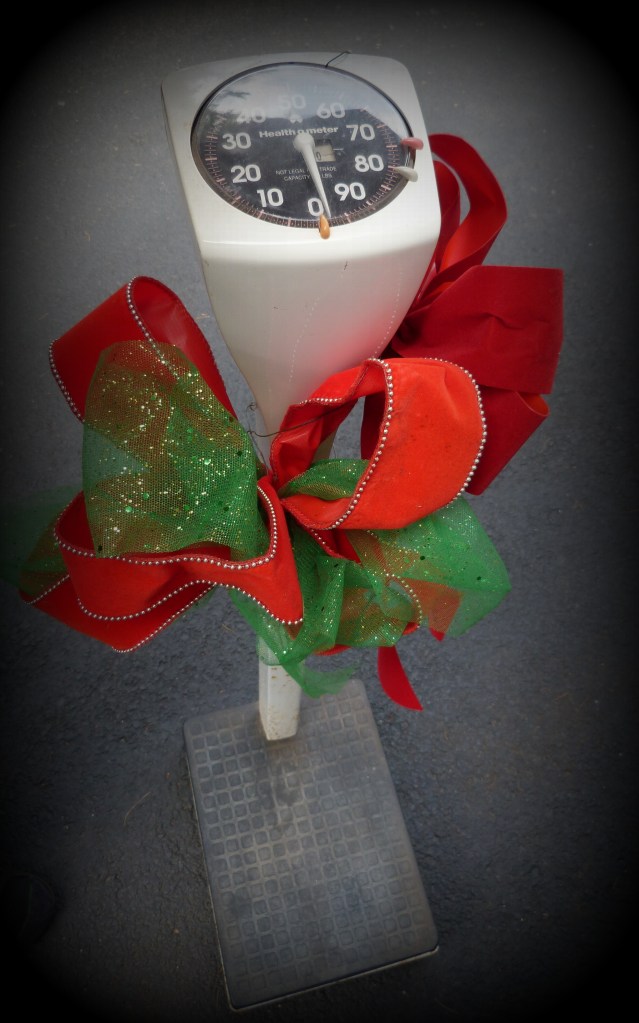
We’ve all heard the jokes about weight gain during the shelter-in-place phase of life — COVID-19 lbs. and such.

It’s gotten me thinking about a seven year period in which I measured life in quarter pound increments. This was during high school and college, while participating in wrestling. I would have told you then that I was an expert in weight loss. Like a jockey, I weighed in several times a day – but without the saddle – and monitored before and after bathroom visits. I knew the expected weight in ounces of my waste products. Each September, I’d lose up to 20% of my mass in four to six weeks and keep it off until April.

I’d dream of the chocolate milk dispenser in Parker dining hall for seven months a year.

All of this would be executed in order to qualify for the weight class in which I would be most competitive. Actually, this was mostly a byproduct of fear: I didn’t want to face larger, stronger opponents! To maintain this weight, many of us would sojourn to the “hot box” in plastic suits. The hot box was an insulated room that could be cranked up to 120 degrees F. The objective was of course to sweat out any excess water. It wasn’t weight loss, it was desiccation. I remember taking the GRE exams in Potsdam in between wrestling matches at SUNY Potsdam and Hobart College. I donned the plastic suit and ran the aisle in the team bus enroute to lose the half-pound I was overweight – that was good for a quarter pound. The security guard escorted me to the exam room and I suppose the GRE was responsible for losing the additional quarter pound I needed.

Once, I dated a person who during a postseason April, asked how much I weighed. When I replied, she said ‘Well you look good right now, but I think you will run to fat in middle age’. Hmmm, she was right. At that time, we wrestlers would call anyone whose six-pack was undefined, a ‘bloat’. Clearly, I am a bloat.

However, I owe her a debt of gratitude. Her words have been a rallying cry for me to not let weight gain get beyond control. Unfortunately, most of the diet prescriptions I’ve tried were not lifestyle regimes, but short term efforts: Fit for Life, South Beach diet, Bullet-Proof diet, Body Fuel diet, etc. All had different premises: eat fruit, separate complex carbohydrates from other foods, avoid white foods, trick your metabolism by fasting. My Dad lost over 50 lbs using Dr. Dean Ornish’s rice diet. He had the discipline to keep his weight down – but yikes!

These days, it’s hard for me to envision weight control without exercise and eating dinner before eight o’clock. That’s it – I have to keep it simple to remember. And worse luck, my diet must include pasta, baked goods and ice cream! What about you?

In for a Penny, In for a Pound

Good time to write about this as covid19 is causing many of us to snack in place!  Weight has been a struggle I have dealt with my entire life but from the opposite end of the scale.   I was the scrawny kid first in line in school.  Short and skinny! Really skinny!  I hated going to gym in high school.  Aside from the embarrassing red and white gym suits we had to wear which on me looked like a cute little red skirt ballooning out over my tooth pick sized thighs, I was the brunt of high school bully humor in the locker room.  And to add insult to injury, we were given spots on the gym floor so the coach could take attendance.  In Flushing High in the early 60’s, you could have 100 kids in gym class.   First day of class we were lined up by size places and given our spot numbers. Across the front of the gym were the letters of the alphabet and 15 spots behind each letter! Yup, you guessed it.  I was A-1 for all 3 years in high school!  The only good thing about those large classes was that once attendance was taken I could slip back into the locker room until the team sports were over.

But even before that as a little kid my family tried to fatten me up.  I was a finicky eater and wasn’t big on meat and veggies so my dad made a bowl of macaroni for me every night for dinner.  Back then it was spaghetti or macaroni.  We never had pasta.  I never even heard the word.  My Italian aunts would bribe me with quarters if I would eat more.  Of course they would only “pick” themselves until there was nothing left in the serving bowls.  So I was a skinny melink.  I would have to get on the scale in front of them to get the damn quarter.  So while Wal was trying to lose a quarter pounder, I was praying to gain one. Through college and for the first 2 decades of teaching I didn’t weigh as much as the average kid in my 6th grade classes.  It was always an embarrassment for me.

Then the magic happened.   My wife and I separated, I came out of the closet and miraculously I gained about 20 lbs.  With a new sense of self pride I strutted into school finally at ease with myself and how I looked!  I was proud of my girth for the first time in my life.  I hadn’t anticipated the problems it would bring on like high blood pressure, and a little pot belly. But I carried that proudly too because unless you were ever skinny you don’t realize how that can be as painful as being fat.  And now with snacking in place, I get panicky if my supply of cookies and jelly candies get low!

I hope Wally only dated that woman once!

Pillsbury Doughman, No More!

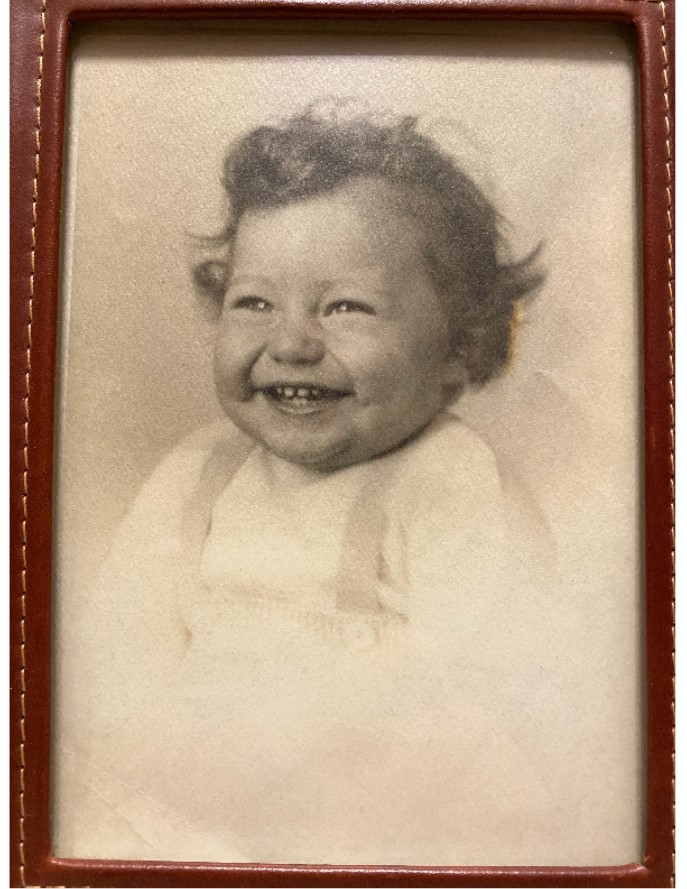
On my first birthday, I weighed in at 30 pounds and was obese.  By grade school, I was in George’s weight class and could have been a poster child for the kid who needed weight gain supplements.  Eventually, I found a relative balance between intake and calorie burn, and my weight offers little to conjure up a story.   However, over the last six weeks of sheltering in place, food has taken on a significance I’d not noticed before.

My mom was the most fantastic cook.  It seemed as if she was always in the kitchen preparing meals that were filling, delicious, and nutritious.  We didn’t order out, and the rare visits to a restaurant were reserved for special events.  For example, at the end of each school year, my mom would take us to a local Chinese restaurant to celebrate our promotion to the next grade.  That being said, tasty food prepared just the way we liked it, was always available.  My mother couldn’t give us much in the form of things money could buy, but she never held back on food.  The time and devotion she gave to her cooking was her currency: her gift of love.  The whole experience created an anticipation of what awaited us at dinner each evening.  The clatter of pans and the sounds of mixing and pouring were following by the aroma of onions or sauces drifting throughout the house.  It seemed like each meal that began promptly at 6:00 pm, started with an appetizer and/or soup, the main course with two or more side dishes, and finally, if we joined the “cleanup plate club” and finished everything we were served, a sweet dessert.  I used to marvel at how long everything took to prepare, how everything finished cooking at just the right time, and how quickly we devoured it.  And while I noticed all of this (and the cleanup afterward), I never appreciated it in the way I do now.

My sisters learned to cook from my mom, but I didn’t.  And, over the last several years, after just getting by preparing the same few dishes I begrudgingly mastered, I ate reasonably well and relatively healthy but never really appreciated it.  However, in the last month and a half, much of that has changed.  With even more unhurried, alone time at home I made a conscious effort to look at cooking and eating with more purpose and intention.  I’ve tried many new dishes each week and found the entire process of planning, preparation, cooking, and cleaning up a rewarding one.  And I’ve also taken the time to taste my food, wondering what it would be like if I added more of this or substituted some of that.  It is a new form of self-care that I intend to continue long after we can get back to our busier, more collaborative lives. So far, I haven’t noticed any weight gain.  However, my sisters always said that if you are a fat baby, then, when you get old, you’d eventually explode into that previous pudgy version of your younger self.   (Hmm, I have this awful vision of myself in six months slogging through the woods looking like the Pillsbury Doughman!)

A Time for Collaboration

Napoleon Hill developed the term Mastermind Alliance to identify the concept of bringing two or more people (minds) together for a singular purpose in a friendly, trusting, and harmonious environment. The outcome of this focused collaboration often yields extraordinary results that could never be reached alone or in loosely connected partnerships.  This synergy has been the secret ingredient for many successful people and organizations. I believe it offers a timely solution to many of the challenges facing individuals and small businesses during this global pandemic.

I am currently a participant in such a group, gathered to help a friend and small business owner decide how to move forward when business has all but stopped.  As we are all sheltered in place, we are using one of the many programs available for video-conferencing.  This solution to overcoming the restriction of not being able to meet in person provides the added benefit of collaborating with people who can offer invaluable experience and wisdom but who live hundreds of miles apart.  These digital gatherings are energizing, thought provoking, and highly interactive.  They regularly bring people together who would not have this opportunity to share knowledge and offer support.  And not only does the recipient benefit, but so do each of us.  Just today, while listening to a suggestion made to the facilitator, I realized a need of my own that requires action.  We also get to see and talk to people, which mean physical distancing doesn’t necessarily mean social distancing.  And we always get when we give.  This feeling of contribution and helping others feeds our own needs to be of service and to feel valued.

So I’m wondering aloud if this is way of coming together online in small groups might be something all of us could offer a friend or colleague who is facing a challenge brought on by the Coronavirus pandemic.  There are many references to the concept you could find using Google or other search methods.  Of course if you have any questions I might be able to help with, feel free to reach out in our comment section.  I will be happy to respond.

Wishing you all good health and strong connections.

No Downside!

Henry’s idea is difficult to respond to because what ‘s not to like? The concept makes perfect sense. An individual struggling to make important decisions regarding business or future has the opportunity to consult with a group of people all focused on that one situation or problem. I love the idea. I could use some masterminds right now to help me deal with the forced isolation I am experiencing because of this awful virus. By myself, my imagination runs wild, and I come up with the worst-case scenarios and doom and gloom. A group of people focused on helping me deal with that situation would provide a great opportunity. It seems like a win/win situation. I am sure they could come up with ideas and solutions I cannot even conceive of.

I can see this being an incredible add on to therapy and constructive goal setting and achieving. I guess you have to pick your advisors/collaborators carefully, but beside picking people who aren’t focused on the problem or who have even less common sense than I do, I can’t see any downside to this idea. What an opportunity to socially undistance ourselves through technology at a time when we have too much time to contemplate, fret, and worry. The process sounds great, and seeking others’ advice through a group effort where ideas can be discussed and kicked around is a great opportunity to define your problem with razor-sharp clarity. I really find the concept perfect for people like me whose minds race during the early morning hours when my imagination gets locked on a pessimistic solution to a problem that won’t go away. That is when I have no sensible, realistic conception of what to do, whereas if I had had such a gathering, I would be able to replace my worry and concern with ideas presented by the group. But what is more significant is that I would feel responsible for seeing the solution put into action so as not to let the other participants down. That holds much more weight than doing it for myself! Imagine having a team of intelligent people all addressing your needs over time. What an opportunity to succeed!

Great idea and a great piece to discuss. I do, however, worry about Wal’s reading list as a teenager. When I was in my teens, I wasn’t reading books like Hill’s. I was reading The Hardy Boys and Ralph of the Rails, along with magazines that I had to hide from my parents, but hey, to each his own!

Lateral Allies

Hen suggests that the Mastermind Alliance can serve several goals: a) help others b) help yourself, and c) maintain positive contact with a group.

I read Think and Grow Rich by Napoleon Hill when I was a teen. This book, published in 1937, is one of the all-time best selling business books. Hill describes 13 principles that are the foundation of a philosophy of success — the Mastermind concept is one of them. 

When I read the book, the principle I focused on was ‘auto-suggestion’… still use it as a matter of fact. Hill said you don’t need an alarm clock; simply look at the clock when you lay down and say out loud what time you wish to awake. Works like a charm! Your internal clock wakes you up. That alone gives Napoleon Hill some street cred. 

The Mastermind Alliance principle is an example of lateral thinking in a group. While individuals certainly can succeed on their own, collaboration can increase our favorable odds. It end-runs our tendency to define a problem within a narrow frame of reference and therefore limit the boundaries of a solution. It’s interesting to listen to Hill’s account of how Andrew Carnegie came up with a Mastermind Alliance to understand how to make and market steel – (see https://www.youtube.com/watch?v=tuGW8ZCJUDE). Although the Mastermind Alliance concept is over 80 years old, it is still remarkably fresh.

In fact, there’s a Facebook community devoted to spinning off new products and ideas that uses the Mastermind approach: The Inventor’s Mastermind. Rules are simple:

In a Mastermind group, the agenda belongs to the group and each person’s participation is key, your peers give you feedback, help you brainstorm new possibilities and set up accountability structures that keep you focused and on track.

In order to use this concept effectively, preparation is important. Hill emphasizes that a person needs to know exactly what they want and be ready to work diligently to attain it. What does diligent mean, exactly? I think it means examining the details that surround us. Being observant. Being aware of the world around us and being ready to enter into new situations with an open mind.

But it is also about being ready to go beyond the bounds of common expectations. To stretch out laterally – creative confidence. To connect dots in different puzzles… to synthesize.

In order to do this, it helps to cultivate a diverse set of connections. You need to form an alliance with others so that you are not trapped by your own perspective. This is well illustrated in Dr. Tina Seelig’s, (What I Wish I Knew when I was 20). She describes the ‘$5 Challenge’ she assigned her students at Stanford. Each team was given $5 and asked to increase the investment within two days – and present their results to the entire class. The most successful teams never used the seed money, but rather brainstormed solutions to problems they observed around campus — solutions that could be monetized. One group offered to check bicycle tire pressure for students and simply asked for a donation. Another team noting the long lines at restaurants, secured reservations at several restaurants and sold them to folks waiting on line. They made over $600. She makes a fine point about being a “T” individual: deep in one specialty, but reaching out to other areas to seek out connections – an alliance.

The most successful person I ever met didn’t work the hardest and was not the smartest individual I ever knew, but he had a super optimistic attitude – he expected to be lucky and he was. He was open to new ideas and rewarded people for creative approaches. He connected an array of colleagues to dig up good ideas – a Mastermind Alliance. Even if he did not have expertise that was deep in any one field, he did have the motivation to stitch ideas together and get others to mine the rich resources of information. Essentially, he mirrored the approach Andrew Carnegie used. Many new projects flourished in this incubator. Was that luck? I don’t think so. All I know is that it seemed to permeate all areas of his life… he was one of those people who found more lost golf balls, made more good friends, avoided the sporadic consequences of mistakes, and lived a long, healthy life. Perhaps the fruits of a Mastermind Alliance?

Tintinnabulation of Spring

This sheltering in place is getting old!  But the seriousness of the situation necessitates us to do our civic duty to our community, family and friends, while at the same time protecting ourselves. My friend called last night and wanted to have a serious conversation about our current situation.  Both of us are in our 70’s, both with risk factors.  He is struggling with what to do if he gets sick.  He wondered, do you ask your spouse or kids to come and take care of you?  Best case scenario, you don’t get sick!  Option 2, you get sick but you recover!  Option 3- you know what happens.  So he asked me what I was going to do.  Was I going to have my kids come and take care of me or tell them to stay away and keep taking Tylenol. Or do you suffer alone until… ?   We don’t want to infect people we love but to just deal without  anyone to hold your hand or to whisper loving words seems unabashedly cold. These are really tough decisions and we are going to talk again tonight!  There is no doubt that families are having this kind of discussion all over the country.

And yet the last couple of days I have heard the bells ringing. They are hopeful bells, happy bells, even jubilant because they promise that tomorrow, however long today turns out to be, will be better.  I worked in the yard yesterday.  It was good to clean out the flowerbeds to prepare for tomorrow.  I could smell the dirt and the promise of blooms just waiting to form and pop into a rainbow of colors and fragrances. There is anticipation.  I saw the signs all around me that until these last few days my eyes were blinded to. All I saw was darkness til now. 

But there is no mistaking it.  The birds were singing, little green sprouts are popping up in the garden beds.  I heard other rakes scraping the ground in neighboring yards.  Shouted to neighbors to see how they were doing.  The guy next door held out his rake and I held out mine—-we laughed!    I guess that’s the new handshake.  Leaf bags for pick up were popping up at the curb up and down my street.  My neighbor’s lawn service came today and actually mowed.  I could smell the grass cuttings!  Others are looking to tomorrow as well.  It was uplifting!


In spite of the cloud hovering over the nation for the next couple months, I can hear the bells.  The ones that toll for sadness are going to be heard but the ones that announce a new beginning will overtake them.  And so if we have to look out the window to see the beautiful blossoms for awhile, I’ll press my nose against the glass like I used to when I was a kid and breathe in the fragrance and the sounds and the scenery telling me that hope is on the way!  And I will continue to imagine having lunch with my friends, hugging my daughter and son, and sharing a glass of wine at the bar until this darkness lifts and I can actually not be afraid to shake a stranger’s hand again.

Streamside Spring

George, I really enjoyed sharing your anticipation of better season! What struck me was our need to have contact and mutually celebrate what the earth has to offer. Shake those rakes! 

My harbinger of hope is the phoebe, the eastern flycatcher. Lately, we have been hearing its distinctive call. Once upon a time, we rented a cottage in the woods, adjacent to a stream. Our location was a breeding ground for bugs: the brook produced a grand variety of nymph-born insects. I’d take Art Flick’s Streamside Guide down to the water and observe the hatches — and so did the kingfishers and phoebes. We’d watch new insects, small to big — mayflies to Dobson flies — launching from the waterside. The phoebe became a favorite companion. Not too put off by humans, they always chose to fashion their mud and moss homes on the side of our garage, sheltered by the roof overhang. These little guys light on branches or clothes lines and dart to catch flying bugs of all sorts, using quick movement and hovering maneuvers like helicopter pilots. 

Phoebes are industrious! We would watch them dodge and juke, nipping their prey and returning to the perch. All the while, flicking their tails and whistling their short ‘pee-wee, pee-wee’. (Now I know some of you are just now thinking about ‘Pee-wee Herman’, but just let that go, already)! Anyway, these fellows are among my favorite birds, along with the thrush, rufous-sided towhee, and cedar waxwing.  

Most folks say it’s the redwing blackbird that is the harbinger of spring – although Linda votes for the evensong of robins and peepers — but when I hear the phoebe, I know it’s warm enough for insects… and therefore warm enough for shirtsleeves. I’m also reminded of those pleasant, peaceful days in the woods. Thanks, George! 

Game On!

George led the way this time with hope and anticipation of what is to come.  He writes about looking forward to post COVID19.  I think we all need to balance dealing with the present with the knowledge and understanding that, like all things, this is temporary, and it too shall pass.  Several months from now, we will transition out of restrictive pandemic behaviors into more freedom of choice.  I wonder what we will learn from all of this that might inform our future actions.

I heard a psychologist speak on one of the news programs about shifting our current thinking about what we’ve lost to accepting our shelter in place lifestyle as a challenge.  A challenge we can meet with an attitude that boasts, “Game On!”  I like that.  From time to time, it helps to test our mettle and ramp up our self-discipline efforts.  And, when we emerge into the sunlight of handshakes and hugs and the freedom to come and go as we please, the connections and liberties will be even more meaningful and appreciated.

As George finds hope and uplifting feelings in the natural signs of spring, so do I.  The warmth of the sun, the smell of early blossoms, and the sounds of spring peepers bring a smile to my face during each morning walk with Duke.  I also embrace the physical activities associated with preparing the gardens, clearing the detritus left by winter storms, and even the machine maintenance required for keeping the lawns, gardens, and driveway in good order.

I prefer to embrace the blending of two philosophies as I engage in meeting this challenge.  I know that the past is gone and the future is not yet, but the present is the place and time for me to make my stand, in style and with a smile.  I also know that it is the hope and anticipation of things not yet realized that often adds more joy than the thing itself.  I choose both.

Gimme Shelter!

‘Shelter in place’, a term that we all will remember for a long time. The effort to maintain social distance while slowing down COVID-19 infections seemed like science fiction just six weeks ago. We ‘Three Old Guys’ skyped to discuss what we might write about in this edition. Our purpose would be not only to log our own activities during this unusual period, but to encourage others to comment on what they have been doing while sheltering. One day we’ll look back on this with a degree of amazement.

So, keep a list of what you did while sheltering and share it with us. Perhaps your list will give ideas to others who are struggling during these initial weeks of “flattening the corona curve”.

Here’s my top twelve so far:

  1. Slowed down the pace: no physical meetings to attend has allowed more discretionary time for sure. More time for meals; likely watch more TV than we have in quite some time; and more time scouring internet news. Breakfast can now span a couple of hours of eating and conversation – when was the last time that happened? Speaking of TV, I recommend binging The Restaurant, a Swedish series with English subtitles.
  2. Contact family daily: checking in is more of a priority. In our case, our sons/daughter and their work assignments, our grandkids now home from school. Perhaps this more for our own reassurance, but situations – particularly work situations – seem to change quickly at this stage of the outbreak. One son has been assigned to an emergency response center for part of each week.
  3. Check on elder family and friends – or friends that are alone: plenty of folks are single or struggling with issues that were pre-COVID. We are fortunate for the telephone, internet, and contact software – much of which is being used concurrently! Most folks simply appreciate the opportunity to have a conversation, but in one case, I needed to break out of solitary and help an older friend install a new light by his furnace. We sort of kept our distance and kept grounded.
  4. Planned alternatives to group meetings. Of course, you all would have laughed at our first attempt for an online 3oldguys meeting, but George, Hen and I had a number of disconnects setting up our group call – resulting in a lot of laughs and banter.  Similarly, Mike and Gregg posted a video of a makeshift regatta from our old college days that was hilarious. Thank goodness for longtime friends!
  5. Set aside time to analyze serious decisions: my younger son’s restaurant business is on life support – employees furloughed, take-out orders only. That’s a tough problem for a cook-to-order establishment. We have spent considerable time while sheltering determining a practical take-out menu (many restaurants are simply limiting choices or offering what they have until it is gone). Thank goodness for the support of friends and community. While we realize that closing our doors is a real possibility, we are planning as if we will survive. Toward that end, I have spent hours filling out applications for disaster loans and mortgage refinancing during our sheltering time. More meetings have been focused on changing vendors to limit overhead costs to improve services: I’m meeting with the fire suppression folks to check our equipment, the cable installers to switch service, and point of sale folks to get estimates on new credit card processor and printers. Onward!
  6. Pursue hobbies – I love woodturning, but rarely have enough time to devote to the craft. The shelter in place sanction has given an opportunity to expand studio time. More bowls, boxes, and spindles! Boy, is it satisfying to work with wood.
  7. Share resources – today, a friend is using my shop to prepare wood for a restoration project for a circa 1680 stone home. I set up the tools and he can operate alone, so we aren’t in the same space at the same time. He’s happy and so am I!
  8. Keeping the faith – was able to assist in a solution to hold Sunday services at our church. Reaching out to a friend who is a ham radio operator (thanks, Bruce!), he loaned equipment/transmitter to establish a short distance FM broadcast from our church sanctuary to the parking lot. Once I turned on the amp and transmitter, individual cars in the parking lot could tune in on an FM station to participate in the service. It was neat to see people wave to each other and sing hymns in their vehicles (and speaking as a life-long “no-tone” maybe we sounded better too!)
  9. Cleaning – oh yes, I imagine lots of homes will be easier to navigate, once we pass shelter in place! We have reorganized and winnowed unnecessary papers – I just consolidated 15 years of income tax data – always an area where I keep lots of detailed back-up. We also assembled two glass door bookcases and a writing desk and went through all of our unused tech hardware (five old computers, four useless displays, three plotters/printers, two boxes of cables, and a game cartridge in a pear tree).
  10. Caught up on banking – lots of digital movement, lots of interaction with pneumatic tubes outside closed bank lobbies. Held conversations with financial advisors to plan next steps and produced lots of Quick Books reports – yay! Not a fan favorite.
  11. Reading – of course! Just finished Jo Nesbo’s The Knife, John Grisham’s The Guardians, and started Kate Atkinson’s Big Sky. What hasn’t worked so well is my new subscription to Audible – I find that if I do this at bedtime, I simply fall asleep and forget where I left the story… during the day, I would feel like a sloth, so that leaves Audible while exercising only – not frequent enough to get story continuity… also not a good solution while snow shoveling.
  12. Getting used to the new normal – which naturally will change, once we have grown accustomed. Let’s hope it will change for the better.

My Upsides To Shelter in Place

I find it predictable but still interesting that we each interpret the mandate to “Shelter in Place” differently.  As we draw on past experiences, current and accumulated knowledge, and factor in our relationship with germs, fear, and individual versus community care, we act accordingly.  I have friends who are still meeting in small groups, running errands daily, and traveling but with adherence to guidelines for social distancing and small groups.  I also have friends who are staying at home except to buy groceries, period.  And there are those of us who decide what is necessary and what is not, and fall somewhere in-between. 

Since most of us are likely to spend the next several weeks, if not months, at home with minimal contact with others, we three old guys have each generated some things we have done, are doing, or are considering.  It would be fantastic for you, our readers, to share some of yours.

Leaning hard toward the complete isolation end of the continuum, my list is as follows:

Hen’s Wood Pile
  1. I am most fortunate to have the companionship of my dog Duke.  We don’t argue, he makes no new demands, and he seems happy to have me around all the time!
  2. Living on a large piece of property and being adjacent to hundreds of undeveloped land, I am free to hike trails every day.  Since I love the woods and being outdoors, this part is somewhat of an extended vacation!
  3. While I can’t go to the gym or play pickleball regularly for exercise, I enjoy cutting, splitting, and stacking firewood, preparing garden beds, and tending to small repairs around the house.  Physical activity without having to interact with other people is readily available.
  4. Recently my son and daughter-in-law sent me a gift certificate to Sun Basket, a company that allows you to choose meals that appeal to your tastes from a wide selection. They then send all the organic ingredients with instructions, directly to my front door. Over the last few years, I have been learning to cook, and this has helped me enormously. Since each order is complete with enough ingredients for two servings, I’m finding the process most rewarding and extremely helpful in reducing the number of trips necessary for grocery runs. I am now a regular subscriber!
  5. This afternoon my granddaughter guided me via FaceTime through the installation of Netflix Watch Party. This Google Chrome extension allows groups of people to watch the same Netflix movie at precisely the same time and with a chat room on the sidebar. Tonight we will watch a film together even though we are 220 miles apart. We also decided to use FaceTime simultaneously so we can see and talk to each other while we watch the movie. Unfortunately, we each have to bring our own popcorn. 
  6. As a result of the widespread concern for friends and loved ones, I have heard from and reached out to not only my regular contacts but a much wider circle of friends and family.  I find it energizing to connect and reconnect with them and serves to remind me of what a treasure they all are.
  7. I started a diary earlier this week.  It will be interesting to look back on all of this, years from now and remember it from a distance.
  8. I’m not in a rush anymore.  Time to notice more things.  Have you noticed how bright Venus has been in the western sky just after sunset?
  9. I’m excited about the possibility of a kind of Mastermind Alliance online group.  Fortunately, the current state of technology allows us to continue supporting each other even if we can’t physically meet in the same location.
  10. Lots of books to read and reread and no longer any excuses not to!
  11. I found one small way to help out during this financial crisis.  I have had the same person and her team, clean my home every two weeks for about 8 years.  Suddenly she and her staff find themselves with no work or source of income.  Some of us have decided to continue her regular payments throughout this period of isolation.  Helping our local businesses in any way we can is critical to them and to our communities.
  12. I’m looking forward to seeing we how we deal with cutting our own hair or coming out of this on the other side looking like hippies!

Of course it’s not all fun and games.  It’s easier to list all the challenges and losses.  But that list won’t serve me nearly as well as this one does.  Until I can hug my friends again, here’s wishing you all good health and a gentle transition to the new world that awaits.

These Are Strange Times

These are strange times.  We are all hunkering down in our own caves.  It seems like a strange, lonely, solitary time.  It is hard to get into a routine because a routine forces you to do the same thing over and over again, day after day, night after night…. being productive can be hard.  And when everything you have to do is inside your own square footage diversity is limited.  Before this crazy virus, I would meet friends for lunch, hug them, slap them on the back, laugh, whisper in each other’s faces.  Can’t do that anymore.  Will that ever feel natural again?  But to put a positive face on the pandemic,  people are making up for lost time-  doing those odd jobs around the house that we have been meaning to do for years.  

It started for me on the second day of staying put.  I looked in the mirror and decided what better time to shave off my beard and stash?  If I looked weird I could grow it back before anyone would get to see me!  Can’t decide if I like it better but it takes more time to maintain so that is a plus when you are trying to make the day go by fast.  

As I look around my house there are so many things to be done but even with all this time on my hands I am not all that motivated to do them.  Then guilt overwhelms me and I find that if I take the harshest route to a task I am more likely to finish it.  As an example, I had a sock drawer that was a so out of control I could not close it.  I began taking a few socks out that prevented the drawer from closing.  I felt myself giving up so I yanked the drawer out and just dumped all the socks on my bed.  This guaranteed my completing the job before going to bed that night. I organized them by pairs, separated the single only/dryer mishaps and then the pairs I didn’t want anymore and disposed of them.  I neatly organized the selected ones and smiled as the drawer drifted easily into place.   Each night I worry about the next day’s projects until bedtime.  It has become my new routine.  

George’s Sock Drawer

I have made tomato sauce to last me for the next week.  Had a hard time finding macaroni (my Italian family never used the word pasta- spaghetti or macaroni!) in the grocery stores. What I did find really ticked me off.  All over the parking lots of 3 local groceries were blue plastic gloves discarded.  Why couldn’t the owners deposit them in the trash?  With a crooked stick I found in the cart corral I picked up about 12 discarded pairs and deposited them where they belonged.  I realized this could be a full time job, discarded my stick and continued my search for the elusive macaroni.

As my “staying put” continued I began to straighten out the upstairs bedrooms where my son had stayed.  He had all our old photo albums and what was going to be an organizational procedure wound up being a stroll down Memory Lane.  And what a great way to spend an afternoon.  So many incredible memories that allowed me to escape Covid-19 for several hours.  Now there are several other jobs that are needed— the books on the floor upstairs have to be organized and put away.  The cabinet under my kitchen hutch explodes every time I open the door and allow all the Tupperware and corning ware covered dishes to tumble out onto the floor must be addressed.  My back porch has to be cleaned and dusted so I can sit there when Spring starts to act like Spring.  My garage needs addressing once warmth settles over the area and my gardens need their seasonal grooming.  I just look with desire wanting to get out there and rake and clean but alas still too cold.  

So, many days I sit with my book or my Sudoku and the only parts of me that gets exercised are my mind and my fingers and right now I am ok with that.  Those other things will be there when the world gets healthy again and I can find legitimate reasons not to do them!  I have to stop now do that I can wash my hands and wipe down my phone with a sanitary wipe.

Living Eulogies

Early in my career in education, I attended a Board of Education meeting where one of the agenda items was the elimination of all Elementary Assistant Principals. As I sat in the dark auditorium, I listened to members of the community come to the microphone to express their opinions on the motion. Many spoke in support of the positions and on behalf of those of us who were about to be terminated. While most referenced the value of the position, they also celebrated the difference we made in the lives of children and families. Several talked about the contributions they felt I made to our particular school community. When it was over and, the Board moved on to the next agenda item, someone who was sitting behind me leaned forward the said, “Isn’t it nice not to have had to die to hear such nice things said about you?”

Years later, I attended a funeral and listened as a member of the family spoke tenderly and lovingly and authentically about the deceased. Having known them both for many years, I was surprised to hear the depth of caring and love that I had never heard or seen in their daily interactions. I found myself wondering if each had indeed known how the other felt.

It’s been my experience that when people speak at a funeral, they put aside the bumps, conflicts, and the “stuff” of life that often comes between people and what is left are the heartfelt feelings of the foundation of their relationship. They remember aloud to the congregation the reason they felt connected to the departed and the values they appreciated and celebrated. And it’s also been my experience to hear some of them remark later on, that they wished they had conveyed those sentiments directly to him or her, while they were alive. Somehow, we seem to think we have plenty of time to get around to those conversations, or we make the assumption that others already know how we feel. I think, often, they don’t.

My purpose here is to pass on an idea I’ve had since those early career days when that voice behind me alerted me to the celebration of my value to others that I was able to hear first hand. What if each of us made the commitment to honor someone we know by hosting a Living Eulogy? We create a venue where we invited friends and family to speak a few words of gratitude and appreciation and to acknowledge the value this person has added to their lives. I believe that most recipients, although a bit uncomfortable, would carry those words and feelings with them for the rest of their lives. And the guests would find joy and comfort in knowing they didn’t wait until it was too late to express their feelings. 

Some time ago, I shared this idea with George and a friend of his. His friend suggested I call it SIN (Say it Now), a phrase that continues the notion of pushing past the discomfort some of us have in sharing our feelings directly with friends and family. That is, we make an agreement with ourselves to seize opportunities to tell people, on the spot, what we appreciate about them. Four months ago, I lost my dear friend Ralph. Although we lived about two hours apart for most of our fifty plus years as friends, we regularly carved out time to see each other. And with each visit, we both found an opportunity to tell each other what our friendship meant to us. When he died, there was no question in my mind that he knew how I felt about him and why. There was nothing left to say other than good-bye.

A year ago last October my close friend Teresa decided to celebrate her dad, Bart.  She had been thinking about it for some time but finally spoke with her siblings and set the date.   Even though he was turning 90 at the end of December and was in relatively good health at the time, she, along with her brothers, invited her dad’s friends and family to a mid October gathering “just because.”  There was lots of sharing of memories, embellished stories that generated lots of belly laughs, and expressions of appreciation and love for this wonderful man.  As I understand it, he felt deeply moved, as did the people who came to celebrate him.  Teresa shared this with me recently.  “Two days after our celebration he was walking to his mailbox and saw his granddaughter and said to her, with his smiling eyes and infectious smile, ‘wasn’t that a great party?”  One week later he was admitted to the hospital for a gall bladder issue and one month later he died of a heart condition.

                             Bart
Bart

However we choose to let people know we value them, we should do so when we think of it; there may not be another opportunity…for them or for us.

As always, we’d love to hear your thoughts and stories.

Say it, Show it!

I’ve been to a few Quaker funerals over the years which are celebrations of life rather than the sadness of goodbye’s.  They always uplifted me and I’ve been able to speak at a few of my former students’ funerals.  It is truly an honor to express your impressions and gratitude for being in people’s lives for however long you are given.  My brother’s funeral was also a celebration of his life.  Several former students of his spoke and brought the place to tears.  They even sang a song from one of his musicals that he produced and directed in his  many fifth grade classes. I lost it at that point!

But so much for eulogies!  Life presents itself with many opportunities to share such feelings. Work  related testimonials, retirements, birthday celebrations, TGIF’s at the local pub.  All great opportunities to tell people how significant and important they have been to you.  People are significant in all different ways.  The co worker whose diligence and integrity have always impressed you- tell them right then and there!  The neighbor who mowed your lawn just because-tell them.  Your friends who gave up a Saturday to help you move- tell them. Your kids who did something that made you proud-  tell them. Your partner who showed how much you are loved –  don’t let these moments go unrecognized.  And if it is appropriate and the relationship is close don’t just tell them, show them. Hugs are great incentives to continue being  loving, thoughtful people.

Words have power.  Recently my daughter came to me discouraged about her work and asked me how I dealt with negative feedback and rudeness.  I had to think for a few minutes before I answered her.  I asked her if she had gotten any positive feedback and of course she had.  I asked her to weigh the positive feedback against the negative.  Which would be the most valuable? I advised her never to let go of people’s compliments and gratitude and to remind herself every time she gets criticized of the good things she has been called out for.  I really think she felt better.  I have to do that a lot myself!

In Appreciation

Hen always brings positive gifts to the table. He doesn’t waste time on gossip or negativity – he’s a builder. ‘Constructive’ would be a perfect word to describe Hen’s contribution in any discussion. His idea of a living eulogy builds on the foundational elements of a relationship – putting aside the bumps and conflicts and ‘stuff of life’ that comes between people. Rather, he focuses on what is structural, solid, and praiseworthy in a person’s architecture. 

I love the concept. It guides folks to share their feelings publically – in a group – and directly to an individual. It recognizes the positive effect of the individual’s being-in-the-world. It is affirmative.

Yet, the association of eulogy and death makes me stumble a bit – shouldn’t, but it does. It leads me to think of it as a last rite, which likely is not the impetus of Hen’s idea.  I’d need to rehearse the mechanics of the process, particularly when and how to invoke a living eulogy. Would you introduce the idea to an honoree: “Look, we’re going to hold a living eulogy for you, because you mean so much to us?” Once the event is completed, does that signal permission to slide into end of life? Is it ‘one and done’, and everything goes back to business as usual? If not, what is the logical next step?

Seems like it’s better to express these feelings continually – as Hen and Ralph did. Unfortunately, we don’t do that well enough or regularly enough, which is why Hen proposes the living eulogy. My wife and I discussed Hen’s idea. She felt that even if people felt uncomfortable with public speaking, there is benefit is simply treating this as a mental exercise – planning what you would say and acting on it at a time of your choosing.

Mark Twain famously said that ‘he could live for two months on a compliment’. We all thrive in an environment of positive feedback. I belong to a woodworking club which honors a Member of the Year at our annual dinner. We each get up to talk about the person, remember some past achievement or funny interaction, and provide a plaque and some gag gifts. The honoree feels good, but I believe that the club feels even better:  telling how you feel is a greater gift to the teller, than to the receiver. As well, the honoree is around to participate in the following year’s celebration.

And sure, a living eulogy does not have to be a formal event. What’s important is the regularity. Also, why not pay it forward? After a person is honored, ask that person to select the next honoree and plan the event? Keep it going — not ‘one and done’, but allow folks to be cycled back into the mix.