Asking for help has never been easy. As a child I believed that working hard, persevering, and striving for independence was the way to be. And since my mindset has always been to do it myself, asking others to lend a hand, especially with something I could somehow figure out on my own, is not easy for me. Even though I could save time, attempt challenging tasks more safely, and end up with a more refined end result, I almost always chose the solo route. My belief has always been that if I could accomplish a task by myself, I would be seen as successful, capable, maybe even better than those who needed assistance. I’m not sure how I developed that belief but it’s been part of my thinking for a very long time. Whatever the psychological underpinnings, I’m not very good at asking others to help me.
I am a fan of Stephen Covey. In his work on defining the behaviors of highly effective people, he talks of an evolution from dependence to independence and finally to interdependence. It is not enough for us to be independent and expect to live well in society, especially in this global society. He contends that we must collaborate and recognize how we need each other to grow into our best selves and accomplish our best work. From personal experience the beginning of a most successful business partnership began when a friend asked me to co-present a topic with which he was less familiar. This collaboration led to almost a decade of some of my best work and I’m convinced, could only have happened through the interdependent relationship we had developed. It all happened because of a request for help.
I actually enjoy helping others and appreciate when friends and family ask. It enhances my sense of connection, I feel good being there for others, and it sends a message that I have value. If I receive these benefits from helping others, it is likely that others will feel similarly if I ask them for help. My hesitation though, comes from a rationalization that everyone appears to be so busy dealing with the challenges of their own daily lives, that even if they gain something from helping, they are still being inconvenienced and I’m still adding more to their list of things to do. As I think about it though, perhaps this is a way of justifying my old habits and beliefs. Perhaps I can have faith that if they are too busy, they will simply say so.
I truly value the idea and practice of interdependence. I love the idea of Amish barn raising. In an article in the Family Handyman, Alexa Erickson writes, “Barn raising combines socializing with a practical goal of building or rebuilding a barn, and allows for everyone involved to feel helpful. With all hands on deck, no one has to work too hard, while also getting an opportunity to catch up with friends and family.”
In fact, for a period of time, many years ago, my family joined with two others to cut and split enough wood to feed our wood stoves for the winter season. Each of us ordered about eight cords of uncut tree trunks delivered in sixteen-foot sections. We would spend entire weekends together at each home cutting, splitting, and stacking. The children played with each other, we ate meals together, and we were able to get more work done than any one of us could have accomplished alone. And, we had fun in the process. I’ve tried to replicate that over the years. More recently, I asked a group of friends over to help me with the spring tasks of weeding, pruning, and mulching my gardens. I provided the meals and the after party! Once again, we got a tremendous amount of work done and had a great time doing it. A few weeks later, one friend asked us to help her start a garden. In one day about a dozen of us turned over the soil, built a fence, and planted her garden.
I cherish those times. For me they were brief but powerful experiences of being in community. And each one began with a request for help. Perhaps this is as good a time as any to begin to think of ways we can help each other.
Help Me if You Can
“When I was younger, so much younger than today… I never needed anybody’s help In any way…..” so go the lyrics of the famous Beatles’ song and they are so not true according to my experience. I have always needed help from infancy to old age. Asking for it? Well that’s another issue! In my early years I discovered if I played coy around the right people someone would say, “Do you need a hand with that?” Of course I did so once it was offered I jumped at the chance. Funny expression about needing a hand. I guess it is derived from the concept that most situations require lifting or carrying things hence additional hands are always welcome.
My situations were usually more involved. As the years progressed that coy technique became a little counter productive as I was supposed to feel a bit more self assured (borrowing another lyric from Help). I think that is the root of difficulty for me to ask for help. It would show my weakness, my insecurities at a time when I was maturing into adolescence and supposed to be coming independent. HAH! So I struggled. I had great ideas but many went unfulfilled because I just couldn’t get the words out, “could you help me out here?”
I wonder if it is a guy thing? Or I just know many insecure guys. When I have asked for help I have always been rewarded not just by the actual project but by the camaraderie and friendship that it enhances. But why is it so difficult to get those few words out? Other things are easy to say like, “I’m sorry,” “I Love you,” “Could you please leave me alone?” et al. But those “I need help” words just won’t come out easily.
Funny thing is, I love being asked to help somebody. Oftentimes just offer help before being asked. Love being asked for advice because that means somebody thinks enough of my intellect or opinions to seek it out. Makes me feel important and smart. Much more important to me than physical help as I carry the remains of a scrawny little kid around with me who couldn’t do much physically or mechanically, or technologically as Hen and Wal will attest to. Anyway, you get my drift! Let me know if I can be of any help!
Codgers United
Well George, the rest of that stanza goes:
But now these days are gone, I’m not so self assured Now I find I’ve changed my mind and opened up the doors
That hones in on an interesting point. As we get older, what’s our greatest fear? A survey of seniors indicates that it is the fear of being marginalized – because we are no longer instrumental. Here’s the dilemma: we’ve reached a point where we realized that it’s not a crime to ask for help, but worry about the consequences of being seen as incapable or ‘past it’. Those consequences for older individuals can result in real life changes (such as how much independent living you may be allowed to engage in).
So when do you ask for help? Laurne Sanderson nailed it:
I need help It’s so hard to admit when I ask myself If I need help I need help
The question is HOW to ask for help. Now I had an elderly friend who sort set the right tone. He looked at asking for help as not “doing for me”, but rather “doing with me”. The focus is participation – helping one another. He would invite folks to work with him. Another friend adopted a “home and home” approach where one visit is devoted to a project of his choosing – and the next visit is the partner’s project choice. These are effective ‘guy-solutions’, due to the reciprocity inherent in the activity. No one feels indebted or inadequate. (Actually, most of the time, we are inadequate together, but in a good way)! In fact, struggling through projects with someone else — or several ‘someone elses’ — is a terrific opportunity for learning and laughing. At the least, it establishes a basis for later legends.
George mentions that he feels good when asked for his opinion. Of course! That just underlines the fact that he is still instrumental… the problem is when you are never asked for your opinion. That’s why I think it is important to build a social network of friends who can be asked for their opinions. It’s as important for them to be asked as it is for you to get the feedback.
It takes a village to raise a codger, so start early!
During this time of sadness and concern due to the intersection of this horrid election season and COVID-19, a time when little is happening to be positive about I actually became surprised. In fact, when I think of these last 7 or so months, where days pass by almost unnoticed, one sliding into the other without much distinction, it is hard to list anything good to take note of. We’ve been living more in our own minds and inside our homes oftentimes cause a kind of negative reflection and poor me-ism! I have been stuck in that space for a longtime until just recently.
I think it started about midweek last week. I was staring out my bedroom window as the sun was rising and I noticed something on my neighbor’s lawn that I never noticed before. It was always there I just never noticed it. There is a clump of white chrysanthemums in full bloom but the shape of it looks just like his white SUV parked next to it in the driveway. It hit me like a brick and I began to scan the whole neighborhood that I can see from my bedroom. It was amazing what I saw for the first time. Door decorations, a broken window, a package on Gail’s stoop that I realized has been there for at least a week. I was always too busy to look closely at things right in front of me. And that began some soul searching about what else I may have overlooked.
Last night, Sunday night, as is our ritual, my daughter and I had dinner at a favorite restaurant, sitting on the side deck, lit up by white lights and heated with towering propane heaters. It is our “check in” time and we share feelings and events of the week. We have been doing this since restaurants reopened. But this time I realized that as a result of these Sunday night meals together we had become really close. There it was in front of my eyes but I just never saw it til now. In this case it wasn’t just seeing something that was there but there was an incredibly warm realization of our connection and how important it was to both of us. We laughed and cried. We relived events that went on in the family over the years. We talked about my relatives and things she remembered about my parents and her uncle. She reminded me of times I embarrassed her as a teenager and chided me that she’s almost 50 and how I shouldn’t treat her like a teenager still….point well taken! When I drove her home and said good bye last night it was different. We hugged and kissed good night, but held on longer and looked into each other’s eyes and we were both tearing up! We both acknowledged who we are today, how life is different but how our bond grew a little tighter and closer because of what we are currently experiencing. Guess I have a lot of things to be thankful for that I wasn’t even aware of and may have never seen without the current situation we are all experiencing. That old expression, “take time to smell the roses” may apply. Glad I did!
Surprised by Joy (Apologies to CS Lewis)
My wife and I have vastly different modes of experience. Linda can sit on our deck and enjoy the birds, flowers, and outside awareness, becoming refreshed and renewed. Me – I usually see this as an impediment to finishing one of those tasks that I’m woefully behind on completing. So, when we sit together in an idle moment, my impatience usually trumps enjoyment.
Except last week.
On an enforced hiatus after returning home from my colonoscopy, I helped Linda disentangle a wild grapevine from a forsythia bush. We pulled out the invasive plant and in the process noticed the tendrils that wrap around host branches in order to support the climbing vine. The tendrils are tough, forming spirals and curling shapes. Hmmm, perhaps they could be used in a woodturning project that I’ve had on the back burner?
Well, I started unraveling the tendrils and cutting them off the main vine. After a small space of time, I realized a real peace of mind and enjoyment in harvesting these little guys – hence, the title of this piece: the feeling of joy sort of snuck up on me. Of course, the title of CS Lewis’ autobiography dealt with something far more significant, but I hope he would not mind me stealing his turn of words.
I kept at it for the good part of an hour, resulting in a box full of curlicues. I was having such a good time that I hardly noticed that it was raining. It resulted in a bit of an epiphany: ‘you don’t need much to be happy’. Even in this time of isolation and tension, happiness is literally right at our feet.
Part of my joy had to do with the anticipation of how the grapevine could be used in my project. I felt in the creative flow — and that is where I find my best self. Linda achieves that state much more frequently; I admire her capacity for joy.
Perhaps, I’ll try sitting on the deck for a while each day…
The Positive Side
“The bad things in life open your eyes to the good things you weren’t paying attention to before.”― N.M. Facile, Across The Hall
It looks like George and this author have much in common. And what I like most about George’s piece is that he uncovered this understanding naturally. It wasn’t like he read the quote and then told himself to pay more attention. He fell into it on his own, perhaps without even looking for it. I find it rare to “wake up” to those experiences without prompting, searching, or following the guidance of others. But when it does occur, it becomes something one owns and feels rather than something one learns and understands. Here’s wishing us all, such awakenings!
It is not easy to see joy and beauty and normalcy lately. If we’re fortunate to have friends and family who spend more time being and less time focused on the heavy and threatening issues before us, we can be uplifted when we spend time with them.
Thanks to George, I’m even more aware that looking deeper at what I see and do each day can be a powerful antidote to the toxicity of the negativism that surrounds me. And, like George, I’ve found my relationships with family have gotten stronger. Even the close connection I already enjoy with my daughter has changed. We have more honest and open conversations, I feel more accepted and appreciated (a term that carries much meaning to both of us), and I’ve gained a new-found respect for the way she juggles the additional pandemic challenges of a working wife and mom with humility, perseverance and love. My son and I have more contact than ever before. Our conversations are deeper and more thoughtful as we talk face to face via FaceTime on a regular basis. His care and understanding were always there but I’m more aware of the feeling behind his words and we smile and laugh together more than ever. And while they both live too far to enjoy an in-person weekly meal together, I recognize how much I have to be thankful for as they fold me into their busy and often overwhelming lives, with sincerity and love.
Recently, the Three Old Guys discussed what we thought would become the new normal following the pandemic. Many thoughts were offered and analyzed. But if those new normals include an increased sense and appreciation of the present moment and the maintenance of those meaningful relationships we’ve grown to further appreciate and nurture over these many months, perhaps the post pandemic future will be even better.
Once upon a time I won an award for achieving outstanding quality in an organizational context. I also taught six sigma concepts to managers in the company for which I worked. If you missed the six sigma effort, it had to do with reaching 99.99966% accuracy in deliverables or products by engineering efficient and repeatable processes. Sigma, of course, represents one standard deviation from the mean in a normal distribution (bell curve). Six sigma exudes absolute confidence in (close to) perfect achievement, all of the time.
Now you might suspect that the discipline of six sigma would also seep into the personal life of its practitioners, but sadly, that is not always the case. My workshop motto is “Oops!” and my crooked headstone will read “This Will Have to Do”.
How could a person sink so low?
Well, as I age, the goal of perfection seems further away. It’s like the Big Bang: the universe is expanding faster than my ability to keep up. Certainly there is a red shift in my ability-to-aspiration ratio. Pursuit of excellence has been replaced by pursuit of ‘okay-ness’.
Social psychologist Gordon Allport used to say that individuals generally adjust their goals, based on a recent track record of successes and failures. This concept was strongly brought home in a recent project I attempted – installing a planked ceiling and crown moulding in my second floor stairwell. Naturally, I researched different methods of cutting compound angles and I built a stair box to support my ladder. However, try as I might, I could not envision the correct method of cut… and due to a long standing reversal problem, one third of my stock was wasted. However, despite uneven walls, ladder balancing, and (what is the opposite of ambidexterity? – well, that), it got done.
In retrospect, I wonder if pursuit of excellence is at times hijacked by a simple desire for personal control – a goal that is usually self-defeating. In that regard, it’s easier to understand the artists who intentionally mar their work as a recognition of impossible standards. Clearly, my work embraces this wabi-sabi approach.
So these days, I’ve attuned my goals to pursuit of small successes… anything more falls into the category of ‘minor miracle’. But you know what – that’s okay. Maybe one sigma is enough…
Pursuit of Perfection
As Wally suggested, I’m one of those people who missed the Six Sigma program. But after admitting my lack of knowledge in this area I think in my field of work, perfection is rarely achieved and we settle for doing our best, at least the conscientious ones do! I can’t imagine what perfection even looks like in education, or in my second career of innkeeping, for the simple reason that our final product is people and I don’t think there is anyone perfect (to the chagrin of those who think they are!) How is perfection measured when you don’t know the results of your input for years to come? But loving what you do makes the striving for excellence easier. And when success is reached the pleasure and pride is shared with those who are benefiting from your hard work! That is a feeling that is unlike any hallucinogenic drug can deliver. And it propelled me to do it again tomorrow, maybe with modification or maybe not. I did that for 35 years and it never got old. Don’t get the wrong idea. As much as I would like to think that level of excellence was reached everyday in my classrooms, I know there were low days and bad days interspersed with the good ones but there was always tomorrow to win my respect back!
Innkeeping is similar. The end product is a happy tourist. I was good at that too. We always went out of our way to please and delight our guests. If they mentioned something they were looking for, kind of off the cuff, we arranged it for them to their delight. Cleanliness and good food are requirements in hospitality so that was a given. Excellence came in the trimmings. One of us met them at the door after dinner every night just to see how they enjoyed it. The fire was always going in the living room for late evening schmoozing with a glass of wine, and a willing ear to listen to their stories. But once again we were doing what we loved so striving for excellence was an achievable goal not an obligation to merely get through the day!
Now, however, with advancing age and social distancing the trouble is I have lost my purpose, my definition. I was a teacher, then an innkeeper, but now I’m a lonely old man with inertia. I do believe I’m probably pretty good at inertia, too. After all my entire life I strove for perfection. I know I’m good at it cause when I try to get out of my chair, there is this weird groaning noise and I realize there is no reason to get out of my chair. Looking for purpose is hard, and I’m not really good at it now, but hopefully as the world opens up new purposes may provide themselves to me and I will find another one I love and strive for perfection once again!
The Stigma of Perfection
I am a firm believer in personal growth and self-improvement. I have a dear friend who displayed a quote on the wall in her office that said, “If you’re not working on yourself, you’re not working.” But even the six sigma model allows for a small degree of error affirming that perfection is not the goal. And if the quest is for improvement in efficiency and effectiveness then doing the best we can under the circumstances can be pretty darn good.
I’m also a firm believer in “good enough isn’t.” Let me explain. I once worked for a boss who would often challenge my idea and requests, especially if they exceeded standard norms and resource distribution. Her response would usually boil down to, “Can you live with what you have?” Even now, I feel a visceral reaction to those words. Of course I could “live” with it. We don’t need even what we already have to “live.” But to excel, to improve, to energize, and to engage my staff and colleagues to provide excellence, good enough just wouldn’t do it. So when I talk about doing the best we can, I mean, doing the best we can which is definitely more than okay or good enough or even the infamous – “I’ll try” which, of course, allows for failure.
But none of this implies perfection. Early in my career, I would hear the wise words of my senior colleagues who would remind me that I’d never get it all done because no one is perfect. And while I understood them, I secretly strove to prove them wrong. Even when, at times, I may have reached a six sigma level, it not only didn’t last, but it took its toll from other parts of my life. Later on I would learn that balance and working to be my best self were necessary companions in living a good life.
Today my best isn’t what it once was. And while it’s better in one or two areas that have unfolded from the wisdom of many years of experience and self-reflection, it cannot, nor should it be, compared to days of yore. “Oops!” and “This will have to do” accompanied by an understanding and accepting smile may also be a sign that not everything that used to matter, still does and what didn’t appear to carry much significance, now holds more of our attention at doing the best we can.
My red-tinged maple
Duke by my side
The sharp line of shadow and sunlight on my garden
My own schedule
Freedom of choice to do as I may
Time to wonder while I wander

The gentlest of breezes
Perfect coolness
Endless blue sky

Learning to be in stillness as an end in itself
Accepting the rush of others without judgment
Trading later for now as well as I can

I am
We are
This is – enough.
Simplicity/Serenity
Simplicity is a word I have not been familiar with for most of my life. Simple does not exist in my vocabulary, well at least my pre Covid Vocabulary. My life has always been complicated and I have succeeded in surrounding myself with other “complicated-lifed” people. I know there is no such term but the condition exists. See, maybe this is why my life has been complicated. Plus my progeny also learned to be complicated and so the cycle continued!
Then slowly at my increasing age several goal posts were reached. 35 years in education and then WHAM- retired. And immediately 25 or so lives were out of my jurisdiction but no, I opened an inn in Vermont and suddenly groups of people regularly entered and left my life. I loved both occupations but , come on- simple? Huh uh!
And then……Covid 19 came to
my house! At first there was the scramble to figure out how to socially distance and self isolate. Do I barricade my front door and move heavy objects in front of it? Worry and confusion muddled my life until I found a routine to follow and the realization that I would be spending most of my time alone, which immediately eliminated a huge portion of anti simplicity in my life.
I first was uncomfortable with the quiet. Initially people stayed off the streets. There was very little traffic noise in my area. Even the dog stopped barking because there was nothing for him to bark at! Simplicity was seeping into my life a little bit at a time. And I didn’t like it! But like a numbing gas seeping under my door I was getting used to the quiet and the simplicity of life. The biggest complication was what to have for dinner. Hell, I can always have pasta! Simple!
Then at night I began sitting in the dark on the back porch. My neighborhood is quiet at night and dark. I can feel the gentle breeze and the cool air and I have learned how to sigh. It sounds like this, “Aaahhhh!” My dog and I are pretty much in sink and often our sighs are synchronized! He gives me a lick on the face and then goes and cuddles in a pile with the two cats. I watch, feeling a little left out and wonder why we as people can’t get along as well. My wine glass is getting a little empty so I refill and sit back in my rocker and just as I close my eyes to chill and listen to the silence. I hear the train whistle as it comes over the trestle across the creek and I smile. I imagine hoboes hitching rides in the boxcars taking them to new adventures and I let my imagination go wild. Simplicity has its advantages!
Simple is a Reprieve
Simplicity is a reprieve. It is a respite from the daily ‘busy-ness’ and complications of daily life – I sincerely doubt it is a steady state. But, hey, I’m no expert – so a quick survey of the internet was in order. I checked out a paper from the Journal of the History of Ideas, called Simplicity, a Changing Concept. Unfortunately, it turned out to be too complicated to easily apprehend.
Next steps: poems, quotes, and sound bites – my go-to’s (now there’s simplicity in action)! Usually, poetry expresses larger concepts in fewer words… however, I found no real affinity in the poems that I looked up. Again, they were not delivered in the shape of simplicity. In fact, one poet wrote about morning: “Whether it’s sunny or not, it’s sure to be enormously complex—“(William Meredith, Poem About Morning). He goes on to suggest, why take it on again (i.e., the complexity), when you were duped yesterday. Yikes!
The philosophers have more succinct quotes. Lao Tzu wrote that he had only three things to teach: simplicity, patience, and compassion. I’m pretty sure that Lao Tzu did not write the pictograph instructions that came with the ‘shed-in-a-box’ that I just constructed to store my woodturning logs!
Even Thoreau, the prophet of the Walden Pond, may have been seeking refuge from more than life’s usual complications (although working in a pencil factory wouldn’t appear to be like a telenovela at first glance). Apparently, two years before he moved to the Concord woods, Mr. T almost burned it all down by starting a forest fire (the consequence of trying to barbeque a fish in a hollow stump). Perhaps he relocated because he was tired of being called ‘Hank the Skank’ by the angry townspeople. It sort of gives new context to his quote: “We are happy in the proportion of things we can do without”.
Even Albert Einstein weighed in with his three rules: a) out of clutter, find simplicity, b) out of discord, find harmony, c) in the middle of difficulty lies opportunity. To test this out, I reposed to my messy office, but after two days – dehydrated and weak from hunger – my wife showed me the path out of the room. Strangely, I did find some measure of harmony in the disorder, as though that was meant to be my steady state. However, in regard to Einstein’s third rule, I found that in the middle of difficulty lies more difficulties. (Try filling out a grant application for COVID Personal Protective Equipment).
In sum, I learned that my state of harmony lies smack in the middle of chaos — not apart from it. In homage to Hen, however, I found a quote I think he would like from author Sharon Salzberg:
“We can travel a long way and do many things, but our deepest happiness is not born from accumulating new experiences. It is born from letting go of what is unnecessary, and knowing ourselves to be always at home.”
This past winter slowly, almost imperceptibly melted into spring. Winter temps were very mild and snowfalls almost negligible. But as spring arrived so did Covid 19 and the accompanying isolation. Spring, usually accompanied with people spilling out of their houses, going to yard sales, nurseries, flea markets with their friends were stifled by the need to socially distance ourselves from one another. Spring temperatures revved quickly up to the 80’s and days became indistinguishable from summer.
The Spring months were lonely, solitary, fearful months as we began to learn more about Covid. Instead of spring clothes we adorned masks and carried hand sanitizer whenever we dared venture out of our domiciles. Days flowed one into the next unnoticeably, I lost track of the day and the date and it really didn’t matter. Because of the heat of this past spring I hardly noticed when the solstice arrived and the season changed. The brightest day and longest day of the year was hardly discernible because sequestered inside the house, little seemed different. Perhaps the only recognition of the change of season was the sound of mowers more frequently resonating around the neighborhood. Little social interaction between neighbors occurred cause we were all trying to feel our way safely through this pandemic.
Now with Labor Day over we are about to slide into the next season. As a kid, autumn was always exciting. In NYC we used to rake all the fallen leaves into huge piles on the edge of the road and jump in them. Running, leaping, screaming into the piles. Then our dads would light the pile of leaves at the curb and we would all stand around and watch them burn. That’s something you can’t do today but on any fall day, on any block in the suburbs of NYC, you could find a pile of burning leaves to warm your hands with. The smell of the burning leaves is emblazoned in my nasal cavity for life and the thought of it, not it’s presence, still warms the cockles of my heart! Autumn was for kids, for artists who tried to capture the incredible colors of the leaves, for bakers, with apple and pumpkin pies in the oven and their aromas wafting through the neighborhoods.
During my teaching years, fall brought the first day of school. I loved the excitement of setting up my classroom, loved decorating it for fall and meeting all the new students. During my innkeeping years in Vermont it was the start of “leaf peeping” season and dealing with a month straight of full houses and welcoming new people from all over the world. It was exciting, special, I was surrounded by people in both experiences and loved it. At the inn in the evenings it would mean schmoozing with guests in front of the raging fire and bottles of red wine. There was joy and laughter and incredible conversation with people from all over the country and around the world.
So how am I going to distinguish the arrival of fall this year? Of course, it comes with the 19th anniversary of 9/11, an event emblazoned in my mind and heart. We are at the beginning stages of socializing and I have noticed a red tinge on some maple trees. The light in my house has shifted slightly- the light from outside entering with a slight yellowing tinge. I am grateful for that. My dog and I wake up to a dark sky now which I can deal with because it is the natural progression of the world and it comforts me. But little else is different from summer. I suspect soon I will smell the wood burning stoves and fireplaces as they come into action and rubber gloves and masks will be replaced with knitted gloves and scarves, or at least I hope so! I’m too old to do flips into piles of raked leaves and you can’t burn them anymore at the curb. I’m ok with
those traditions passing but I would like to find a way to celebrate the autumn and would appreciate any suggestions as to how we can acknowledge the world turning during a smothering pandemic and once again discover some joy and youthful excitement. Suggestions greatly appreciated!
Time Passages
The lead in to autumn is my favorite time of year and September my favorite month. George is right — this has been a time devoid of social landmarks that help keep track of the seasons. It is a shame, because we like to celebrate the seasonal transitions: winter into spring, spring into summer, and the coming of fall. The sameness of limited activity through the pandemic has dampened our collective activity. Unless you are a potential super-spreader, you have likely narrowed your social outreach. Schooling, zooming, or working from home has you staring at a screen of one sort or another for a good portion of the day. Is it possible to get a “blue tan”?
Yet, there is something about the fall which you feel in your bones. The high pressure weather systems and cooler temperatures encourage me to move, finish projects, and prepare for winter. Autumn is large muscle time – outdoor projects and sports take center stage. Growing up, the Fall Classic was the World Series which was played out in September. It was football weather in October, marked by homemade confetti and the smell of oak leaves. These days it’s the start of the indoor tennis season. I don’t see this time of year as the end of summer so much as the beginning of a new round of events.
If summer is the celebration of flowers, the fall is celebration of leaves – and the harvest. Vegetable gardens are bountiful. Nothing better than fresh tomato sandwiches! Farmers markets share the bounty. It’s time to plant mums!
This year has dulled the social aspects of the seasonal celebrations and looking back, it seems as though we have been robbed of our preparatory rhythm. Rhythm is important. Many of my friends are having difficulty remembering the day of the week, so it’s no wonder the weeks have passed in homogenous similarity. George asked for suggestions… I’d offer these:
The nights are cooler. Take advantage open windows and regular sleep patterns
Buy new shoes. Go for a walk in your new shoes… be aware of the new bounce in your step
Pretend you are starting school – get up at a regular time; dress for the day
Prepare your garden for winter rest – spend an hour a day outdoors
Start an indoor project
Take vitamin D – less light, more Seasonal Affective Disorder
Less TV, more book
Celebrate the bounty of the season with fresh foods, a new coffee, a different tea
We can make our own seasonal markers. Make your kitchen table the center of the celebration. As Joy Harjo writes:
“The world begins at a kitchen table. No matter what, we must eat to live.
The gifts of earth are brought and prepared, set on the table. So it has been since creation, and it will go on.”
Moving Through the Seasons
My blogging partners raise the question of how the pandemic influences our movement through the seasons. Certainly the transition of summer to fall is most noticeable to those of us who have connections to schools. Whether we have children or family and friends who are school employees, the summer vacation typically comes to an abrupt halt after Labor Day and marks a shift from more leisurely living to more rigorous schedules
The pandemic has certainly impacted this tradition. While children and staff are back to school, they are returning in new and untested ways. Hybrid models of in-person to full time virtual learning have unfolded with uncertainty as each district and state interprets the data and readies their school communities for potential shifts and adjustments over the coming months. Add to that the challenge for working parents, who may or may not be working from home, to supervise their children when they are not in school, and we have a fall season like no other.
Yet autumn still signals us with diminishing daylight, cooler temperatures, changing leaves, and flowering grasses. The days no longer sit heavy with heat and moisture and the cooler temps and falling dew points encourage us to get up and out, to breathe deeply and to enjoy our natural surroundings. Duke and I have more energy and a quicker step during this time of year. In this pandemic fall season I am still able to hike, garden, split wood, and sit on the porch with my laptop. What’s changed is the lack of group gatherings around the fire pit and visits to see my grandchildren and to help out with their online learning while their parents are at work. Not being able to help is my biggest challenge and not knowing when this will change, adds yet another layer.
However, fall only lasts so long. Right now I am still able to have a friend or two over to sit on the porch for a meal or for a walk in the woods and to play outdoor pickle ball in the local park. When winter arrives, these options will no longer be available and I must ready myself for a season of solitude (SOS). While the last few ideas Wal offered can apply, like George asked in his opening post, I welcome suggestions for those indoor days.
I’m sitting at the dining room table with my grandsons. We’re discussing the use of semi-colons. Yikes, why? Well I read a squib in The Week, indicating that young people find it hostile when older people, such as myself, use a period in a text message. I wondered why and asked my two young consultants. My youngest grand said that periods are called for at the end of a thought and are not a signal of hostility; my older agreed with the The Week, feeling that the period expressed a position of stark finality – in the vein of a proclamation from an adult — and possibly too strong for a short informal text. He felt that lack of a period leaves a sense of open-endedness in the exchange. That led to a discussion about other punctuation, including the misunderstood semi-colon. I mined Wikipedia for its guidance on the “;” and we had a lively conversation on punctuation. Who’d a’thought?
Let’s segue to the well-used pronoun “I”. It is used four times in the paragraph above – four times in nine sentences. If we add the use of ‘my’ or ‘myself’, that is nine times in nine sentences. Sounds like it’s all about me, doesn’t it? Sometimes this is called ‘self-reference’ writing. Does it seem to you that self-reference is an over-used trope in both writing and speaking? Perhaps it is a sign of the times that one’s point of view overshadows all forms of communication. When was the last time you heard a reporter simply read the news, versus opine about it? Maybe it’s time to consider a different approach.
A book (Wake Up and Live) written in 1936 explores the idea that self-reference discourse freezes a person in their own opinions and hardens his/her/they/one’s point of view. Sure, describing a personal experience requires the use of personal reference, but perhaps that need not be dominant form of daily communication. The author, Dorothea Brande, suggests avoiding the use of “I” or “my” as an exercise in damping down the subjective or egocentric nature of our thinking. Her thesis is that substituting “we” in our conversation nudges a person to find common ground with others – and may in fact make a person a more interesting communication partner.
Walther Conkite was the trusted voice of reason. In an article written by Scott Simon for NPR, Simon says:
“Cronkite was a great broadcaster. He spoke to masses, not niches. He grasped that when the news was urgent, people would turn to the broadcaster not only for information, but for sincerity and calm. Millions of people felt better to hear from this man who seemed experienced, but not jaded. He had a visible sense of grief in tragedies, and a little boy’s delight in the glory of space shots. He had gray hair and hound-dog bags under his eyes, but ageless sincerity.
Wal (another Walter) nudges us past what is, to what might be, and in the case of Walter Conkite, what was)
The notion of speaking and writing from “I” is something well practiced, especially in the United States. Emily Landon, the chief infectious disease epidemiologist at University of Chicago Medicine writes:
“In all honesty, if we say, ‘This is like the flu, we’ll be all right,’ that attitude is going to harm other people,” Landon told The Post. “And it’s really hard to wrap your head around that, especially in American culture: We’re individualistic and we pull ourselves up by our bootstraps and find a way to make it through. And that’s not going to work right now.”
On April 1, 2020 Jane Hyun wrote an article for Fast Company about the impact of culture on how we approach the current pandemic.
“Geert Hofstede, renowned social psychologist, measured the differences in individualism vs. collectivism across nations. The “hugger” approach is a prime example of American individualistic culture. It is expected that each individual act for him or herself, make their own choices, and that individual needs take precedence over the group’s. In South Korea, Singapore, Taiwan, and China, where the collectivist orientation is prevalent, preferences are given to the rights of the community, team, or organization and standing out is not encouraged; therefore decisions are made that take into account the best interests of the group. Employers (and institutions) take responsibility for their employees and recognition is given to groups and teams as a whole. In times of crisis where we need to move quickly to contain a pandemic, the collectivist orientation perspective has its benefits.”
We are a country that fiercely celebrates independence, so it is not surprising to find the “I” influence in our communications. Earlier in our culture, it was more common to find families living in closer proximity and each member accepting responsibilities that contributed to the greater good. It could also be argued that family elders were looked upon for their life experiences as well as the stories that bound the kinfolk. This interdependence was often necessary for the survival and success of the family. Perhaps this is a seminal time for us to consider a shift in our way of thinking that goes beyond the “I.” Perhaps, in addition to the benefits of independence, there are significant consequences we wish to avoid and the bygone benefits of interdependence are worthy of renewal.
Me, Myself, and I
I am the oldest member of this blog group. Henry won’t be my age for another 2 or 3 months and Wally, well he’s much younger! So, I’ll just say that if wisdom comes with years, I should receive respectful deference for my opinions! I’m glad Wally didn’t talk to his grandchildren about the use of exclamation points cause I use them all the time! Not that everything I say requires emphasis because of it’s value but I’m old and need humoring! I will, however, adhere to the concept: one sentence, one period at the end. I am not very cerebral. I think with my gut. I often use wrong parts of my body to do different functions than were intended. But I digress! After several readings of both Wally’s and Henry’s pieces I began to understand the concept of I-dentity. I slept on it…I contemplated over late night snacks on it, I mused over how to write without using it. And(never start a sentence with “and” nor end one with a preposition) I questioned what the heck was I going to write about! After several failed attempts I realized my writing was about my personal feelings and experiences. I always value hearing other people’s personal experiences and feelings about those experiences. In a political time when social discourse is mainly “them” vs. “us” I would rather hear about you personally. I am comfortable reading an entire story about someone in the first person. I don’t feel that the decline of western civilization is based on our ending I-dentity in our literary genre. I commiserate with 3 important people in my life I this time of pandemics, Me, Myself, and I. Therefore, I will write in the first person. For me my ideas, experiences, and struggles are valuable to be shared. If something I write gives someone an idea how to deal with something, I have done a good thing. If you are experiencing something that I may have already gone through, it may make you feel good to know you aren’t alone! I know that has happened to me. If just for a moment something I said put your mind at ease, I have succeeded! If something I said gave you an idea of how to deal with something, I have succeeded. If you chuckled, I have succeeded. It has to do with authenticity. This IS who I am. But now, one must stop and get one’s butt into bed!
We all have different thresholds for what moves an inconvenience into the struggle category. And, because words have different meanings for each of us, to acknowledge struggle doesn’t mean the same thing for everyone – anyone for that matter.
Some define struggle as “work hard to deal with or overcome a difficulty or challenge.” Notice this is written in the singular, which implies that we perhaps “struggle” with one thing at a time. But wait! It has been my experience that when one thing stands apart from the many, I am more easily able to marshal my energies to focus on a solution or best choice scenario. In fact, I am often energized in this case because most everything else is in synchrony, relative harmony, and in alignment. I have the luxury of allowing an unrelenting focus on my issue. Yum! Nope, that doesn’t define struggle for me.
For the purpose of this post, I need to pluralize the definition to include the feeling of being bombarded by multiple difficulties and challenges for a significant period of time. Add yet another factor of not always being able to clearly identify all of the assailing projectiles, and you might better understand where I’m coming from when I say, I’m struggling. And now add the component that there is no convincing evidence to support an end-date by which most of these trials will resolve. Ugh!
I recently went for my physical exam. Prior to and throughout the process, I was asked as a matter of a new standard protocol, if I was feeling depressed. Is this not a sign of that many of us are struggling during these times?
It’s one thing to know about struggle and how to address it. It’s another thing to be able to step back to see yourself more objectively as others may see you. But it’s an entirely different thing to be able to apply what you know and what you’ve learned to move forward toward improvement and out of that almost seductive black hole that spirals downward into an emotional abyss of despair.
Throughout my life I’ve ridden the roller coaster of good and bad, happy and sad, fulfillment and desire, success and failure. When I look back though, I realize how thrilling it has been, how much joy I’ve felt, and how many people I’ve interacted with and with whom I’ve influenced and been influenced by. The bumps and bruises of the wildest part of the ride have left scars, yes. But they also taught me when to pull the seat belt tighter and when to loosen it, when to hang on tight and when to weave and bob and be more flexible. Each incident gave me more reason to keep at it. It always, always, got better.
One of my secret weapons against struggle!
If you asked me last week, I would have told you the current events in my life during these extraordinary times have given me good cause to say I’m struggling. Today I would say I’m not! Not so much has changed since last week. But the few simple things that did, allowed me to remember to have faith, that life is good, it all works out, and the struggle makes me stronger.
Some things that help me with struggle:
Reach out to friends, especially those who know how to listen.
Nature heals, even when it’s too damn hot to feel it.
Exercise, keep moving, motion is lotion (for my old achy joints)
Laugh
Hug – thank goodness for my dog Duke. (He’s much softer than the trees.)
Get back up – every time
Keep an attitude of gratitude, even when you’re not feeling it.
Drink chocolate ice-cream sodas with whipped cream. (My two secret ingredients are a splash of heavy cream and a squirt of raspberry syrup.)
Be helpful to someone other than yourself.
Life is uncertain so eat dessert first. (Did that last week with George and Wal!)
Let go
Accept
A Struggle Snuggle
I’m glad Henry raised this topic. I’ve struggled my entire life for all kinds of things, mostly trying to hide who I really was. That was a struggle that took somewhere upwards of 40 years to resolve. It was a struggle I had to manage all alone and without help, advice, or encouragement from anyone. That’s probably why it took so long!
Historically, I have always had trouble asking for help from anyone. For most of my life there have been unresolved issues that were easier to let sit and fester than to resolve by asking for help. Simple kinds of things, decisions about career and family, daily life stuff. Just let time pass, they will work themselves out. Of course my internal worry system would have time to kick in and often built the struggle way out of proportion from what could have easily been resolved yesterday.
But I notice now we all seem to be struggling. Not just from the virus and the quarantine but the news cycle as well. The struggle is an internal struggle. How do I deal with the loneliness, the isolation, the news of hardship and pain, the inertia that months of separation have allowed to set in? Things are easing a little and I find it becoming an effort to get out of my chair and do things. I miss people and touch. Reaching out isn’t easy. Each evening as I climb into bed I have an overwhelming feeling of sadness oftentimes driving me to tears. The sadness is sometimes brought on by something I saw or read about someone else’s misfortune but sometimes it is just a heavy dark sheet that covers me in self pity! The cause undetermined other than these crazy times in which we live and the lack of knowing if letting time pass will bring back NORMAL!
Things are so strange. The other day my neighbor introduced me to someone who was working on his house. I reached out automatically and we shook hands. Immediately we both apologized but it was automatic, sincere and comforting to do it. Something so natural has become another struggle. Common daily practices become part of the problem.
Living alone now has intensified my struggles. Not because I would have asked for advice or help but because my struggling is always easier with a snuggle when someone just understands you are going through something that a hug, cuddle, or pat on the back could help. I, like Henry, have a dog to hug who isn’t a bad snuggler and seems to have a sixth sense about when the dark sheet starts to cover me. We are all dealing with our own demons, and I’m afraid each of us has to find our own way to slay them!
Inertia
Struggle — whether you oppose, contest, fight, endeavor or find yourself in a conflict, encounter, or skirmish – means you are rubbing against the grain.
I admire Hen’s ability to profit from a struggle involving multiple and/or serial difficulties, but I can’t seem to embrace a positive position on this subject. Mandy Kloppers writes: ”With struggle there is no joy and rarely any reward. In fact, for some people struggle is the reward. They are a little lost without it. There is comfort in what you know.”(mentalhealthnet).
Perhaps that better describes my position – I expect to struggle, so I do. I expect to contest, churn, and endeavor – but not to enjoy it. When it seems like a flight of arrows forces you to tuck and roll – my primary focus is simply to survive. Generally, I put my head down and grind through it. When it’s over, the overwhelming feeling I have is relief – and the satisfaction of remaining somewhat intact. And perhaps a little lingering adrenaline high.
Hen says what doesn’t kill you makes you stronger. The Jamaican version goes ‘what doesn’t kill you, just gives you gas’. Struggle is a case of indigestion with a heartburn topping. Struggle is roadwork on your metaphysical highway. Struggle of any kind looks just fine in the rearview mirror, but there are plenty more visible in the road ahead. What’s to like?
I suppose I’m a big fan of inertia in the sense of moving in a straight line at a constant speed, unimpeded.Inertia isn’t laziness – it’s the need to channel energy to stay on track to reach a targeted goal. George is right: most of our struggles are internal. My guess is that many internal struggles are manufactured distractions. Perhaps that’s why Matthew Wilder’s anthem sings:
Ain’t nothin’ gonna break-a my stride Nobody gonna slow me down, oh no I got to keep on movin’ Ain’t nothin’ gonna break-a my stride I’m running and I won’t touch ground Oh no, I got to keep on movin’
Granted that presumes a limited amount of self-reflection. But I can identify with the aspect of powering through some internal doubts or struggles in order to face the basic conditions of life: we do our best in the moment, understanding that we have limited control of all the variables and we may not make all the right choices, but we move on and hopefully live to fight another day. In the end, it is not clear that ‘struggling’ improves the choices that we do make. And yet, I’ll likely continue to struggle with this concept.
During this quarantine and period of reflection my daughter and I have been ordering in food on Sunday evenings and the three of us(my dog) enjoy each other’s company for a couple hours. We sit in her living room and watch movies on her super gigantic Smart TV screen. The movies we have watched are mostly historical in nature and have led to some very interesting conversations afterwards.
Let me preface this by explaining that I am the sole survivor of my family with the exception of my kids. I regretted not asking a million questions of my aunts, uncles, parents and grandparents. Not to mention my brother who for the last few years before his death was the verifier of family lore and associated historical family events!
Last Sunday we settled down with Mexican food and watched a movie called, “Motherless Brooklyn.” It took place in the 50’s in Brooklyn and Queens and dealt with racial discrimination and unethical politics. Very timely and appropriate to today’s conditions. After the movie ended my daughter asked if that was what it was like in the 50’s in the boroughs. Of course the cars and the architecture took me back to my childhood, but so did the politics of the time and the accents. And at that moment I had that “AH HA!” realization. I said to her that I regretted never asking my family about so many things. Did my grandparents ever become citizens? What was life like in the little hill town of Pietrapertosa in Basilicata? What happened to Gramma’s brothers when they arrived in Ellis Island and had their names changed from Matiacchio to Madison and why did they lose touch? And a million other questions that I am still sorry I never asked.
unanswered questions about grandpa’s family
I then told her, with tears in both our eyes, to ask away. Now is the time! We don’t know how long we have together to fill in the blanks, and I don’t want her to regret living with all those unanswered questions like I have to do. Her questions began to spill out. She had heard stories all her life about Holy Mary, better known as Aunt Mary, who we would always laugh about because she would always tell us to say a Holy Mary, meaning Hail Mary, after we prayed each night. My brother and I coined that name for her and would laugh whenever we thought of her. She was my dad’s uncle’s wife. My daughter never met her but heard about her her whole life. And who was Muddy Ette? Another name she had heard about her entire life and had no idea who we were talking about. That was Aunt Eleanor’s best friend in NYC who grew up with her. Her parents came from the same town in Italy as our family. Her name was Marietta but with our regional accent it sounded like Muddy Ette!
We sat that night laughing and crying together as her questions kept coming. I know there will be more thoughtful questions coming and I welcome them. I look forward to sharing whatever I know about our family with her. It was a significant moment in our relationship and so glad I had thought to open that door for her. It was apparent she has a lot of questions to ask. I savor the opportunity to share these moments with her! We said good night and gave each other a long overdue, real, long lasting, unmasked hug for the first time in 5 months. Covid-19 be damned!
The Story of Us
I took away two major conclusions from George’s piece: a) the sweet need to connect to a story and b) the importance of making the story interesting.
After all, we are simply the latest product of a long line of forebears – we’re one chapter in a very large book. In a world that hungers for prequels and sequels, it’s no wonder that we dig in to our origin stories – the story of us. What’s really nice is the closeness it can bring to the teller and the listener. It says you are not alone in the wide world – and we have special stories that should be handed down, so that ‘our’ people are not lost. How many of us have boxes of old photographs that are not labeled, featuring individuals we can no longer identify? I know that I do. Seems a shame.
Of course, our stories need to be interesting in the telling. Carl Jung called this myth making – in a positive sense. A friend of ours – possibly, the best story-teller I have met – explained it this way: she read a book which detailed a series of dramatic events in an elderly woman’s life. However, the book did not develop the characters very well; the facts were simply stated. So, even though the events were compelling, the reader remained disengaged, because it was hard to care about the central character. She said that it could have been an excellent multi-generational saga, if the author had spent some time putting the events in a larger context, making the character more three dimensional.
George uses the story teller’s hook to make his history interesting: providing monikers that have a back story. It makes Holy Mary and Muddy Etta special. They have earned a brand for which they are remembered! They are elevated into heroes and heroines – legends of a sort. Our story teller friend also populates her tellings with individuals whose Damon Runyon sobriquets include Wayne the Flame (alleged arsonist), Lancer the Romancer (local playboy), and Dead Betty’s house (used to be Live Betty’s). Now, here are characters who are larger than life (except poor Betty)! It makes you want to know more about them.
How do you pass along your family stories?
Tell Me a Story
When my grandchildren were younger, the first thing they would ask me as soon as we got into my car was to tell them a story. It didn’t matter if it was something I recently remembered and hadn’t yet told them or if it was one of the stories that they heard me tell dozens of times before. Over the years we’ve spent hours laughing at my childhood and family adventures and mishaps. They especially enjoyed hearing stories of their mom when she was a little girl.
As they got older and it was harder for me to infuse my energy and silliness into stories I’d told over and over, so I introduced them to a new approach. We began to use “…and then!” to mix fantasy with family memories. We took turns starting a story, usually made up, and after a few minutes of developing a character or plot the speaker would stop at a critical juncture and turn to the next person and say, … and then! Of course it was then that person’s turn to continue the story in his or her own way. It provided wonderful opportunities for us to share ideas, our fears, and, of course our silliness, while passing the time and having fun.
More recently, we would play “farm.” Each of us assumed a role as a member of a family who lives on a farm and, while tending to our animals, had to prepare for a town festival on our property. Either we were driving to pick up materials or food or delivering horses or pigs, or we would scatter about the property of whose ever house we were at, pretending to set up booths and parking areas, etc. I’m wondering if these times will be the family stories my grandchildren will tell when their children ask them about the “old days.”
George reminds me of the importance of family connection and history through story and conversation. While my playtime with my grandchildren is now limited, I do spend more time with my children on the phone or in weekly video-chats. Perhaps the next time I speak with them, I’ll ask them if there are any questions they have or stories they might want to hear of days gone by.
We’re sitting in our truck, parked along the periphery of the church parking lot. It’s a hot morning and we’re taking advantage of the shade provided by the catalpa trees. There are a number of vehicles around the lot, spaced like a string of pearls. Only two brave souls are in the middle of the asphalt field.
Each of us had options: we could have stayed home and ignored a call to worship. We could have stayed home and participated by Zoom. Or we could drive to the church and park. The folks who drove to the church are listening to the pastor broadcast from the sanctuary on our FM radio… his broadcast range is about a quarter mile radius. We are listening to the organist sing and play from her Zoom connection. I look at the other folks, all gray headed and think: how many more years can this last, before we all die off and leave the church without a congregation? What would be the consequence?
When we three old guys started this blog, one of the main objectives was to express how we experience the aging process – things that you aren’t taught when young. I would tell my grandkids that you might expect that worship in a group is an act that you may find more pleasing as you grow older. If you are wise, you may realize it sooner than later.
Certainly, I didn’t. The idea of attending a worship service seemed a waste of time when I was a teenager and young adult. There were better things to do than spend time in a boring service with hypocrites that prayed in one fashion, but acted in an entirely different fashion. Besides, who has a monopoly on the ‘real truth’?
So, why are we at this service in the hot sun? I think there are two reasons: a) the act of exercising faith is important personally and collectively b) we are community-building.
My opinion is that by worship, one humbles oneself before the great unknown. In addition, it is part of a compact to improve oneself morally. It is a discipline that is common to all faiths. It is a visible act, witnessed by others that says I’m willing to do better, to be better — to think of others. Worship in a group multiplies the effect in my mind – it’s an implied public commitment. Participants are joining in common purpose, if only for an hour or so. Is it perfect – are we perfect? Of course not. But it is brave. And what would be the consequence of never honoring the possibility that we are purpose-made? The consequence would be the negation of the second reason: community-building. As an example, our congregation is a mix of people with all kinds of varying opinions. Yet we put all that aside for a weekly meeting to focus on spiritual matters. People chose to drive to this place of worship to sit in hot cars – because we have a need to see our neighbors and recognize a common purpose. Showing up expresses mutual respect. I call this community-building. It is quiet affirmation that the larger community in which we live still binds us together, regardless of our political persuasion, personal pursuits, or aspects of our lives where we miss the mark. We are not here for a party, nor for protest – but rather to remind ourselves that there is a great beyond which deserves homage.
Note: the image is from a 1945 painting by Marianne Appel, who was a member of the Woodstock School of Art. She later focused on puppeteering with Bill Baird and later, the Muppet Show. She remained active in the arts community in Woodstock. I wanted to reference a local artist who depicted a community working together — what better than a barn raising? Although this Indiana community is pretty homogeneous, it shows inclusion of all neighbors, regardless of age or sex. In other words, I value the spirit of people working together to build something; doing the heavy lifting made easier by many joined hands.Do you have a favorite piece of art that represents your view of community building?
Being in Community
I appreciate this message Wal leaves for his grandchildren. Faith, self-improvement, and community are words that hold great meaning for me.
I no longer worship as a member of a religious congregation but I once did. I fondly remember an instance when we were all singing a well known, uplifting prayer and my friend glanced at me and smiled. It was a look that said, isn’t it great to be standing here with all these people, giving thanks and feeling good? It was a powerful moment that could only happen in community.
Years ago I was a member of The Caring Community. We defined our community as a place where people felt valued, accepted, and connected. We came together regularly for two reasons: to participate in personal growth and to provide service to others. I never thought of it as a religious organization but it served similar purposes. We were a diverse group and while we did not live in the same area we were committed to each other and to our intention. We had lots to celebrate despite (or because of…) our challenges and struggles. For five years we endured and when we realized we could no longer sustain the rigors and responsibilities of our group, we met in solidarity to honor what we had learned and experienced and then went our separate ways. I am wiser, more self aware, and a stronger person because of this amazing collaboration of people.
For fifteen years I was part of another extraordinary community – my place of work. And because we built this union of some seventy-five people around respect, hard work, cooperation, celebration, and fun, it never really felt like work. It was, in many ways, a second home for me.
Recently, I was part of an Alliance created to provide support and guidance for a friend at her request. It was an example of a brief but powerful community of service. I hope to be part of one again in the near future.
And finally, during this time of continued isolation and restrictions due to risk of exposure to COVID-19 I realize how fortunate I am to be in community with two remarkably wise and caring men, Wal and Geo. Working, serving, and playing with groups of people continue to be, as Wal puts it, the ties that bind. I always feel more complete and fulfilled when I am part of such a community.
The Need to Belong
Ever since I started school I always wanted to fit in. Even at a young age I knew I was different but didn’t understand it. (That just intensified my need to be accepted. Later on, I would define that difference and still struggle to be a part of a group). I was too small and too skinny to be much good at sports. In school it was hard to be a part of a group if you couldn’t make a basket because of your skinny arms and lack of muscle structure. Team sports was an opportunity to fit in with a group that was denied to me. And, though I was popular in high school, I never had a clique to belong to.
Finally, in college I was accepted into a fraternity and for the first time I had a group of friends with a common purpose and a place to belong. It made me feel special and accepted, and made friends that have lasted a lifetime.
The need to belong followed me into my adult life and I became a part of groups with common purposes that changed as careers and interests evolved. I became president of my kids‘ PTA, president of my local teachers’ union and active in regional teachers unions. When there was no professional group to join I helped organize one for innkeepers to talk out common problems and encourage tourism to our area in Vermont. I even fulfilled a lifelong dream and auditioned for a part in local community theatre where I achieved the official part of Salesman #1 in “The Music Man“ and suddenly I was a part of a cast of some 40 people working together to entertain our community. That further led to joining the Northeast Chordsmen, a barbershop chorus out of Dartmouth College. All of these organizations had the common purpose requirement that I so desperately needed all my life!
Now in retirement, that need is still present. Unlike Wally, my faith has always been individually practiced, praying silently or out loud at bedtime! It gives me comfort in that I usually pray when something is eating away at me and it forces me to focus on the prayer rather than the irritant until the irritant lessens!
Today I belong to two very important groups in my life with common goals that help me find purpose. I have a community of LGBTQ friends where I finally fit in like the last piece of the puzzle waiting to be positioned to create a beautiful landscape. The other and equally important group is this 3 member blog that has become all the more important to me due to this crazy pandemic with which we are all infected.
I’ve always been drawn to animals. When asked what animal I would choose to be other than human, I immediately think of wolf. But, since I can’t become a wolf or have one in my home, I’ve enjoy the companionship of dogs.
When I was eight and my father still lived with us, he brought home, what he said, was a direct descendant of Rin Tin Tin, a dog hero in a 1950’s family western TV series. We named this beautiful German Shepard, West. He was a perfect pet with one minor exception; he hated children. And, since my sister and I were children as were our friends, having a dog that growled at us and bared it’s teeth every time we approached, didn’t bode well for anyone. West was returned shortly after he arrived.
Mickey came next. My parents got him from a nearby farm when he was a puppy and he lived with us until he wandered off to some unknown resting place when he was seventeen. He was a beautiful Shepard Collie and while he was no relation, he was the spitting image of Lassie. In addition to his kind and playful attitude, he was a problem solver. We had an outdoor kennel for him but he dug tunnels under the fence and would sit on the front porch as if to say, sorry, I need to be free. When we tied a long rope to his collar and the other end to a stake in the ground, he turned around, backed up until he slipped the collar off, and headed to the front porch. So, we replaced the collar with a harness. And then we watched him from the window as he turned around, backed up, put one paw through the strap, then the other, slipped the entire restraint off and, well you know, proudly walked to the front porch. Finally, we would put him in the garage when we needed to keep him in (my mom didn’t allow dogs in the house). This seemed to work until we arrived home from shopping one day to find him sitting on the porch. The two-car garage door was closed and no one was around. The second time this happened we decided to see if Mickey had enlisted the aid of another or if one of my friends was playing a prank. We put him in the garage, closed the door, and peered through a crack in the basement door that led to the garage. He walked over to the side of the double door, grabbed the rope that hung to the side, backed up with great effort pulling the double wooden door up maybe a foot off the ground and then, released the rope and dove though the opening, as the door came crashing down. I enjoyed his antics but what I loved most was the companionship Mickey gave me.
While I was in college I met several dogs that came in and out of my life (and other dog loving students) at different times. Thor was a jet black German Shepard who would often come to the pond behind our dorm and loved to fetch the puck as we attempted to play hockey. He soon realized we wouldn’t follow him if he left the ice so he learned to run and slide, as he stayed close enough for the chase but never close enough for us to catch him without great effort and coordinated teamwork.
Wazu was a campus beagle who wandered daily for food and hugs and seemed to be one of the happiest creatures I’ve known. He would often join me on short local hikes.
Sam was a large mutt who would find me, often, and who would walk me to classes, wait for me to come out, and walk me home. In the extreme ups and downs of college life, it was comforting to know Sam and Wazu seemed to be there for me. I assume he gave many college kids a similar gift.
In my senior year, I happened upon Josh, a small, white, terrier mix who belonged to someone I knew but can no longer remember. For some reason he needed to find a home for Josh who had a personality that was compatible with everyone who met him. My future wife’s parents and Josh were a perfect match and home he went to live on Long Island. Josh was so friendly that when my in-laws’ house was burglarized, he remained in the house throughout the experience, with little to no trauma. In fact, we’re convinced he either unlocked the door for them or at least showed them around the house.
Soon after beginning my teaching career, the parent of one of my students offered me one of the kittens from her cat’s litter. My wife and I were both working and traveling about an hour each way so the idea of a self-sufficient cat seemed to fit the bill. Mew (short for Bartholomew), was jet-black, full of piss and vinegar, and used his claws, often. We were given the name of a retired vet who would neuter Mew for far less than the usual fee. You know the phrase “you get what you pay for?” With his shaky hands and uncertain manner and Mew’s fierce dedication to independence, we witnessed what looked like a movie scene where the mad scientist was chasing the cat from hell all over a large cluttered room with a hypodermic. Finally, in desperation, the former doctor (we wondered if he was ever a licensed vet) threw the syringe like a dart into the cat and then pounced on him to plunge the tranquilizer into his system. As fate would have it, it wasn’t enough and now we have a groggy but angry wildcat stumbling through the room as the determined doc reloaded for another dose. By now we decided it was too late to grab the cat and leave so we sat horrified as Mew was knocked out and neutered. After the surgery, the vet announced that our cat might not survive and needed to stay with him overnight. Convinced that this man who was nursing his bloody hands from the scratches Mew induced, was determined to seek revenge and make sure recovery was not an option, we put some money on the table, grabbed the cat and ran for the car. After a night and a day of care and attention, Mew awoke and went on to live a long and even more fiercely independent life.
Years later, I took on a second job managing an after-school center for elementary aged children. It was there that I met Cocoa, a beautiful bronze colored collie mix.
He lived in a small apartment with one of the kids in the program and the child’s mom. She would often bring him to the center to pick up her son and it was there that she mentioned she needed to give up Cocoa for numerous reasons. I brought him home for a weekend on a trial basis and while he and Mew had little to do with each other, Cocoa was hit with our two children. He was a mellow, gentle soul who loved everyone, including the neighborhood bully dog that would frequently beat him up every time Cocoa approached him. Not necessarily what you would call a quick study, but he added many years of pleasure and love to our lives.
Josh, who had been living with my in-laws, joined Mew and Cocoa after my father-in-law died and my mother-in-law moved to an apartment. The three got along well and each, in their unique way gave us joy and affection that would last beyond their years.
Fast-forward to a time when many things had changed, all three pets having lived twelve, fifteen, and seventeen years were gone and our children were now adults. My wife and I were no longer together and I was once again ready for another pet. My adult children came to visit to help me find an appropriate rescue dog at a local shelter. The match was instantaneous as we all agreed that Jeb, a three-year old black scrawny mutt who was a mixture of Shepherd, Newfoundland, and Rottie was the one for us. After we brought him home the kids went to visit their mom. When they returned they gave me a newspaper clipping of a rescue dog being advertised as needing a new home that their mom had clipped for me knowing I was in the market. Unbelievably, it was Jeb, the same dog we had just brought home. If it’s meant to be, it’s meant to be. Jeb, who grew to over one hundred healthy pounds, exceeded his life expectancy and died well into his seventeenth year.
Now there’s Duke. His alluring photo on a dog-rescue website captured my interest and that of my partner. He was being shipped up from a kill shelter in West Virginia to a pet supply store for adoption on a first come, first served basis. The doors opened at nine but we were advised to come early, as there might be a crowd. So, despite the heavy snowfall that morning, we arrived shortly after seven only to find twenty-six other pet lovers waiting on line, in the snow and cold with almost two hours left until opening and more and more people arriving every few minutes. When we were finally allowed in to meet the dogs, we waited while one of the hopeful adopters was getting to know Duke. When she stepped aside we sat by his side and were hooked. A member of the adoption team approached and asked if we wanted him, we were clear in our desire to have him but mentioned there was another who had expressed an interest and we didn’t know how the process worked. After a quick check of the list of visitors that was written in order of arrival time, it turns out we were one place in front of our competition. We later found out that the person second in line had also come for Duke but fell in love with another dog. Another case of Karma?
Duke
Now it’s just the two of us as we give each other comfort and companionship during these limited times for social interactions. I am so thankful for this guy. And, so is my former partner who Duke happily gets to visit from time to time.
I Paws for a Moment…
When we moved into Queens I was 5. My dad and mom got us a dog. We named him Tim and he was a sweet mutt. But never having had a pet he scared me cause he moved fast and licked everything! Shortly after that my brother “found” a puppy and brought him home and now we had Tim and Tiny. I got over my fear and picked up a few cats over the early years. Tiny and Tim died when I was entering high school, and my dad bought a pedigreed German Shepard he named Baron Ludwig Von Vlushinger, better known as Sarge! I picked up a few parakeets along the way and several goldfish. One lived in a round flat bowl for 6 years and was big enough to eat by the time he passed. We called him Goldie. That was the story of my early years through high school.
In my senior year of college I snuck a puppy into my apartment every night for 4 months who moved with me to my first teaching job and our first house. He met a rather unfortunate demise at the hands of my neighbor who shot him one day and never told us. We found out months later and moved into the big city of Kingston immediately after. My wife surprised me with Dagmar when I got my masters degree. She looked like a black Irish Setter. Dagmar lived with us for 17 years. She was a sweety and learned to love the kittens and strays my kids brought home, including a great chocolate lab mix called Daisy! He came along with a beautiful all white kitty named Pegasus who lived a long and healthy life many years after moving to Woodstock. All my pets were family members! My last dog came after my wife and I split. Julie was a Shepard mix and I found him one day driving through the country when I saw a sign saying, “PUPPIES.” How can you pass something like that!
Fast forward- years go by, the dogs passed of old age, I retired and was moving to Vermont to own and operate an inn. Couldn’t own dogs cause they wouldn’t insure you if you did. But I managed to adopt two beautiful little kittens who loved mingling with the guests!
Devon
Fast forward again to the present. Sold the Inn, moved back to NY and for the first time EVER I am alone with my two kitties. But I missed having a dog! So I began my search. I went online, visited shelter after shelter , nothing! After over a year of searching I had given up but had some quilts from the inn that I wanted to donate and went to my local SPCA to help them out and just casually asked if they had any puppies. I was told they just took a mom and 3 pups in the day before. They let me into the play room and released all of them. I sat on the floor and this one guy came over to me, crawled in my lap and laid down. The rest is history! But this time is different. In the past there were other people playing with them and feeding them, usually my dad. They were always his dogs. Then my kids were there and played with them and I was at work. Suddenly there was no one but me and my little pup! Nothing took me regularly out of the house. Devon followed me everywhere, if I sat down he sat on me. If he was hungry he let me know, if he had to go out he pulled my hand. Suddenly we were reading each other’s body language. He began to sense my moods and knew when to stay away and when to cuddle. It was a whole new experience with my dog. I never shared this with my previous pets because there were always other distractions. Then came COVID-19 and Devon and I have become the best of friends. We finish each other’s sentences! Without him I’m not sure how I would have made it through the sheltering in place. I will forever be grateful to him. He is my buddy!
Dog-Gone
Well, I love pets, but dislike the term ‘pet’. I prefer ‘companion’ – or even ‘familiar’, if we can get past the supernatural subtext — or ‘partner’, if the animal is purpose-bred or used for a functional project, such as hunting or herding. The point is that there ought to be an implication of choice, mutual benefit, and some autonomy in the relationship. Pet seems entirely too one-sided.
That said, a healthy relationship with an animal companion is amazing. For a young kid, it teaches respect and responsibility – but more important: empathy and love. At least that’s how it worked with me through a succession of cats, dogs, guinea pigs, turtles, chameleons, and one surprisingly large lab rat (Rosemary). But my favorite companions have been dogs – and I’ll focus on three.
The first was a slap-happy, peripatetic Boxer provided by my uncle, after my Dad’s German Shepard (Dick) passed away. My parents asked me to name her – and without any hesitation I said “Juno Virginia”. I don’t think they expected that moniker from the four year old sitting in the back seat of the 1950 Plymouth. They laughed and the name stuck. Juno was an outside dog who was generally tethered in the dirt floor, detached garage. Letting Juno off the leash would result in a neighborhood manhunt – she was an official flight risk. Happy to follow her nose, she would have reached the Pacific quicker than Lewis and Clark – I should have called her Juneau, Alaska! Over the years, we have received postcards from Juno in a number of exotic places.
A longer term companion through grade school and college was a Dachshund titled Baron Dach von Spritzen, AKA Doc, AKA Rug Rocket. Doc’s last appellation was derived from his habit of sliding across the carpet on his belly. He would rev up, tuck up his front legs, and surf the rug, sliding past my brother and me as we watched TV or played a board game. Doc literally rubbed all the fur off his chest. When we took Doc out in our small runabout in Great South Bay, he would launch himself like a canine dolphin through the shallow water, leaping rather than swimming. Doc had a zest for life and lots of affection to share — how could you not love such a being? He was both friend and confidant. I’m reminded of the Kingston Trio song, ‘Speckled Roan’: “I used to ride a little old speckled roan. I told him lots of things I wouldn’t have told at home”. I shared all my thoughts with Doc as he laid his head on my leg in-between surfing sessions.
One Thanksgiving I came home from college and called for Doc – but no Doc appeared. My Mom confessed that she had let Doc outside to run instead of walking him, as was our custom. He ran into the road and was killed. It’s hard to tell which of us felt worse. I missed the old guy terribly – and the subsequent animal boarders did not begin to fill his absence. There was a succession of nasty, abused rescues my softhearted Mom brought home: Chico (AKA the Couch Cobra), Charlie, the four-legged prostate (AKA the Urinator), as well as the canine formerly known as Snarl – who didn’t stay long enough for a naming ceremony.
However, good things eventually happen. After Linda and I were married, we rented the first floor of a house overlooking the Hudson. Our next door neighbor was an elderly lady who was in the process of moving back with her children – she begged us to take her dog, a Collie-Shepherd mix she named Beauty. We rechristened him Toby and he was a pleasure. Toby was likely between a year and two when we received him and subsequently moved with us through several relocations over twelve years. Initially, Toby stayed outside in a fenced-in area, until our upstairs neighbor came home drunk and left the gate open – and then backed over poor Toby with his truck (he later confessed what had happened). We came home to find Toby huddled on the open porch, quietly enduring the pain. The vet reset and put a plaster cast on one broken leg, but his tail was permanently damaged – no more wagging to signal his mood. Toby made up for that by swinging his hips when happy… playfully batting our three year old son – and us around.
We had plenty of adventures… our second move was to a farmhouse near a large forested ridge and next to a stream. Toby and I tramped the many deer trails, hill and dale, summer and winter. Old Toby thrived — he loved to be outdoors. Yet he stayed close and showed no urge to follow Juno into the great beyond. However, as he aged, he began to have fits: epilepsy was diagnosed. When he started to meander in confused, tight circles, we knew he was pre-seizure. Phenobarbital would usually do the trick. Toby seemed restless with our last move to a more constrained neighborhood — whether it was the increasing bouts of epilepsy or lack of woods to wander, I’m not sure. He had moved indoors during cold weather and one day pushed the porch door open and vanished. Two weeks later the NYS Thruway Authority called to say they found his body miles away.
Old Toby
Perhaps he made a decision to exercise his freedom – maybe, he was in the midst of another confused seizure. Either way it was a heartbreak. We had a family pow-wow and reached consensus that we would not try to find another dog. The end game was just too rending.
However, that did not stop us from enjoying our friends’ animal companions. Without a canine companion, I’m so aware of the number of household dogs. Many are professional yardbarkers and I wonder if they are trying to say “Set me free!” These days I’m partial to animals who can find their calm like Hen’s Duke or my friend Steve’s Jonesy. I miss sitting on the outside steps alongside an alert, but peaceful dog, the two of us augmenting our senses in the early morning or late evening natural world.

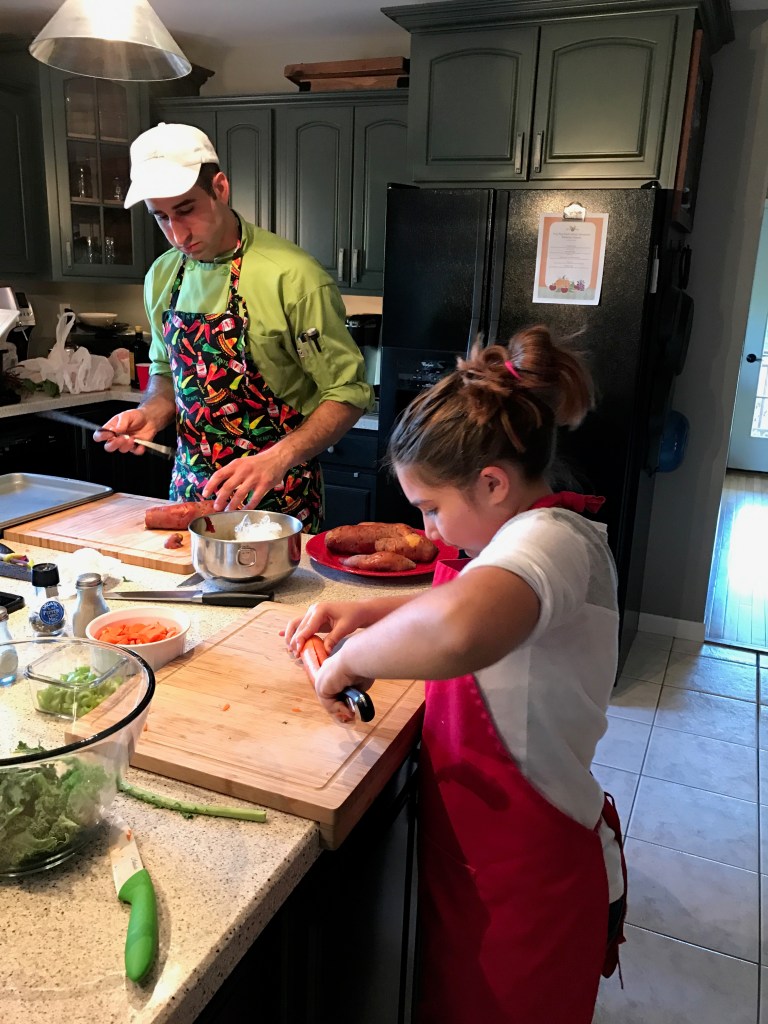
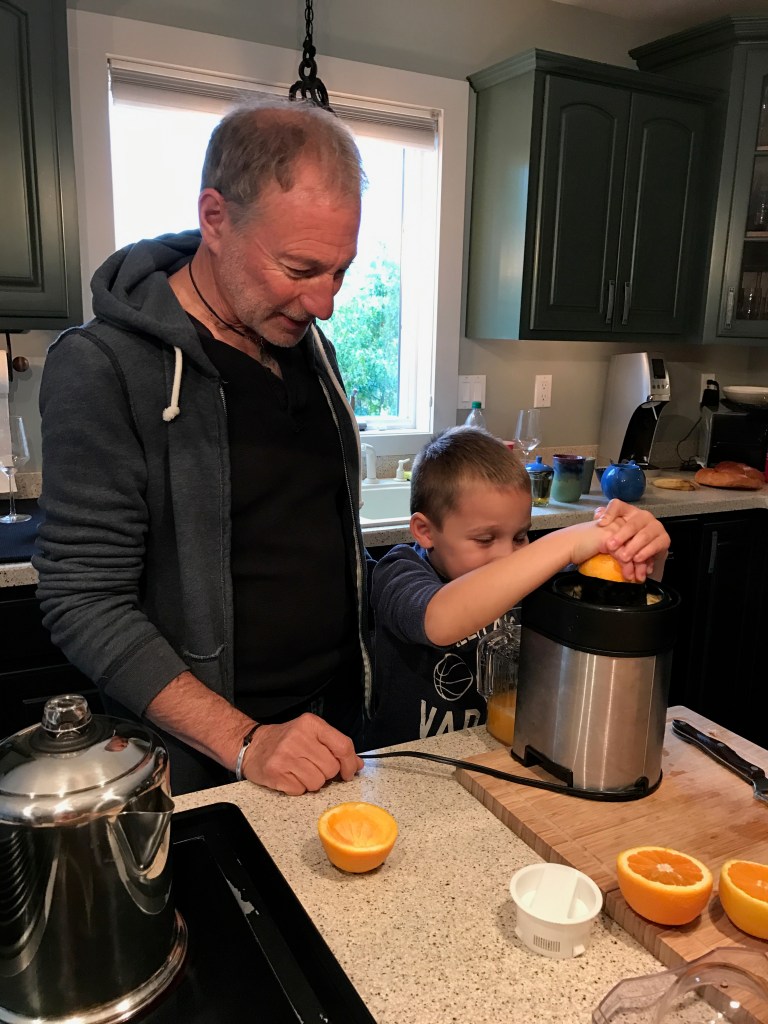




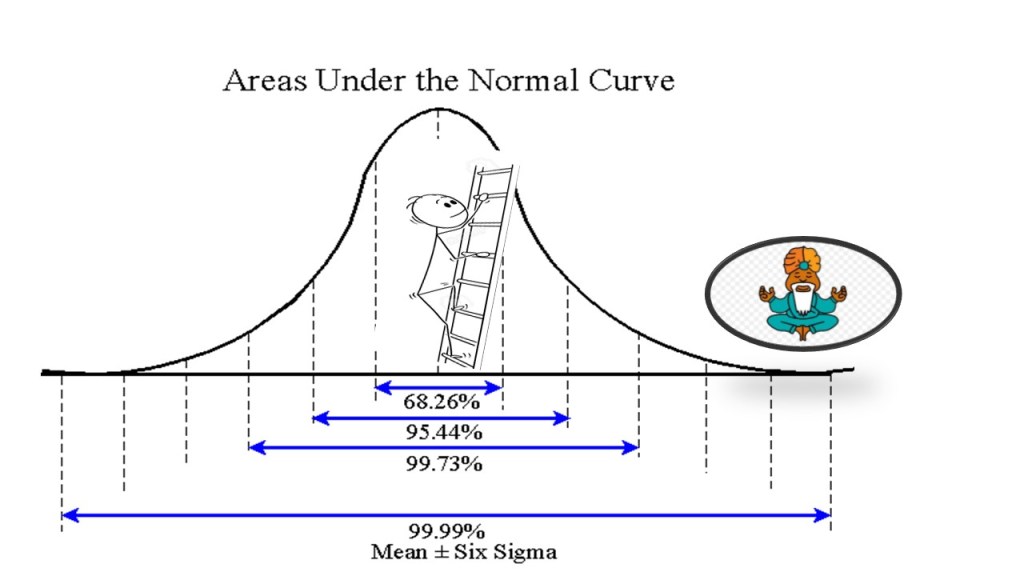
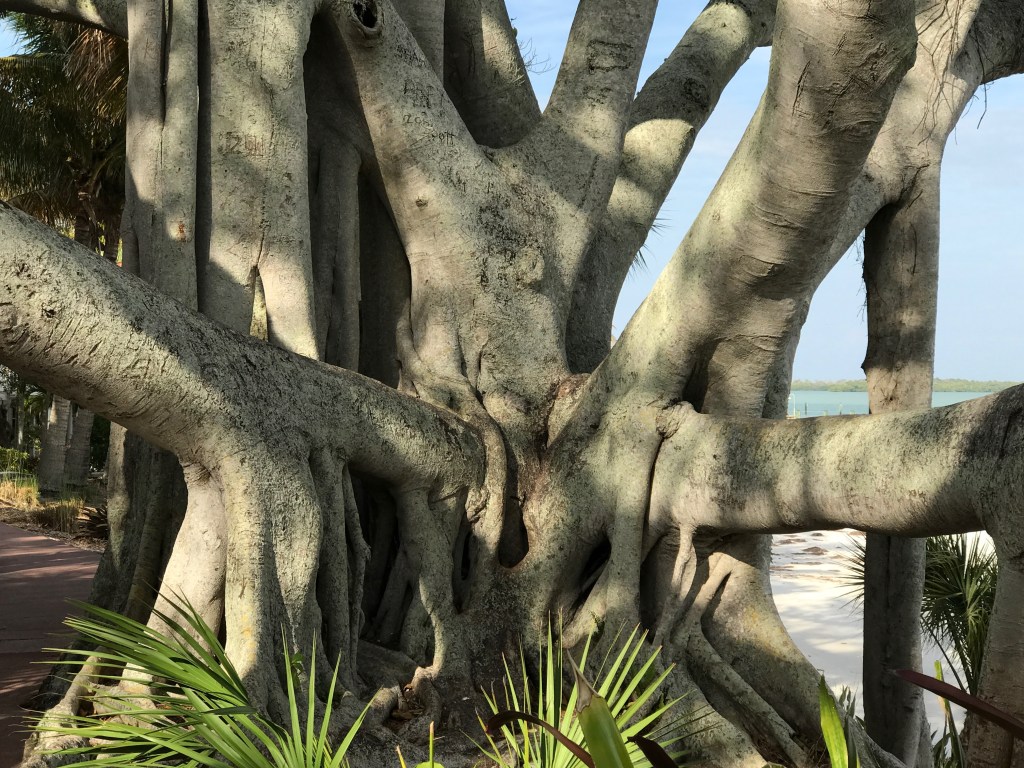


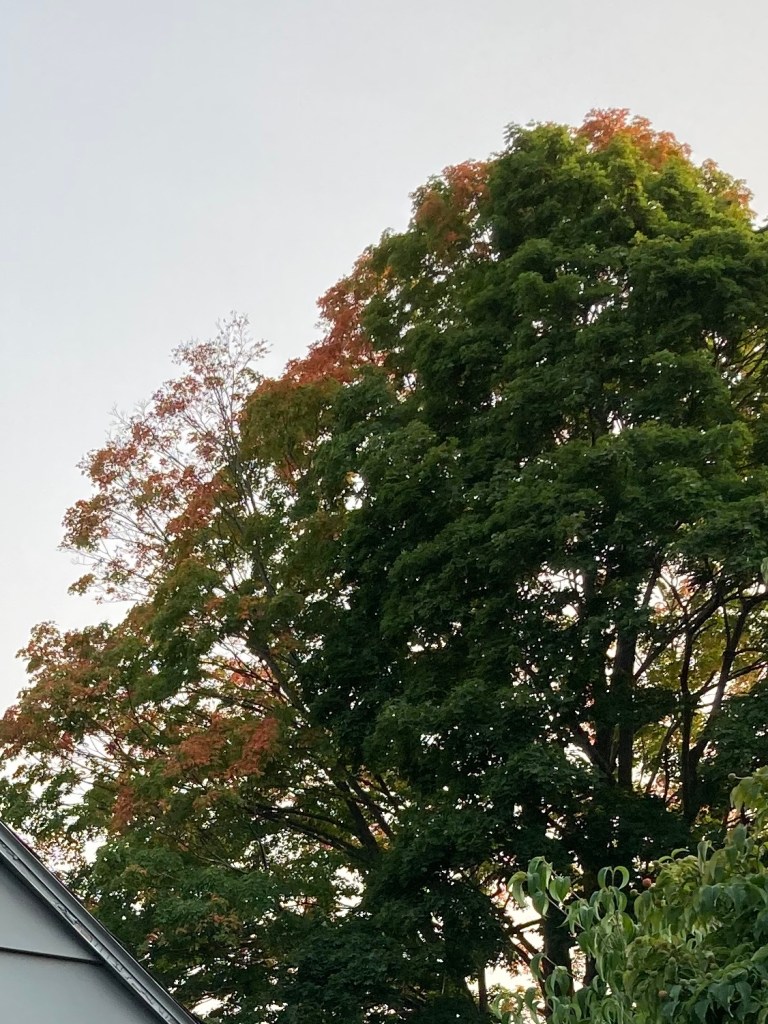
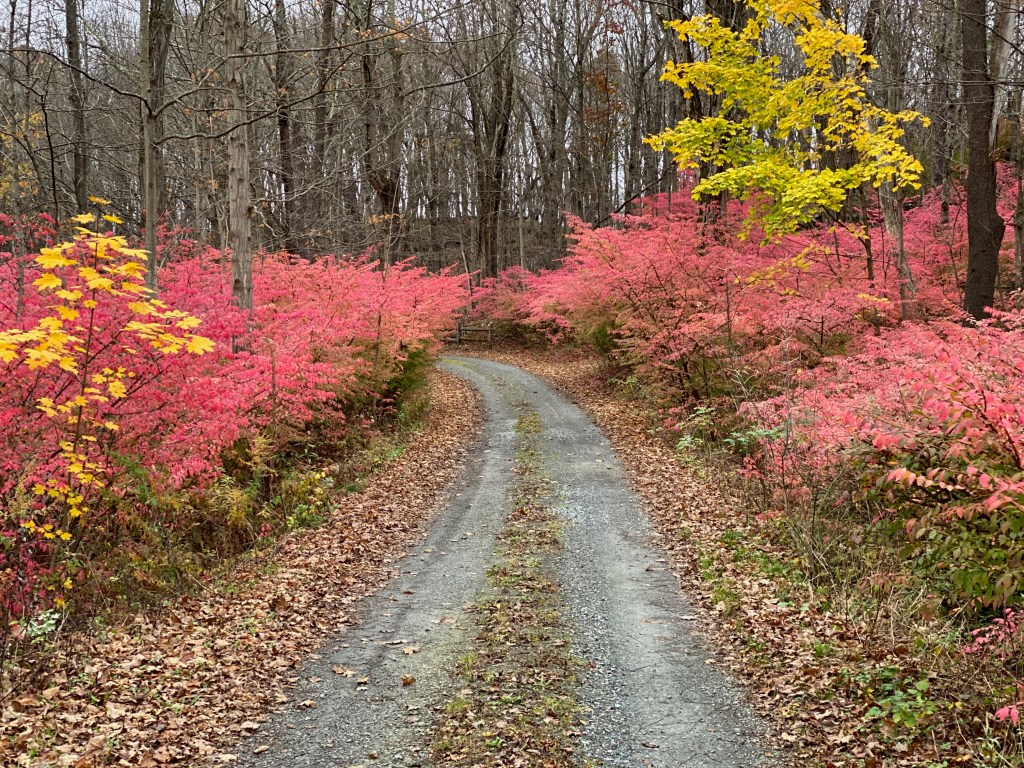




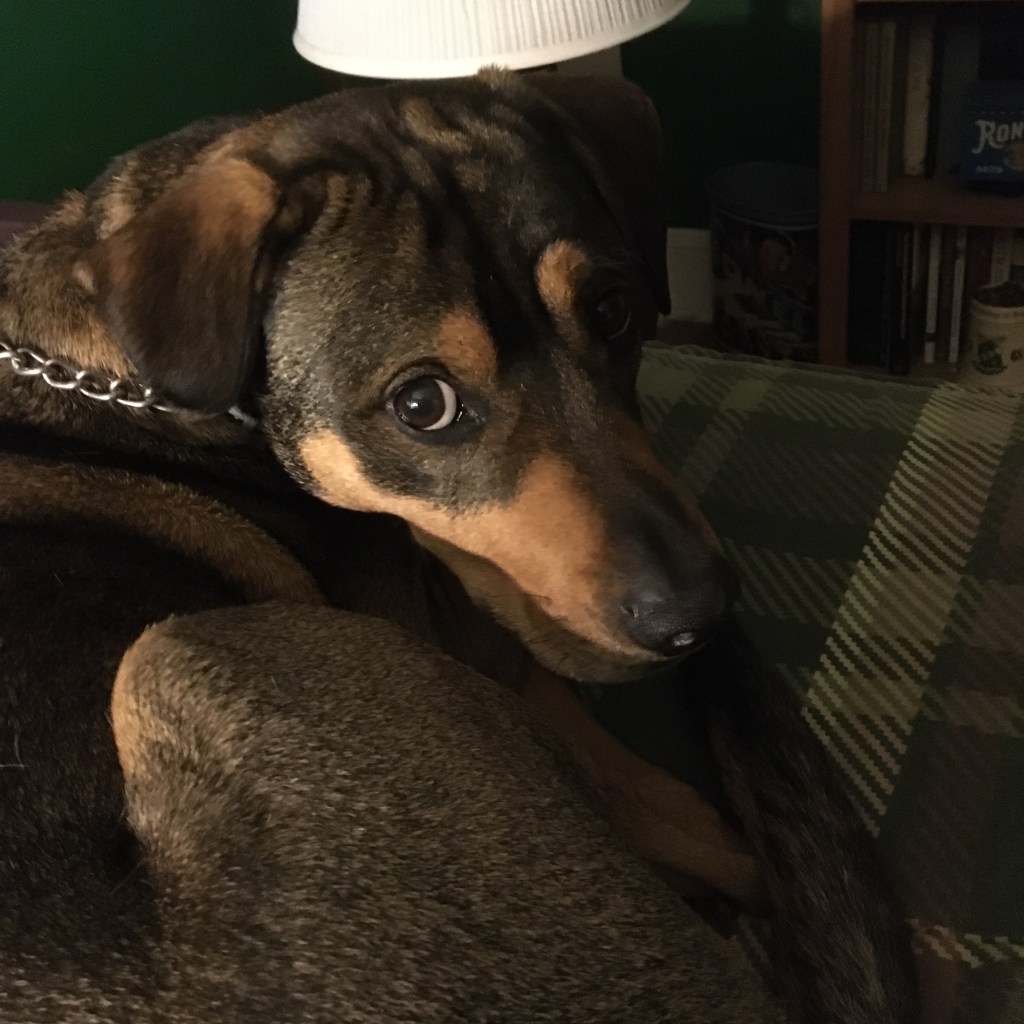

 Three Old Guys Walked Into A Bar