Featured

Dash Theory

Loss is constantly on my mind.  My family has shrunk to 3 people, myself and my two kids.  I have outlived everyone in my family with the exception of 3 spinster aunts who lived well into their nineties, but everybody in my immediate family passed by the age of 74. And everyone is gone now!  Hitting 80 in a few months kind of scares the living daylights out of me but it is what it is.  This has been a year of loss for me.  I have lost friends, colleagues, former students, and other folks who were in my life over the years and though I know it is the natural progression of things it is still difficult to accept.  The uncertainty, of when and how it will occur to me is ever present on my mind.  Not only has my human family shrunk, but my furry family has also with the latest loss being that of my 18 year old kitty.  I got her and her sibling when I was running the inn in 2007 and they were faithful critters up to the end.  Just last week I woke up to find her stiff body resting in her cute little bunny bed but totally unresponsive.  Eighteen years is a long time to enjoy the company of a furry pet and though her brother passed 2 years earlier, her passing was particularly hard.  My psychic daughter called that morning and asked if my kitty was ok and I told her what happened.  She said she knew because kitty actually came to her overnight to say goodbye.  Two days later, I was awakened by the sound of her soft meow telling me she was hungry!  My daughter assured me that her passing was easy and there was no pain involved. That comforted me. The point of all this is that my circle of people in my life is shrinking!  That scares me but that isn’t the reason I am writing about this!  I have a tendency to wallow in the negative though try as I might my glass is definitely emptying   Living alone now just with my dog, I have no one to bounce my fears off or to tell me things will be all right, so my imagination can run wild for long periods of time.

But something strange happened recently.  Hen, Wal and I have a fraternity brother who we hear from every now and then.  He is currently in the process of relocating permanently from his home here in the north to his condo in Florida.  He was just here for a short visit in October and then returned to Florida.  I got a desperate call from him at the end of the month asking me for a favor.  With all the confusion they were dealing with, they forgot to pick up their absentee ballots to vote and wondered if I could go immediately to the Board of Elections, pick up their ballots and mail it down to them ASAP.  The ballots had to be postmarked within 4 days of his request.  Off I went, picked up the ballots, ran to the post office and sent them out certified mail.  Make a long story short, they received them in 3 days and made sure they were postmarked by the required cut off date, and all was good with the world.  About 3 days later, I get a lovely thank you card with a $20 check in it thanking me for doing them that favor.  I called immediately and yelled at Larry for thinking he could buy me that cheaply…….Not really!  It just wasn’t necessary.  I told him about my poor kitty and we were chatting when he asked me if I ever heard of the Dash Theory.  I never heard of such a thing so he proceeded to ask me if I have ever read a tombstone in the cemetery.  Of course I have!  He said what usually comes after the person’s name.  I said usually the year of the person’s birth and the year of the person’s death.  He asked me if that was all and my response was “pretty much.”  He asked if I noticed anything else.  Still not registering anything, he asked what usually comes between the birth and death year?  I said a “DASH?”  He responded, “Exactly.

So where was this going?  Then he asked me what I thought was most important, the dates of birth and death or the dash.  HMMM- was this a trick question?  I never remembered Larry being so philosophical but damn, I had to think and search my brain for an answer.  I had to admit it is what happens between those 2 dates that tells the person’s life story. .Who was that person?  What did he or she do during those two dates to distinguish him or her from everybody else?  We ended the phone call but I couldn’t stop my mind from racing.  I started thinking about my own life.  I knew my year of birth, I started reminiscing about my family life when I was a kid, sometimes difficult, sometimes painful, but I always felt loved and supported. Teen years were difficult but most people experienced difficulty in their teens.  I moved on, went away to college, settled away from home to start my family and began teaching elementary school.  Whoever would have thought that 35 years later I would retire from that profession feeling proud of what I accomplished over those 35 years. I made deep and lasting friendships not only with colleagues but with former students who I still see to this day.  And as if that weren’t enough upon retiring from teaching I began a second career as an innkeeper in Vermont where I made new friends and met people from all over the world, innkeeper of the year in 2010 for the state of Vermont. Actually elementary school and innkeeping aren’t really all that different cause the men really do act a lot like little kids!  SHHHH- don’t tell anybody I said that.  I also have to add that we raised 2 great kids and many, many furry children along the way as well.

So the losses will always be painful, but my tombstone will have 1946, and the dash after it will be filled with love, pride, laughter, excitement, its share of sadness.  As my uncle would  say, “You done good!”   I guess I did!.  Maybe that is what my dash will stand for!  I like that dash theory- and that last date, yet to be determined.

Dash On!

I’m sorry, George! The loss of a pet is tough to bear. And it sounds like it is a placeholder for your general feeling of loss this year. It is amazing: when you engage a pet, the “I” quickly becomes “We”. Each makes accommodation for the other, behaviors change, and new experiences are shared. Same with any relationship, I guess – and just as binding.

Yet we know it is temporary and that we will eventually deal with loss – at least on the physical plane. (Unless you are Tom Brady and clone your pet – but is that the same, really?). Larry suggested focusing on the dash, rather than the unresolved loss in your life. You chose to respond by recounting your life and concluding it has been well lived.

However, I saw Larry’s suggestion as a call to action: dwell on what is in front of you. Now, Geo, you are a good writer and I really enjoy the way you express yourself. But I have to admit, your post annoyed me. Of course, that says more about me than you – but here’s why: I read it as an attitude of living life in the rearview mirror. I know it is important to do that occasionally, but not continually.

I felt that you have been recounting your life history as if it is a c.v. for a job interview – or an epitaph. It seemed to me that it left little room to comment. You replied that I should reflect on my mortality – good idea! That was the root of my last post on the story stick. I deal with mortality by making things.

It’s all temporary, but life is too sweet and bitter to spend it looking backward. Too much is still coming your way. Sandy Kominsky (Michael Douglas’ character in the Kominsky Method) says ‘Look, we’re all renters – and we’re here only until the landlord kicks us out’ (or we get a new lease on life?).  So, make the most of it.

Linda introduced me to a guy our age, who has been running an excavation business for 50 years. We bumped into him while he was doing a septic system next to our bank. He could retire, but he has no plans to do so. In his spare time, he built an 18-hole golf course on property he owns. Over the years, it has become a really nice venue… and here he is fixing septic systems. His crew has stayed together, but his foreman is now retiring after 47 years! But Dave still looking forward to working. His words: “ As long I can work, I can keep giving.” Sounds like words of wisdom to me.

Mark Twain said that it isn’t the size of the dog in the fight, but the size of the fight in the dog. Until that fight goes away, I don’t intend to stand still – and either should you, George. 

Living the Dash Our Own Way

George recounts the losses in his life—losses that, while not new, feel deeper with the passing of the last of his feline companions. I, too, extend my condolences to you, George, and understand the feelings that come with pets loved and lost. It tugs at the heart and never truly stops.

After talking with Larry, it seems George found a way to look at his life—the dash—in a positive light that counters some of his current feelings of loss, loneliness, and the impending struggle of living until the date on the other end of the dash. This is good. While we have often written about our lives over time and, more specifically, about our legacy—frequently inspired by Wal’s story stick posts—this time feels different, as if George has more to be grateful for and maybe even envisions a slightly higher watermark in that glass-half-empty story he often tells himself. But Wal’s rejoinder reminds us that our story stick isn’t finished just because we’re closing in on our end date. Recognizing what we’ve accomplished matters throughout our lives and perhaps even more so in our late 70s. But just because living fully may take more cognitive and physical effort doesn’t mean we’re done. Wal’s comments challenge me to consider that maybe our real legacy is how we live out our winter years. Maybe it’s about using what we’ve learned to persevere, remain strong, and continue contributing to society—not in spite of being older, but because of it. He reminds me that many cultures turned to their elders for decisions and advice because of the knowledge and wisdom they accumulated. And I suspect those seniors continued to learn as they taught, told stories, and influenced decisions through those interactions, right up until their dying day.  Here’s a quote from an old man who is still trying to figure things out…“It doesn’t matter if others think we’re useful—what matters is that we believe we are.” – Hen (with assistance from AI) 
We all reach multiple points in life where we have a choice to push on or to give up. And each of us, when faced with the same situation, might choose differently. Who is to say my perspective is the right one for someone else? At best, we can offer our viewpoints in hopes of influencing others toward greater peace, happiness, or joy span. Then, I believe, our quest to help shifts to a posture of acceptance; until someone directly asks for help, we can only listen.

Another thought I had is that some people find comfort in the way they live, even if it’s not the life they believe they want. They see the world as it is for them, and the reactions from friends and family help them feel supported, despite suggestions to change or take action. They (we) may continue to voice disappointment in the way things are, yet find enough nurturance from others to continue on as is. It is far more comfortable than trying to live differently, especially when we don’t believe meaningful change is possible. In this scenario, isn’t it also our role as a friend or caring family member to listen, to accept, and to offer assistance only when asked?

“When we are no longer able to change a situation, we are challenged to change ourselves.”  – Victor Frankl
Featured

Not for Granted

The indoor tennis season has started and the guys on the next court are cracking the ball back and forth over the net – the ball is sizzling!

Not so much on our court.

Bernie, wearing his signature Hawaiian shirt, is having trouble with his knee. He stands helpless as balls are returned just out of his reach. David, once the intercollegiate tennis champ of New York City, has adjusted his game after surgeries on both knees and shoulders. I have missed the entire outdoor season, due to a shoulder injury, and cannot find a serve to save my life. The three of us are like Blinkin’, Dinkin’, and Plod out there. Only Larry, our fourth player, is energized, having just come back from trout fishing in the Adirondacks. Parenthetically, I was really looking forward to trying out my new service motion, timed to Steely Dan’s Babylon Sisters. Instead, I’m hearing Joni Mitchell sing ‘you don’t know what you’ve got ‘til it’s gone”.

The culmination of our combined 200 years of tennis experience resulted in a twelve-shot rally at the net. Each of us, awkward and unbalanced, can’t get a whole racquet on the ball, but we manage to return each shot just barely over the net. Each reply is worse that the previous shot, but the rally continues until Larry misses a wild overhead blooped over his head.

At the end of the point, we all look at one another in amazement. No one knows what to say. It’s like an out-of-body experience. David finally says: “that was the worst point ever played in the history of tennis” and breaks down in laughter. We all join him. It is humiliating, but funny, that we have been brought so low. It’s also emblematic: we will play better next week, but today was a marker of a measured decline of skills.

Sometimes life is the art of a managed retreat. I love tennis, but realize my best playing days are in the rearview mirror. However, it makes me so happy that I’ve continued to dodge the final silver bullet that would take tennis away as an option. I don’t take it for granted that I can walk onto the court with my friends next month – or even next week. This conclusion heightens my enjoyment of any opportunity to send a yellow, fuzzy ball soaring over a greedy, green net. I won’t quit, even though I’ve passed the top of my form.

Even so, before the end of play, I had managed to thwack myself in the face with my own racquet, hurt my foot, and aggravate my shoulder. Hobbling home with bruised eye, Linda said: “Are you sure you were playing tennis?” No, I’m not so sure I was. I think I was simply trying to stay alive. It just happened to be on a tennis court.

Do you have a similar story?

Here’s a stanza from Edgar Guest’s Don’t Quit (allpoetry.com), which seems appropriate:

“When things go wrong, as they sometimes will,
when the road you’re trudging seems all uphill,
when the funds are low and the debts are high,
and you want to smile but you have to sigh,
when care is pressing you down a bit – rest if you must, but don’t you quit.”

Too Close to Home

I went for my 6 month check up with my doctor in July.  When I got there, they weighed me, took my blood pressure, checked all my blood work and then did the usual stuff….tapping on my chest and back, listening to my heart, all the usual stuff.  Everything seemed good!  Then he always sits opposite me, puts his computer down and asks if I have anything I want to tell him, any complaints, aches and pains or anything I want to ask him.  My doctor is a young guy probably close to 50 years old and I have been seeing him for the last ten years regularly.  He followed his usual routine  and we sat down and talked.  He asked if there was anything I wanted to ask and in my usually snide manner I said ,”  I am 78 years old.  What kind of shape am I in?” expecting to hear that I have the usual aches and pains and usual movement problems, urination problems and all that stuff.  Instead, he got snarky with me and said,”Well, let me just say that at your age if you were a machine, we would have replaced all your parts by now!”  I was at a loss for words but mustered up just enough strength to say, “No tip for you this visit.”  That is kind of what our relationship has been  like since we met.

I completely empathized with Wally’s tennis experiences.  I have had many of the same problems that he and his fellow tennis players experienced.  Wally had shoulder problems and was concerned about his serve, someone else had knee problems, another had trouble holding the racket, and another had difficulty running around the court. I empathized with all of them.  I felt badly for them all experiencing these hardships and then I was overcome with despair.  It took Wally and three of his tennis buddies to experience all of those things  which I experience all at once every day.  When did this happen?  I moved into my house almost ten years ago after carefully searching for a house I could manage alone.  Back then I could mow the lawn, shovel the sidewalks and driveway, use tools to facilitate work that had to be done.  No problem, in fact it was challenging living alone for the first time in my life, and I was up for the task.  Unlike Wally’s activities my athleticism over the years has come down to the sport of taking the garbage out. Taking the garbage out requires a tight grasp of the plastic garbage bag that is required to be pulled out of the can in the kitchen and deposited into the proper receptacle.  No problem, an easy task.  Grab the bag in one hand, other hand filled with recycling, two doors to open before arriving at the large garbage tub on wheels resting by the garage door. This used to be done with little effort and great skill.  After breezing through the two doors which easily unlocked and opened using the recycling hand and with the help of my elbow, out to the garage and  with my right foot I would flip the lid open and with an amazing shot from 5 or so feet away deposit the garbage bag right into that sucker.  That was how I used to do it.  Today however the procedure has evolved.  The first challenge is to remove the large plastic trash bag from the kitchen can without snagging the bag in such a way as to cause the messiest of garbage to come spilling out while the right hand clumsily dropped the items to be recycled..  Task one now is to retrieve all that emptied out of my  arms and bag while fighting to get across the kitchen floor without leaving a trail of coffee grounds across the kitchen.  Then the doors…….an immense task to master.  If I am wearing the right shirt with some texture, I can cradle the knob into the crook of my elbow and twist it just enough to unlatch the little thingy that goes into the hole in the door frame.  Once outside I take a sigh of relief and go to open the top of the can with my arthritic hand forgetting the pain caused when my wrists even twist a little. I should learn some new curse words because the old ones are highly ineffective.  That is just one of the sports I participate in!  I will spare you the details of climbing up the cellar stairs with a load of clean clothes in a basket.  Having to hold the laundry basket with my left hand while at the same time using the handrail because about halfway up the stairs my right knee stops supporting me and as I discovered, without the use of the handrail the basket, clothes and I go tumbling down and the challenge to get up again is unbearable.  You get the idea. Having a constant stiff neck from an old volleyball injury, I must always be aware not to put myself in any position where I have to turn my head any further than a 45-degree angle without the shooting pain it calls up.  Anyway, you get the idea.

I remember as a young adult when visiting home for the holidays I used to look around at the collection of old Italians sitting around a big table with everyone shouting at each other, not angrily but just to be heard.  I remember seeing my Aunt Eleanor’s hands and the distorted shape of her middle finger and pointer.  Occasionally I would see her rub that hand right after delivering a platter in the middle of the table with whatever delicacy she created.  By that time, my dad had developed a little limp because he was constantly fighting plantar fasciitis.  My uncle was always rubbing his left elbow which we could hear crack if the shouting had died down momentarily.  I looked around the table and remember thinking if that ever happened to me, please shoot me and put me out of my misery.  Now, it is a little too close to home.

And Yet I Continue

Wal provides a clear and relatable description of our journey into the world of the aged. Using his wisdom developed over the years of making sense of life, he turns the frustration of diminished physical skills into a moment of shared laughter and acceptance.  And he closes with that life sustaining attitude of gratitude: the deep motivating appreciation that he can still enjoy the gift of playing.  Unsaid but understood, is that being with friends, getting exercise, competing, and pushing himself to do his best, is what tennis is about.  How well he does or used to do, is not the reason he signed up.

In the first year we began our blog, we wrote about Don Miquel’s Book, The Four Agreements.  The last agreement was to always do your best recognizing that your best can and will vary from day to day based on any number of prevailing conditions.  It has occurred to me only recently that age, more and more, has become a huge factor.  None-the-less, practicing this belief helps me continue to enjoy my life as fully as ever because it allows a perspective that doesn’t compare and fosters a compassion for gratitude.

Wal asks if we have any similar stories to tell.  Mine is from a couple of years ago which, because time seems to have accelerated beyond the speed of light, seems like yesterday.

My grandson, Ben and I, were across the street from his house at the ball field having a catch with one of his friends.  Shortly, several of his neighbors joined us.  Our game of catch soon evolved into a mini version of a baseball game.  We took turns hitting, running the bases, and fielding.  After about twenty minutes of play my heart rate was off the charts and I began to wonder if, despite having a relatively healthy heart, trying to keep up with these teens was going to be the last thing I ever did.  Accepting that fact that I had exceeded my capacity to breathe without gasping, I reluctantly admitted to these young bucks that Pop Pop needed to sit out for a bit.  After the game in the quiet of Ben’s house, he looked over at me and delivered his analysis of my skills.  “You can hit the ball pretty far, Pop Pop, but you’re not a very good runner.”

While I was briefly saddened that I was likely no longer the able-bodied grandpa he had frequently admired I quickly realized that in the latter part of my 70’s I was still able to spend some time actively playing on a ball field with Ben and his friends.  I was and still am deeply grateful for that day.

“In the end, it’s not the years in your life that count.  It’s the life in your years.” – Abraham Lincoln

Featured

Life in the Slow Lane

71……That’s when this whole adventure began.  I retired from teaching at  57 and immediately moved to Vermont and my new career.  Inn keeping really keeps you busy.  There is no time to waste as things have to get done on a schedule.  Rooms had to be ready by 2pm so when the new guests arrived they could be taken right to their rooms.  I had it down pat.  I moved smoothly from one task to the next, making beds, cleaning toilets and bath tubs, replacing towels and of course leaving time to chat with our resident ghost.  I was all over it.  Then of course there was the necessary snow shoveling of the parking lot and all the paths to  the inn itself.  And even with those added responsibilities everything had to be done by 2 pm so that we could greet the guests with a smile!  We were like a machine, I would strip the bed, throw the used linen down the stairs for them to go in the washing machine.  Then move from one room to the next effortlessly.  I even learned a trick to fold fitted sheets.  I was in good form, my body moved perfectly and effortlessly.  After 14 years of inn keeping we had to sell the inn because the advent of Air BnB’s pretty much killed the market for all the little inns and BnB’s.  Homeward bound back to New York and on to the next adventure.  Not knowing what to expect I bought my own little house and spent the first few months setting it up.  Still in good form I could mow all the lawns, shovel the walks and driveway and then chill with a nice glass of wine.   AND THEN, I TURNED 71!

Something happened to my body.  I think it wanted me to slow down but I was fighting it. It won!  Acid reflux and other discomfort necessitated a trip to the  emergency room, an ambulance ride up to St Pete’s in Albany and two stents planted in the widow maker as the doctors called the vessel.  They said I was lucky, no heart attack, but I had to slow down and recuperate.  While I was recuperating, doing lunches with  former colleagues and students, emergency number 2 struck.  After two weeks of my dog licking the right side of my neck, my cardiologist discovered that my right  carotid artery was 99% blocked and needed another procedure.  They slit my throat and scraped the artery clean and inside of 3 hours I was back home and having to slow down even more. So I looked like a lopsided Thanksgiving Day parade balloon  for almost 2 months which pretty much slowed me down out of necessity.  I didn’t want to scare innocent children in the grocery store.  But once again the doctors said I was lucky because they caught it before I had a stroke.  My body then began to slow down without me having much control over it.  I began to notice little things……When I got out of bed often I would fall back onto the mattress.  No problem, I was tired!  After all I wasn’t a kid anymore.  Both my kids reminded me of that on a daily basis. I could deal with that annoying but not serious problem.  Then, I noticed when I would pick up a stemware glass my hand would shake.  That never happened before and bothered me because it was something  other people could  see.  Obviously, I had to develop some coping mechanisms to deal with the balance and shaking issue.  Activities that I could do in a split second all of a sudden required a moment of thought before attempting the activity.  The rest of my 71st year was uneventful and I was beginning to feel myself again.  MY activities were not interrupted and my energy level was back to normal.

Then 72 came!  And with 72, I began to have pains in my wrists and thumbs.  Annoying at first but not really limiting.  Add to that a painful few months with plantar fasciitis which really limited my walking, but luckily I broke my foot and had to wear a brace for 6 weeks and it magically cured the pain .  I started an alphabetical list of all my old man ailments.  As the time passed I adapted my lifestyle to the  restrictions left by the refusal of my body to move in the way I wanted it to.  Unfortunately, though the fasciitis disappeared, the arthritis intensified and continued doing so up to the present..  I was beginning to get the rude awakening that I had to start making amendments to the way I do things.  My wrists got so sore that I had to develop alternate ways to accomplish simple tasks.  Common everyday activities became challenging,  The most difficult was opening cans and jars, door knobs became hurdles, trimming my shrubs caused hours of pain.  Doing the laundry, which I hated in my 40’s became unbearable, even lifting a pot off the burner for dinner was a chore.  While this was going on, my balance was intensifying, My hearing was getting worse to the point where my kids , thinking they were humorous, would mouth words carefully so I could read their lips.  It was time to do something about all of this.

The worst pain was from the wrist.  I was mowing my back lawn and the mover went over a wire cable that twisted itself all around the blade.  There was nothing I could do to untangle it.  The strength in my wrist couldn’t clamp down on the handle of the wire clipper, so I went to Home Depot with a piece of the wire that fell off and searched for a tool that could actually do the job.  I finally found a long armed clipper meant for this kind of thing but I still didn’t have enough strength in my wrists to clip it.  Suddenly I realized, that because of the long handles, if I used both hands and my knees to compress the handles I could experience success.  I was very proud of myself.  Bought the tool, got home, turned the mower over and with one clip of the coil which was wrapped around the blade hopelessly entangled, the whole thing fell right off and I could continue mowing forever more.  There is a solution to all problems.  Opening jars became more difficult.  I found that if I bang the  lid several times on opposite sides and then arrange my body so that my left hand was grasping the lid, my right hand wrapped around the jar and my shoulders were extended forward, the lid would begin to break its seal as I turned the jar instead of the lid.  I even had to buy pants a size too big so that I could snap the waist band pain free.

Because of my balance issue, which has improved by a series of exercises in my shower(there is a safety bar) I can now stand on each foot for at least 25 seconds without losing my balance.  This is important for me because I had fallen several times in the last year.  This slows down my life considerably because I always have to think about what my next move will be especially on staircases.  Which brings me back to the laundry.  My clothes sometimes sit in the dryer for several days.  The process of getting the clothes down to the basement is difficult.  The basket is always full, the dog is always under my feet and I have to stop at the top of the stairs and think,  I had a friend who was doing her laundry, fell down the stairs and hit her head on a metal radiator at the bottom.  I developed this two part system of getting my dirty clothes down to the laundry.  If my laundry basket was overflowing, I developed a rope system that I tied to one of the handles, and slowly and carefully let the basket slide down over the steps until it hit the bottom.  That works really good but now I feel more comfortable and I know the number of steps in each of my staircases.  When going downstairs I naturally hold the handrail, count the steps going down and make sure that my heel hits the back of the riser as I descend.  It works great!  Going up is easy cause you can pull yourself up by using the handrail unless you have an overflowing pile of clean laundry. I actually know how many stairs there are in most of the places I frequent just to be on the safe side.  All of these processes require us older people to think before acting.  The joy of spontaneity is certainly reduced but it beats a trip to the emergency room or worse.  One other thing…..My neck doesn’t move as it used to .  Driving can be difficult because of it.  When roads merge at less than a 90 degree angle I have real problems discerning whether there is on coming traffic so what I have learned to do is all the way at the end of the ramp I position my Jeep as close to a right angle as I can so that I just have to turn my head to the side which then allows me safe passage off the ramp and onto the larger highway.  Anyone who has ever tried to merge onto Route 9 South after getting off the Mid Hudson Bridge knows what I mean. These things all take time, thought, and patience.  Though the days seem to go much faster than they used to, individual actions are slowed down to allow for careful consideration and safety.

I’ll just end with the problem of the fading memory.  Of course, names and words become hard to retrieve so I make a habit of writing lists, especially to go to the grocery store.  I carefully compose the list, post it on the refrigerator door and head out only to realize when I get to Shop Rite that the list remains magnetized on my refrigerator door.  That old 60’s song, “Slow down, you move too fast….gotta make the morning last.”  That is my new theme song!

Life Accommodations

George reminds us of the adjustments we need to make to maintain our lifestyle without having to endure major changes or eliminate those things we need or want to continue to do. When I first read his piece and realized that I was also making these kinds of adaptations, oftentimes without realizing it, I was disappointed that I had reached this point in my life. But as I continued to think more about the concept, it occurred to me that I (all of us) have been making accommodations all of our lives.

When we were children and weren’t tall enough to reach something we wanted, we found something to stand on. When we wanted to go swimming but couldn’t swim, it was a flotation device. We biked with training wheels when we wanted to ride.

As young adults, we were faced with developing coping mechanisms for transitioning from being cared for by our parents to becoming independent tenants, shoppers, finance managers, etc.

As middle-aged folks, we used physical and emotional supports to address unexpected health issues, trauma, and relationship challenges.

With this mindset, I no longer felt as vulnerable and frail as when I first read George’s piece. Now, I can more readily agree that as my body and cognitive fluency are more limited than they once were, I check and adjust to continue my forward momentum in life. While I can’t think of a story to share that makes this point, I can tell you that I have made many accommodations to my daily living behaviors. Each morning as I slide out of bed, it is with greater caution than in the days of old. Before I leave the bedroom, I must put on my glasses to find and place each hearing aid in its proper ear. I no longer bound down the stairs hands-free but walk down holding the handrail (most of the time). I move more slowly, do physical work in shorter periods and with more breaks, and my list of tasks to accomplish is decidedly shorter than I’m used to.

For me, the greatest adjustment has been letting go of the shame I used to feel about getting older and allowing others to see my limitations. My ego was much larger than I believed it was and had (still has) a greater influence over my ability to be fully authentic than I thought. Getting in the pool with my looming love handles showing and wearing a hat while swimming to cover my growing bald spot was, and still is to a degree, a conscious hurdle to overcome.

“It’s not a question of how old you are, but a question of how you are old.” – Jules Renard

“Age is an issue of mind over matter; if you don’t mind it, it doesn’t matter.” – Mark Twain

Thinkey, Thinkey

I liked George’s point about needing to adapt to physical limitations as we age. Let’s face it, nothing stays the same. But what’s really amazing is our internal gyroscope which keeps us spinning true, no matter how circumstances change. I’m talking about our ability to process information and integrate it into the “new normal” of the moment. That gyroscope smooths over the vast amount of change in a manner that allows our basic organization of the world to remain consistent.

As a result, I read George’s account as almost a cheerful reckoning with limitations of a physical nature. His strategy is risk abatement and he cleverly baked in solutions to overcome vulnerable areas of his day-to-day challenges. (Except for his “War of the Roses”, which he’ll have to relate).

I’m all for the special accommodations that allows us to continue to pursue the activities that we love – or need – to do. Lately, I’ve purchased a couple of items that have made a difference: a folding rolling platform – like a dolly with a handlebar – which lets me move heavy items or lots of boxes pretty easily and a pneumatic lift table which can raise a 500 lb. object 27” off the ground (so that I don’t have to).

Super helpful! So much so, that I envisioned a method for single-handedly loading a very heavy 6’ tall storage cabinet into my truck bed. Asking myself. ‘What would Archimedes do?’ I developed a scheme to roll the cabinet next to the tailgate of my truck, pump it up with my lift table and topple it into my truck bed. What could go wrong?

Well, I don’t know what might have gone wrong, because part way through this exercise a younger and stronger friend stopped me. He said that if each of us took a side of the cabinet, we could lift it into the truck. Testosterone took over and I agreed to a team hoist. Unfortunately, he lost his grip part way through and I awkwardly handled the unexpected weight.

Now, my plan probably would not have worked well, but this approach resulted in a shoulder injury which has not fully healed after two weeks. I was moaning to Linda about my inability to do the things I really love (no tennis, no woodturning) and she simply said “Thinkey, thinkey, next time” (since this is a made-up word, I reserve the right to spell it thus). Boy, that ticked me off! But she was absolutely right – as is George: ageing means planning ahead a bit more.

But yet … what’s a life without some risk?

Risk – by Anais Nin

And then the day came,
when the risk
to remain tight
in a bud
was more painful
than the risk
it took
to Blossom.

MM/DD/YYYY

“I am very impressed”, said the surgeon – “about how much damage you’ve managed to do to your hip. “You need a full replacement, so let’s see how soon we get you scheduled”. Two thoughts occurred right on top of one another: a) boy, am I lucky to have an option to reduce the pain, b) wow, I am officially old.

I admit to being a surgery rookie – fortunate to have avoided hospitals since my tonsils were removed, so many years ago. So many years ago, that Robbie the Robot was the toy of the year. But now, I am joining the Society of Waiting Room Junkies, an exclusive club of seniors who inhabit a labyrinth of calendar conflicts almost totally devoted to medical service. I figured to be pretty good at this, as my working life taught me to wait productively in airports, but I have to admit that doctors’ waiting rooms have their own vibe. Mostly, older and infirm individuals emit auras of fading energy, but I have witnessed some full-on, call the cops outrage with the administrative process.

Problems tend to arise when patients do not understand insurance-speak or waiting room ethics… and some admins tend be unaware that folks may need to be ‘socialized’ into appreciating the specialized tasks assigned to various members of the medical team: front desk reception (‘what is your birthdate, please’), intake nurse (what is your birthdate, please’), medical history admin, phlebotomist, x-ray tech, surgery scheduler (‘what is your birthdate, please’), co-payment processor – oh, and the physician or PA.

Since western medical practice is a symptom-oriented approach, specialists exist for every symptom. Your medical team wants to know (in addition to your birthdate) the names of your urologist, cardiologist, nephrologist, neurologist, oncologist, physiatrist (yes, that’s a thing), psychiatrist, ophthalmologist, dermatologist, proctologist, and pharmacist. In addition, your team will be pleased to hook you up with an anesthesiologist. Look at all the new friends! We may have not found the cure for COVID, but we have certainly cured loneliness in our lifetime!

Obviously, I speak with tongue-in-cheek, observing a rite of passage that people of a certain age must cleave to, or not survive past that certain age. We are fortunate to have excellent healthcare, even if at times the process gets in the way of the service. How nice it is to encounter the upbeat nurse, the skilled practitioner, or the pleasant fellow traveler… they keep us keepin’ on!

Organ Recital

When I was in my forties I had a phone conversation with my colleague Jack.  He asked about our health insurance coverage to see if I had any knowledge of reimbursement for a procedure he had scheduled.  One thing led to another and soon we found ourselves immersed in a completely health-obsessed exchange of body parts, broken bones, previous illnesses, and surgeries.   He paused, chuckled, and then said we sounded like two old men who talked about little else than their medical conditions – he called it the Organ Recital!

Ever since that day I remain observant when I find myself pulled into such a conversation and seek to make it more about gathering information rather than enjoying it as a new mode for social entertainment.  And now Wal’s post reminds me that, in fact, I am an old man who will have more and more medical issues waiting for me on the horizon.  The question remains how much of the “concert” I choose to participate in and/or listen to.

As Wal points out the challenges that lie ahead include more than just the condition of eroding body parts; they include the endless stream of paperwork, administrative error or incompetence, and waiting rooms that bombard us with a myriad of conversations and germs!  I’m thinking that George’s approach from his previous post will likely serve him well; expect the worst and you’ll likely be surprised that it wasn’t as bad as you expected.  And, as Wal reports, sometimes these conditions can lend themselves to pleasant surprises when we might experience highly respectful and efficient check-in and follow-up services and the opportunity to make a positive connection or two.  I try to combine my optimism for the latter with preparedness for an experience that might require much patience and a Zen mind.  After all, if this is the new normal for “Old Guys” then it makes sense to adapt and accept it.

I think the part that I have control over is whether I make these medical interventions a symphony I play in regularly or an intermittent recital I can leave behind when the visit is over.  Perhaps if I choose to bring my playful and curious nature to this venue rather than become an organist playing and replaying the same old song, I might just continue to enjoy the music!

“We don’t stop playing because we grow old. We grow old because we stop playing.”

-George Bernard Shaw

Relatively Speaking…

Everything is relative! I just had a major revelation about everyone’s fixation about my glass being half empty all the time.  It just occurred to me to get a smaller glass and pour my concerns into it and magically my glass is FULL!  Not half full but all full (say it slowly and enunciate so it doesn’t sound like ‘awful’) See?  Relative!

In our youth our social life consisted of parties, big events and social gatherings!  Every weekend was filled and work took up our weekdays!  Life was busy and full (not half full), fun and laughter were the currency of those gatherings.  Life was good!  In our mid-life prior to the crisis, our social engagements quieted down slightly. Our social calendars were filled with weddings, christenings, work related parties, road clean ups.  Life was getting softer, quieter and cozier.  Life was comfortable if a little quieter.

The Golden Years, which sneaks up on you mercilessly, changes the nature of our social calendars.  The weddings and christenings are finished for the most part, gatherings become less frequent but the one commonality we all face at this stage is the maintenance of our physical bodies.  Life can become concerning.  They say in your mid-fifties your ‘check engine light’ comes on and predicts the ailments and medications soon to be arriving at an organ in you! The friends you maintained over the years are in the same boat and remain faithful at your side, sympatico to what you are going through.  Hence the conversations Henry refers to as organ recitals.  Now here’s where my new revelation about my glass kicks in.  You begin to see your week is filled with blood work, X-rays, appointments with specialists, Medicare physicals where you get extra credit if you remember the four special words in their right order! But as Wal pointed out, the new socializing opportunities are in the waiting rooms of all these new and exciting locations.  New friendships develop as you run into the same person you met at your general practitioner’s office pops up the following week at your cardiologist’s office! “How is your son doing with the divorce?” Or “Social Security thinks you died?  I have a friend that was declared dead by them and he had to be resurrected!”  Meeting new people is always fun and the conversations are so much more interesting than in our youth.  So you see, everything is relative!  Just a little digression.  Wal and I have the same general practitioner so I had to fill out that list of specialists as well, so after I listed my Cardiologist, Nephrologist, Dermatologist, Therapist, Orthopedist, in my snarkiest printing I added one that wasn’t on his list….I figured since they want to know everything about me I listed my Veterinarian too!  The doctor asked me if I was trying to be wise and I told him I didn’t have to try, it came with old age…

Tower of Song

Hen suggested the topic of diminishment — particularly of physical decline. We wrote about a similar sense of aging in George’s earlier post The Golden Years. However, this topic is a bit more pointed. George ended that post with a poem that fits the bill – about the inevitable crankiness of the body… or as Leonard Cohen sang: “I ache in the places where I used to play”.

Ending on a poem was a nice touch in The Golden Years, George. I drift toward poetry when confronting life issues. Somehow poets seem to capture large thoughts with few words. Three poems catch my fancy in this regard:

1. Dylan Thomas’ Don’t Go Gentle into that Good Night

Do not go gentle into that good night,
Old age should burn and rave at close of day;
Rage, rage against the dying of the light.

Though wise men at their end know dark is right,
Because their words had forked no lightning they
Do not go gentle into that good night.

Good men, the last wave by, crying how bright
Their frail deeds might have danced in a green bay,
Rage, rage against the dying of the light.

Wild men who caught and sang the sun in flight,
And learn, too late, they grieved it on its way,
Do not go gentle into that good night… (and further verses)

Dylan Thomas kicks it up a notch! Some years ago, this was my anthem. Thomas not only wants to resist the acceptance of diminished ability, he wants to fuel his energy with anger. Go out with a flair! In addition, this poem conjers up the lament that one feels not just at physical decline, but the accompanying despair that life is too short and accomplishments too meager to meet the first rank. Thomas wrote this lyrical poem for his father, but he himself raged so at the loss of youth that he drank himself to death at age 39. Thomas spent his energy rubbing against the grain. He never came to peaceful terms with the inevitable arc of life.

2. Alfred Lord Tennyson’s Ulysses

…Though much is taken, much abides; and though
We are not now that strength which in old days
Moved earth and heaven; that which we are, we are;
One equal temper of heroic hearts,
Made weak by time and fate, but strong in will
To strive, to seek, to find, and not to yield.

This is the stoic solution – head down, keep moving forward. Marcus Aurelius would have endorsed this sentiment. If you ever followed Rumpole of the Bailey, that aging barrister used to quote these verses to pump himself up to face difficult circumstances. The context of the poem chronicles poor Ulysses, forced to wander for many years and fight battle after battle, who finally makes his way home and finds he has to fight one last battle to reclaim his household. It’s a call to marshal one’s infirmities and soldier on. However, I’m not sure that it encourages a person to find new solutions, but rather to make good use of what you still possess – work with what you’ve got.

3. Emily Dickenson’s We Grow Accustomed to the Dark

The Bravest – grope a little –and sometimes hit a Tree

Directly in the Forehead –

But as they learn to see –

Either the Darkness alters –

Or something in the sight

Adjusts itself to Midnight –

And Life steps almost straight


I find this portrayal by Emily Dickenson most apt, most human. My friend Lee recently pointed out that we are bound energy… energy can’t be destroyed, but it can be transformed. As our physical presence transforms over time, we learn to adapt.  We find a way. Senses and abilities previously dormant begin to bloom. We compensate. And perhaps we better appreciate the skills still remaining in our tool bag.

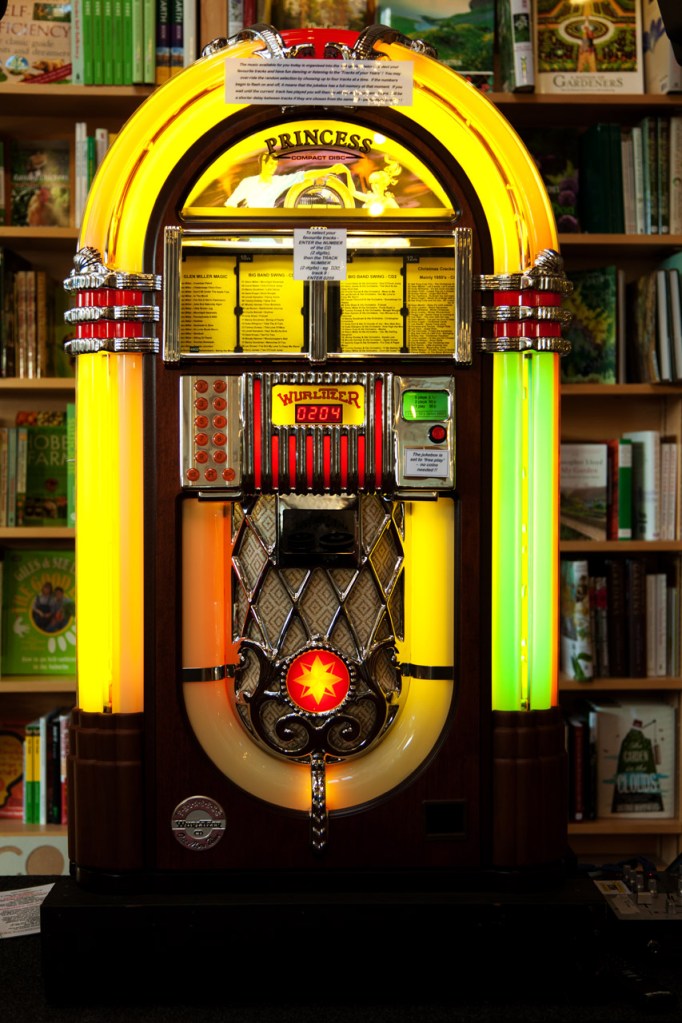
Oh – so why is this post entitled Tower of Song? Well, it’s a song by Leonard Cohen. I consider him more of a poet than a performer. If you chance to listen to this wistful song, it might touch a chord. I’m pretty sure that Cohen was contemplating something other than a jukebox. Perhaps eventually some remnant of our energy will reside in a Tower of Song.

Accepting My Diminshed State

Wal’s invitation to reflect on diminishment as we age provides, as one might expect, a range of perspectives.  And offering it through poetry and song only enhances the number of interpretations. 

Refusing to go quietly into the night reminds me of my friend Bill who once told me that when his time comes, he wants to be completely used up, having lived fully, without compromise, until there was no more left to give.  I get that, I too, fueled by a youthful spirit and sense of adventure, welcome the adrenalin rush when I can.  But influenced by life’s experiences and the ever-increasing limitations of the body, they are less spontaneous and more measured.  As Wal, continues in his post, the wisdom of working with what we still have and consciously honing skills we may have barely acknowledged allows us to adapt to our new normal and still live fully.

For me, it’s about acceptance.  Not acceptance of defeat.  Acceptance of what I can still do, with or without difficulty, and recognizing when it’s worth it and when it’s not.  Acceptance that it’s time to shift my tempo, or ask for help, or be more forgiving (of my limitations.)  Acceptance that it may be time to let go and revel in the joy of watching someone else dance wildly into the night.  So easily said, so challenging to practice.

I came across the two following poems that represent many of my feelings.  I also liked I Still Matter, by Pat A. Fleming but didn’t include it in this post.

The Little Boy And The Old Man by Shel Siverstein

Said the little boy, sometimes I drop my spoon.
Said the little old man, I do that too.
The little boy whispered, I wet my pants.
I do too, laughed the old man.
Said the little boy, I often cry.
The old man nodded. So do I.
But worst of all, said the boy,
it seems grown-ups don’t pay attention to me.
And he felt the warmth of a wrinkled old hand.
I know what you mean, said the little old man.

I like the parallel that we end in similar ways to how we begin.

Maya Angelou wrote:

“When you see me sitting quietly, like a sack upon a shelf,
Don’t think I need your chattering. I’m listening to myself.
Hold! Stop! Don’t pity me! Hold! Stop your sympathy!
Understanding if you got it, otherwise I’ll do without it!
When my bones are stiff and aching and my feet won’t climb the stair,
I will only ask one favor: Don’t bring me no rocking chair.
When you see me walking, stumbling, don’t study and get it wrong.
‘Cause tired don’t mean lazy and every goodbye ain’t gone.
I’m the same person I was back then, a little less hair, a little less chin,
A lot less lungs and much less wind.
But ain’t I lucky I can still breathe in.”

Lucky indeed!

Diminishing Returns

Getting old sucks- sure it beats the alternative but it causes us to watch the demise of the persons we used to be.  Sure medication helps- Blood pressure, cholesterol, and other old age conditions can be controlled with pills but the one thing that can’t is the mind.  The mind remembers how it used to be and wants to be back there but the body says, “No way, Jose,” unless you aren’t Spanish and don’t know the expression.  Things hurt, slow down or function differently than in the past.  And you remember how it once was and wonder why it can’t be the same as it was.  But intellectually you know that things wear out.  Tires go bald, mower blades dull, plumbing breaks down.  Same thing happens to our bodies.  The only difference is there is no technician who can come and service your furnace, repair the elimination system in your body, or even fertilize the hair on your head.  You know what I mean!

But we are complex!  Our bodies consist of organs that break down, but we also have senses and sensitivities.  My ears have diminished. Tinnitus and hearing loss have cause me to say, “What?”  My eyes have deteriorated so I have to have my glasses on my forehead at all times so that I can see clearly.  Fortunately smell and taste have not deserted me. I don’t know what I would do if I couldn’t smell the lilacs or taste the sweetness of an apple pie!  But touch- now that is a different case.  Living alone during the pandemic I don’t get to touch another person.  I crave the feeling of someone’s head on my lap or a good foot rub!  Sure I can feel the dishes while I am washing them, the soap when I am washing myself in the shower but I can’t feel the human touch!  The feel of a hand touching my face tenderly or shaking my hand or brushing the dirt off my arm after I come in from cutting the grass.  My sensations have been diminished!

In general my world has diminished.  No poetry can express it!  My family has diminished.  From a large Italian family we are reduced to 3.  My son moved south but my daughter is nearby, thank God.  In the last two weeks I have lost 3 friends.  I didn’t lose them, I know where they are…. they died!  So my sphere of people who make up my world is diminishing as well.  It is hard for me to be optimistic in this limited environment.  In my youth I could always say things will get better.  In my senior status I know more than likely my world will continue to diminish so I have to accept it and find a way to be comfortable within this circle of life. Life can still be comfortable!  I can take comfort in the fact that over the years I have gained experience and wisdom that merely passing through years afford us.  It feels good knowing that wisdom can be accumulated over the years IF you are open to it.  Some people never gain wisdom.  It is just who they are.  I am fortunate in that I have accumulated positive information that I can apply when needed.  And at this time in my life and this time in a country full of unrest I guess I have to take comfort in the fact that it may be all I have left to give and that has to be enough!  As the body deteriorates, that isn’t such a bad thing!