Our good friend Larry Rand suggested that we write on the topic of ‘Tomorrow is promised to no one’. Larry has good reason to examine this thought as he has been slugging it out with cancer for the last few years. So far, Larry is winning.
At first, I was not sure how to approach the topic, but this last week has brought news of two friends who survived close calls – and two who did not. Tomorrow is a prize that not everyone can claim.
On the first day of Spring, I stood on a hilltop in the windy cold, observing the interment of a man who didn’t reach tomorrow. His ashes, housed in an urn crafted from wood taken from his sailboat, were being buried. John was a guy who stayed in the background – modest – he never sought the limelight. He volunteered to drive the elderly to medical appointments or to the airport – he called himself a ‘road pilot’. He was cherished by his family. His son found some of his writings, including an entry shortly before he passed. At that time, he was in the hospital and was awakened by a lullaby broadcast over the PA system. When he asked the nurse if he dreamt of the episode, she told him that when a new baby is born, the hospital played that song, regardless of the time. John wrote, “I wish that baby has as good a life as I have had.”
Now there’s a person who knew the value of tomorrow, but had made his peace with the fact that it wasn’t a given.
I’ve read that Martin Luther, the great Christian reformer from the 1500’s, would tote up his sins every night and pray for absolution, so that he could start each new day with a clean slate. I like that idea for a number of reasons. The Greek word for sin used in the Bible is hamartia – and it means ‘missing the mark’. No matter what your faith beliefs are, I think that most folks would agree that we miss the mark fairly often.
It makes sense to me that if we take the opportunity to accept our daily missed opportunities and missteps; figure out how to do better, ask our Maker, our universe, and ourselves for forgiveness and the chance to improve – we would better appreciate the gift of a brand, new day (Thanks for the title, Sting!).
The Sun Will Come Out Tomorrow
Henry, Wally, Larry and I all met around the Spring of 1966. That was Rush time at New Paltz State University back then. We have been friends now for about 60 years. That is a good run as far as friendships go, and there are more brothers still in contact over these 60 long years. It just happened that way. Larry has been following the 3oldguys for a while now and makes good, helpful and thoughtful suggestions to us. So his comment about tomorrow is promised to no one, hit home. This is a hard topic for me to write about. In the last year I have lost over a dozen old friends, colleagues, and acquaintances. It isn’t unusual for people around my age to start seeing their community shrinking. And every time it does, it reminds me that some day tomorrow may not come. Those times usually strike late at night when I can’t sleep, and my mind is thinking about the person I just lost. It isn’t a long lasting nor overwhelming feeling and is usually washed away by the necessities of living today. But it does put things into perspective and acts as a reminder to all of our immortality.
Three years ago I had the honor or privilege of being present at the passing of one of my closest friends. Sal had suffered for several months in the final stages of cancer. His friends took turns staying with him during the day and Hospice came in at night. Most of the time he was either in an induced sleep or under the effect of morphine or whatever is used to disguise the pain he was experiencing. There wasn’t much conversation other than soft conversation with another friend who came that day. I wanted to be there to make the day as easy for him as possible. I made sure he was comfortable in bed, warm enough and had a class of water close by if he woke enough a take a sip. We were told by the professionals that tomorrow may not arrive for him and a couple of us just wanted to be close by. We were having a soft conversation when suddenly we realized the room had become very silent, almost unearthly silent. We looked at each other, thinking the same thought that our friend had passed. It was strange about the silence because we had almost been whispering and there were no other sounds in the apartment but we suddenly realized at the same moment that something was different. We knew right away that Sal had experienced his last day. The weird thing about it was that it wasn’t at all terrifying, it was peaceful and almost comforting to realize at that moment, without any noticeable discomfort or upsetment the end had arrived. We stayed until the authorities arrived and made the official pronouncement. The tears waited til I arrived home and though of course they were tears of sadness, there was a sense of peace to it all as well.
Larry’s comment made me think that if tomorrow comes, it gives me the opportunity to evaluate yesterday’s errors, and if I have one more tomorrow I will have the chance to correct what I screwed up yesterday. As Annie said, “The sun will come out tomorrow. Bet your bottom dollar that tomorrow there’ll be sun….” There may be sun tomorrow somewhere but for others there may be no tomorrow!
What Larry Reminded Me About Time
The saying “tomorrow is promised to no one” has never been unfamiliar to me. It’s often linked to a line delivered by a character played by Clint Eastwood and echoed in the life and legacy of NFL great Walter Payton, though its roots stretch back much further, even to biblical teachings. Still, words remain just words—until something brings them to life.
Our friend Larry understands that distinction. More than understanding the sentiment, he seems to be living it.
I’ve often spoken—and written—about the importance of living in the moment. In theory, it’s a powerful antidote to fear, stress, and uncertainty. In practice, it often escapes me. Too easily, I let the least important things—those that are simpler, more appealing, or immediately gratifying—consume time that should be reserved for what truly matters. My sense is that Larry is choosing differently, spending more of his time focused on what endures.
As a grandfather, I find myself reflecting on all the things I once overlooked or dismissed—lessons that now feel essential. I think about how best to pass that hard-earned perspective on to my grandchildren, even while knowing that youth carries with it the illusion of endless tomorrows. When you’re young, time feels abundant, and urgency feels unnecessary. Short of staging an intervention, all I can do is plant seeds—through conversation, through example, and perhaps through reflections like these. Larry’s words have stayed with me. They serve as a quiet but powerful reminder: every moment matters. We don’t need to wait for life to confront us with a crisis to start living as though it does.
“Live as if today were your last day, learn as if you were to live forever.” –Mahatma Ghandi
Two things in my life have always been prominent- routines and people. My occupations always provided the routines I needed to feel comfortable and happy. Maybe that was because my childhood tended to be a little chaotic and unpredictable. My career for 35 years was totally predictable. As an elementary school teacher my life was segmented into carefully defined segments. From 8 AM til 4PM I was in my classroom from September til June. It was predictable, secure, comforting. I knew where I had to be and what I had to do. For 35 years I lived that comfortable existence knowing what to expect….most of the time. It was manageable, delegated time where I knew what my job was and what had to be done. My second career as an innkeeper of a small bed and breakfast, which lasted for another 14 years was also very regimented. Early to rise to prep breakfast, serve the guests as they came down for breakfast. When breakfast was finished it was clean up kitchen time and then on to the guest rooms to change sheets, clean bathrooms, vacuum and put in a load of wash. Then for an hour or two I could relax. As guests began returning for the day, I would make dinner reservations, and schmooze by the fire in the evening as the guests returned from dinner. It was predictable and fun, and sharing a glass of wine with people from all over the country and sometimes from around the world was very exciting. Both careers gave me the predictability and routine I needed. That certainly addressed the routine I needed but both careers also gave me the people I needed tp surround myself with. During my first career I went home to an equally predictable home, predictable in its unpredictability, but my wife and I always could talk to each other about what was going on in our lives and when scary thoughts woke you up in the middle of the night there was always someone there to calm me down. After I retired from teaching, and we were divorced the routine of the inn provided a lot of that comfort simply because of the time it took. up. Then suddenly, Air BnB came into Vermont and our small businesses were unable to compete. That is when I began to realize how much I depended on routines and people.
I was about to turn 70. Actually at 70 the job of cleaning was getting too much for me. It was hard work but I enjoyed it. Several trips up from the basement daily forced me realize I could not keep doing that. I decided to move back to the town where my kids were, and forced to live alone. No schedules to keep, no clearly defined roles to follow, and days without someone to even talk to. I filled my days with having lunch with former students, going out for drinks with other retired colleagues but always coming home to an empty house. That’s when I got my dog. It was an attempt to make up for the loneliness in my house and honestly it worked to a large degree. I talk to him, watch tv with him, have small talk in bed with him at night. The usual things dog lovers do with their pups. He was a rescue from the SPCA but in all fairness I think he rescued me as much as I did him. I think in the past I told the story of how he saved my life so I will spare you the details by not repeating the story. Anyway, days are long, hours pass slowly when you don’t have an itinerary to follow. And of course, my house began to have problems as all houses do and without someone to run the information by with, I had to depend on my own knowledge and intuition to do what I thought was best. The dog didn’t help much with that! And sometimes just the quiet in the house was overbearing and so loud I would lay on my bed and cover my head with a pillow. I am sure some of you understand.
Out of desperation and 10 years of living alone on the spur of the moment I joined a dating site. Had no idea what would happen and after several contacts of younger men in the 30’s and 40’s who really liked what I had to say and wanted to desperately meet me if I could only help them out and send them money for a ticket to return to the US we could do that. So that idea soon lost its glitter! And after a while forgot I was even on it still until one day someone from nearby and only 3 years younger than I contacted me. I heard from other dating site people that you never invite a person to your house on the first meeting- always somewhere public. Very good advice! We met for lunch at a great little restaurant in Coxsackee. We hit it off immediately and agreed to meet again,. Now here is where the problem comes in! What the hell am I supposed to do? I don’t know how to date, I am 79 plus years old. What routines do i follow? All of a sudden, my regulated, organized life got thrown into a blender. What is the schedule going to be, His routines are totally different from mine. I probably shouldn’t do this! All these crazy thoughts poured through my mind. One night shortly after we met, I was home and in bed with my dog telling him about this guy, and we decided if he liked my dog he was a keeper. So we continued to meet for lunch and eventually we went to each other’s houses and discovered we had so much in common that it was becoming easier for us to be with each other. Scheduling was difficult because there was no framework to follow. Sometimes it even was decided on the spur of the moment. Spontaneity was never my strong suit. I didn’t know how to do spontaneity, but it is becoming easier and actually I am finding it enjoyable. So perhaps it is never too old to teach an old dog new tricks. It is certainly a change in life style that I am actually enjoying now. I guess it is because I am too far away from that childhood of craziness and chaos. Oh, by the way, he and my dog are best friends.
I am developing new skills out of necessity. Two old men living alone for several years. Old guys set in their ways wanting to combine lives. I am working on the skills of understanding and patience. He had his life all arranged and I had mine. Suddenly we have to adjust. This requires patience and acceptance! It isn’t just two individuals cohabitating . There are other people involved now- Blending isn’t always easy but if this is to work it is a necessity. Not only families have to blend but pets have to adjust! Arrangements have to be made that acknowledges both families. I am not sure how this works but working together to make a workable arrangement is the plan. We are both old, set in our ways, but the prevailing need is to make the blending of lives work. This is going to require a new set of skills and compromises we never before experienced. And I haven’t even mentioned the financial, legal, and inheritance issues it brings to the forefront! Fingers crossed, prayers, vigils, time will tell!
Walking Two Old Dogs on One Leash
George writes about the exciting but challenging changes ahead as he and his new partner thoughtfully discuss the negotiations and compromises required for cohabitation. Patience and understanding are nothing new to these seasoned travelers on the road of life, but the “new tricks” may involve a deeper level of emotional intelligence—especially as they navigate newly shared living arrangements. I’m betting “Old Dog George” will not only learn these new stratagems but be happier for it.
Successful relationships require each person to understand and accept the other’s traits and behaviors. As I’ve found in my relationship with Teresa, they also require an ongoing movement toward each other. By that I mean not expecting her to change to suit my ways, but instead working with the behaviors that challenge me—adapting where I can and respectfully explaining when I can’t.
Sometimes this helps us both feel accepted and understood. Other times, simply stretching and being more flexible beyond my firm (dare I say rigid?) approach to daily habits actually makes me less stressed and much easier to live with. Go figure! In doing so, I often find Teresa meets me halfway without my even asking—a total win-win.
None of this is easy, George. But with mutual respect—and a clear sense of why you’re choosing to meet these challenges together—there is every reason to believe it will work. One other thought: two people who have spent years living by their own rules may occasionally need time apart to refresh and recharge. What that looks like is different for everyone, but discussing it up front might provide a helpful option down the road.
Your piece prompted me to reflect on my own experiences, and I offer these thoughts simply as friendly considerations. Wishing you both a wonderful journey.
“You are never too old to set a new goal or to dream a new dream.”
– C.S. Lewis
Old Tricks
George writes about navigating the details of a very new relationship. Hen brings suggestions for a relationship that has found its groove. I guess I’ll reflect on a very old relationship!
Linda and I have been married for nearly 57 years. By now, we have stored in muscle memory all the moves in our choreography. And yet, we aging dancers have to adjust our steps to accommodate lifestyle and physical changes. In conversation, Hen made the point that learning new tricks is a lifelong process – he’s right! However, I wonder if it is just as important to not forget old tricks we’ve learned!
I could make the case that Linda and I have had years of practice to adjust to one another – and that’s true. We are trusted partners. However, that statement glosses over the importance of recognizing age and stage challenges — and how that alters our expectations of one another. It is an “old rookie” mistake to let a relationship fall into rigid patterns and behaviors. I believe that fine tuning can be helped by three old tricks:
Have your partner’s back – Always. Full stop. Be the most dependable ally.
Make room. Make room physically — but mostly in your heart – to allow the other to grow and change. Make it okay for the person to not be their best all the time; to allow for exploration, false starts and achievements.
Step back and see the humor: When conflict arises, fight earnestly, but end with humor. After all, no one will remember this moment in fifty years (at least at our age – adjust the timeframe as needed).
The details of change will fall into place if these guiding principles are used. Since I’m good at bad analogies, try this one: life is like roller derby. Do you remember when this was popular on tv in the 50’s? I used to watch somewhat horrified as a kid as jammers and blockers battled to contain one another as they whizzed around a roller rink. The points in each “bout” were gained by launching one team’s skater past all the obstacles and ahead of the pack. Well, there are times when life is a scrum – elbows are thrown and bumps are encountered. I’d like to be one of the partners that helps to launch my partner ahead of the pack. In the process, we may have some miscues, but we can work them out.
As Linda sometimes says: “I’m always thinking of you, Wal – but sometimes my thoughts are not nice.” We laugh and skate on!
Lately, I’ve been wrestling with the concept of trust — or rather, the lack of it. It feels as though I need to question everything and exercise caution at every turn. This isn’t just a personal observation; it’s a response to a very real and documented pattern. Recent data from 2025 and early 2026 suggests that trust in the U.S. is currently defined by a “descent into insularity.” While trust in specific institutions like local fire departments or small businesses remains high, trust in the national government and mass media has hit historic — or near-historic — lows.
In the past, communication felt authentic. At worst, you might be lured into a timeshare seminar with the promise of a “valuable gift” or pressured to buy a vacuum you didn’t need. Today, the stakes are much higher. Our phones and inboxes are rigged with minefields of digital traps designed to steal personal data and empty bank accounts.
“Truth” has become increasingly subjective. I grew up in the era of Walter Cronkite, when facts felt like solid ground and the words of officials carried weight. Now we operate in an environment of blame, exaggeration, and purposeful misinformation. Even when I hear something that echoes my own beliefs, I find myself questioning it. I no longer take anyone’s word as immediate truth — and that includes media figures and government officials alike.
To add insult to injury, I’m noticing a quiet decline in my own physical and cognitive certainty. When names slip my mind or my agility falters, I realize I’m losing a bit of trust in myself as well.
So what can I do?
Rather than spiraling into hopelessness, I’ve been looking for a way to live constructively in this time of change. Researchers who study trust generally agree that a few basic behaviors help build and rebuild it:
Clarity and intention in your words: Say what you mean and mean what you say. Consistency and reliability in your actions: “Walk the talk” by ensuring your behavior aligns with your words. Openness and integrity: Create an environment that genuinely welcomes differing opinions.
I’ve come to realize that the more I wish for others to act with integrity, the more I must embrace being integrous myself. This means being vulnerable — admitting when I’m wrong, acknowledging what I don’t know, and accepting that every person views “the truth” through a unique lens shaped by life experience.
There is a reciprocal nature to suspicion: the more I mistrust others, the more likely they are to view me as untrustworthy. It becomes a self-fulfilling prophecy. So what if I flip that dynamic? What if I choose to trust first while remaining open to validating what I see and hear? By leading with a “trust but verify” mindset rather than a “defend and suspect” one, could we create a more confident and reliable environment for everyone?
When we discussed this topic during our Zoom meeting, Wal asked whether this reflection would change my behavior. I don’t think so. Despite trusting others and sometimes being let down — even cheated — over the years, my instinct remains the same: I choose to trust first, unless someone shows me they are not trustworthy, rather than withholding trust until it is earned.
I will likely be more skeptical. I will verify more of my decisions through additional research. But I will continue to begin with the belief that what I hear from others is true — until proven otherwise. It’s a risk, certainly. But in a world of growing isolation, it might just be a risk worth taking.
What’s your relationship with trust?
“Trust is the glue of life. It’s the most essential ingredient in effective communication. It’s the foundational principle that holds all relationships.”
– Stephen Covey
A Matter of Trust
Trust – a noun we own and a verb we perform, but usually don’t examine. Trust is like the air around us, part of our essential environment. It is the glue that shapes relationships and societies. Trust fosters cooperation; lack of it leads to isolation and contention. According to psychoanalyst Erik Erikson, trust is one of the first lessons that we need to resolve as infants and is the basis of further healthy development.
Hen raises the point that the ever-expanding channels of information vying for our daily consumption contain wildly varying statements of “truth”. What should we trust? Accuracy is suspect and reposting of derivative or second- hand information is promoted by algorithms designed to gain your attention. Are there “trusted sources” any longer – would we trust an AI Walter Cronkite, for example? Hen’s conclusion is to trust — but verify.
After all, trust has always been conditional. You may know individuals you would trust with your life, but not trust to build a nuclear reactor. Our dollar bill says “In God We Trust”… and perhaps that is the only unconditional bedrock of trust. However, I suspect that many people are more inclined to trust a politician’s pledges, rather than the promise of God’s plan.
I think the choice to trust is simpler than a choice to mistrust. If you don’t believe that, try this simple test: which approach requires more energy, a) trust or b) trust and verify?
Discussing this post with Hen and George has made me realize that I trust because I am sort of lazy. I just don’t want to take the extra steps to verify or directly examine the facts. I’d rather concentrate on some pleasurable activity, than qualify a set of data. I also confess that once I accept a premise, it saves me time and energy in evaluating new information. The worse part, is that I’m likely not alone in this disposition – that’s why our news feeds are filled with items which support our previously established opinions.
It seems to me that much of our decision-making about trust happens in the background — like the autonomic nervous system. That’s why we can make quick decisions (see Blink: The Power of Thinking without Thinking). Essentially, we’re ‘trusting’ our gut. I keep thinking of that refrain from Billy Joel:
“Don’t wait for answers Just take your chances Don’t ask me why”
But Hen elevates the process of trust to the foreground – and he’s right to pay greater attention. In this confusing multiverse, you have to be a reliable steward of the information around you… and to practice being a trustworthy source for others.
Trust Me…..
Trust is an immense topic! Trust can have several meanings and scads of nuances. In the words of 3 American philosophers, Ronald Reagan is quoted as saying, “Trust but verify!” when referring to our position in the international community. Mr Kraftowitz, my Junior High English teacher always used to remind us that, “Trust is earned!” and Siri defines trust as, “A firm belief in reliability, truth, ability, or strength of someone or something!” It is a give and take! If we want people to trust us, we must act in a trustworthy manner. We must stay honest to our word, live up to the goals we set for ourselves and share them consistently with the general public when dealing with others. It seems simple. When we want to trust others, they must show us that they are good to their word and consistently prove to us that they at least try to act in a way that is consistent with factual information. When someone misleads us with information regularly, trust is lost. Excitement about conversations or events can often lead to misinformation because the verifying part is missing. Verification sometimes is time consuming and downright hard work. Our daily schedules are sometimes too hectic for us to have the opportunity to do the research that will verify our information. This is all just common sense.
But we don’t always put our trust in other humans. When I go out in the morning, I trust my car will start up, the heat will warm up my seat, my directional signals will blink when I decide to turn a corner and stepping on the brake will slow my car down and eventually stop if need be. We often put our trust in mechanical things that are expected to function as defined. When I step in an elevator and press the button for the floor I am going to, I trust it will rise and stop at the assigned location because that is what it is entrusted to do. We trust these things to work for us.
We don’t only trust other humans or mechanical things. I trust my dog will bark if a stranger tries to enter my house late at night, or if he has to go out to do his duty. Trust is shared. He trusts that I will put his food dish down with his supper every day, because I have consistently done that for 10 years! He trusts that I will open the door when needed for him to go out and run. Perhaps it is easier to have trust in our family pets. They don’t seem to have trouble with truth as much as humans do.
Therein lies the rub. Verifying is now harder than ever, at least for me. Our country seems to have difficulty trusting what we hear in our newspapers and news programs. Our leaders seem to have trouble with presenting themselves as trustworthy when they say something one day and completely contradict themselves the next. They make promises to improve our lives and then ignore them and do the exact opposite. Our faith and belief in what we are told is destroyed and trust is lost. Unfortunately, in this day and age trust may be one of those virtues that dies a slow death while our means of verification become more and more limited. Artificial Intelligence has contributed to our diminishing trust as well but that is food for thought for some other time.
I have been in a funk for the last couple of months. Call it winter blues, sundowners, or whatever, it started when daylight savings ended. I wanted to pull the covers over my head and hibernate. I’m not a napper – and yet Linda found me sitting up at the kitchen table, sleeping soundly at 5:30pm. Yikes. I don’t know about you, but it takes me another 30 minutes to get my bearings after waking up from one of those sessions.
Sting writes in Mercury Falling, about the “hounds of winter, they harry me down”. And that’s exactly how I’ve been feeling: under siege, no initiative. In fact, this is the first year ever that we did not put up a Christmas tree… just lacked the motivation.
What the heck causes this malaise? At first, I just wrote it off as diurnal adjustment to greater darkness, but then I remembered warm summer nights, cool and clear, with smells that carried on the breeze. I sure did not mind the darkness at that time of year.
Or perhaps it’s the cold. The northeast this year received an early taste of winter: a fair bit of snow and unseasonable temps. Yet, I have good memories of bright, sunny days cross country skiing and powdery snow. While winter is a bit more confining, outdoors is beautiful. I should take a page from Hen’s playbook and go outside more frequently – gather in those ‘outdoorphins’! Truthfully, I have as much activity as in summer, but it is all indoors: playing tennis and/or pickleball. It’s just that my activity level does decrease when the sun goes down.
Is it the evening news? Nah – the news is a downer all year long. Is it metabolism, tax season, holiday blues, aging? Maybe it is the barometer, after all. We’ve had a stormy season so far. Low pressure days just seem heavier. What’s your opinion?
In any case, enough is enough. I am taking initiative to socialize a bit more. However, most of that activity takes place in daylight – I still have to rouse myself to go out at night for dinner or visiting. The NY Times suggested that when things seem oppressive: ‘move your horizons in’. Focus on closer goals, smaller tasks; practice self-forgiveness. This is the season of Hygge, right? Settle in, get cozy and don’t make unreasonable demands on yourself.
So, I have decided to focus on the “smalls” and close-contact activity: playing chess with grandson Chris (who kicks my butt – but it feels good to lose to your grandson); thrifting for electronic gear with grandson Alex (he was thrilled to find a Tandberg-Huldra radio and tuner – and I found old music cd’s which included a diverse mix of Boss Nova, Gregorian chants, Big Band, and Nat King Cole); and sharing Linda’s finds as she goes through old photographs. We both have been enjoying watching our amaryllis bloom over the past week. It is a pleasure to have beauty so close to hand. All of this has tended to elevate my mood.
However, the call of the bed still lingers and we’re rarely up past 10pm. I suppose that isn’t a bad thing. In fact, I asked my AI assistant which mammals seem to need the most sleep – and there I was, right after the platypus and sloth! Can’t fight nature…
Now, you’ll read further to see Hen and George’s ideas. In fact, Geo’s piece was so bleak that Hen and I were really concerned; we reached out to him to see how we could help. George responded with an addendum and said that we shouldn’t worry – everything turned around because he is exploring a new relationship. That is certainly a way to cure the blues! So — What do YOU do to tame the hounds of winter?
Seasonal Adaptations
It’s not often that I hear Wal talk about being dispirited, gloomy, or despondent, so I take notice whenever he spends any time with those feelings—which is hardly ever. But for him to write about them takes it a step further in significance. After analyzing the possible contributors to his winter blues, he offers some thoughts on what might remedy—or at least reduce—them. Fortunately, it appears he’s finding some solace in his targeted actions. And, predictably, Wal asks what we think and what we do “to tame the hounds of winter.”
Here are some random thoughts about Wal’s topic:
Does this mean we all suffer some form of negative impact from the fundamentals of the winter season?
“Wintering” is a phrase used to describe “a period of retreat, restoration, and slowing down to survive an ‘inhospitable’ season.” But what if I react more negatively to heat and humidity—and to days that last until 9:00 p.m. when I like to go to bed? Perhaps this is more personal and situational than a universal syndrome.
Recently, I’ve become a snowbird—staying through late fall in Delaware and shifting south to North/Central Florida until early spring. As a result, my reactions to this discussion are shaped by not having to endure most of the typical winter issues faced by Wal and George, but they’re also influenced by memories of winter living for 74 years. (Actually, I just booked a flight back to Delaware a week early so that I can be there for Winter Storm Fern and once more enjoy some time in the snow with my grandkids and friends!)
I’ve always loved the change of seasons and tried to embrace each one. I look forward to gardening and the rebirth of spring; more gardening, barbecues, swimming, and outdoor activities in summer; cool, crisp hikes on beautiful fall days; and the many times we gathered to go sledding, ice skating, or sit around our fire pit with hot cocoa and s’mores. Of course, not every day of each season is all fun, and each brings its own set of challenges. Wal mentions those of winter. Spring can be wet, muddy, and cold at times. Summer heat and humidity often limit my outdoor activities to the point that I sometimes long for fall—despite the shorter days and loss of greenery.
Enough musings. Here are my feelings about the winter blahs. They don’t impact me as much as they do some others. I enjoy being outdoors in the cold as long as the windchill isn’t in the single digits or below. I use the shorter days to rest more and to focus on indoor chores and activities I put off during other months. I read more, watch more TV, and lately spend more time on photography and writing.
That said, I like Wal’s ideas of socializing more, being easier on myself, and setting shorter goals. They do seem to provide an uplift—even if I’m not particularly down. And I’ve recently reactivated my iPhone Academy photography course and am enjoying spending time learning and practicing picture-taking. (Below is my response to my first assignment, which focused on shooting a photo with focus in mind.)
“So, you see, while some perceive winter as a festive time when their worlds are blanketed by the purity of snow, others feel they are being suffocated by a literally colorless existence.” —Jessica Blaszczak, 10 Things You Didn’t Know About Seasonal Affective Disorder
Year-Round Blues
Fall has always been my favorite season. I love the colors of the flowers in Spring and Summer but Fall means new beginnings for me. For 68 years it meant the start of school and new beginnings, new people and a kind of loving warmth I never felt in the warmer months. There is something about the crispness of the days, the cool nights spent in front of a nice fire in the fireplace. The crackling of the burning wood, the rustling of drying out leaves on the trees in a slight wind were sounds I welcome and enjoy. It was always special to me! When I was younger I also enjoyed the snow of the winter, snowball fights, snow men and snow angels, and of course the promise of snow days not only as a kid in NYC but as a teacher in Ulster County. Snow days were God’s gift to overworked teachers and we were as excited as the kids were when they were called. Back then the winter was exciting, it didn’t present the challenges that it does today to an aging body. Shovelling snow is drudgery today for the 80 year old. I say this as I just came in from shoveling my walks and driveway for the third time in two days. But that isn’t what has me down. Wal suffers from the winter blahs and I understand that. The shorter days, being locked inside for most of the months, difficulty travelling or even walking around outside is intensified with a layer of snow over the possibility of hidden slick ice making the season difficult to navigate through. And that can certainly limit enthusiasm and activity to help lift our spirits.
Unfortunately, for me, it isn’t the season that led to my malaise. My retirement from both of me careers- one of 35 years teaching and the other of 15 years of innkeeping, came at a time when my relationship was collapsing. So at a critical time in my life I was without a purpose and alone. Two very difficult conditions to deal with individually but worse when combined. At first, the change of seasons was unnoticeable. The lack of having purpose was very pronounced. I didn’t know what to do with myself, how to occupy my days or how to participate in things that I used to enjoyed doing anymore. The loneliness became almost unbearable. The things I used to enjoy didn’t excite me because I enjoyed them because I did them with other people. Living alone for the first time in my life was new to me and I didn’t quite know how to do it. Purpose is important to a fulfilling life without depression. As time went by I began to realize I wasn’t enjoying things like I used to. When you do fun things or when cool things happen to you the first thing you want to do is to share it with significant others. I realized I had no one to share those times with so those events didn’t take on the significance they normally would have. It wasn’t just the difficult times we go through in life that weights us down alone but the good things don’t feel the joy that they used to for me. I wake up sometimes in the middle of the night with an unexpected ache or pain and I normally would wake my partner and tell them what I was feeling and I would be reassured that it was probably nothing and we would deal with it in the morning, easing my concern. Now those imaginary horrible ailments fester cause there is no one around to quell the scary thoughts that our minds imagine.
So for the most part, I have the feelings that Wally is experiencing mostly all year long. I have an incredible dog who tries to comfort me with a tongue licking and it helps but can’t soothe away my concern with gentle words, though his cuddling next to me helps and he can always tell when I am struggling! I do look forward to the approaching Spring, though it isn’t approaching quickly enough. Then I can plant in the gardens, enjoy the colors and the smell of the earth, and the warmth that the season brings. Along with the colors I pray it will bring remedies to the malaise I feel all year long with the hope of new friends and relationships, and a sense of purpose to a life that has been struggling without both for too long. Wal is lucky! He will get relief when the days lengthen and the seasons change, and his daily activities return to normal. I look forward to perhaps finding the things I am lacking and hope springs eternal!
This is a post script to my response to Wal’s Winter Blues. When I wrote my response to Wal’s piece I had just met a person and had no idea how or if our friendship would progress. Well, I am here to tell you that I believe my eternal malaise will be lifting shortly. Not just shortly but it has already begun to lift. The person I recently met has lifted my spirits immeasurably! We share a great deal in common. Our view of the world is in synch, we laugh at the same things and worry over the same issues our country is facing. We both love animals, even our issues are similar. I suddenly have someone I can call in the middle of the night if needed and he can do the same. I feel free of the worry and concern I have lived with constantly since retirement. I don’t feel alone anymore! The physical weight of living alone has been shed and I see a much brighter future ahead. Time will tell, but at least now there is the promise of a happier future, the sadness and worry has been lifted and maybe Wal and I can both celebrate with the approach of spring and say goodbye to the Winter blues!
Recently, I was reminded of something I had learned many years ago as a result of a job experience. It got me thinking about all of the “jobs” I’ve held over my lifetime and what lessons I may have absorbed from them as a subconscious byproduct. After all, aren’t we the sum total of our life experiences, as well as how we processed those experiences? And, wouldn’t it be good for me to share these work lessons with my children and grandchildren?
For the purpose of this post, I define having a job or going to work as performing a task or tasks for some form of remuneration, generally money. (Of course, these days when Teresa or I say we have to go to “work,” it joyfully means helping out with our grandchildren—but that’s a story for another time.) As a young child, I did have chores to do and received an allowance; however, the two were unrelated. Therefore, chores are not included as jobs in this post.
When we moved to the country from the Bronx, we settled in a development of 60 homes that were part of an association. Several times a year, a newsletter was mailed to each family. My work life began in 1958 when I was hired to deliver those newsletters to each of the 60 houses, for which I was paid the cost of a stamp per delivery. What good fortune it was for me that for 26 years, from 1932 to 1958, first-class postage had been three cents—and I was now earning the new rate of four cents! This was my first experience of what I could do all by myself to earn money.
This exposure to our neighbors led to my next paying job as a grass cutter. It only lasted about a month. As it turned out, what I considered “good enough” was not good enough for Mr. and Mrs. Spruck. They had clear expectations: trim work, neat mowing lines, and raking up all remaining cut grass. After trying to help me understand how they wanted their lawn to look—and my failing to meet those expectations—they politely told me they no longer needed my services. While this was not my first experience with failure, it was a new feeling to be dismissed. It was also the beginning of my understanding that “good enough” isn’t.
A paper route followed. Rain or shine, bellyache or not, lots of homework or a little, flat bicycle tire or full—the paper had to be delivered! A job is a commitment, regardless of conditions.
CIT (Counselor in Training) came next, at a day camp in a bungalow colony. Interviews are scary, but well worth it when they say yes! Jobs can also lead to things other than what you were hired for—I met my first girlfriend there.
My job at the Rexall Pharmacy in Yorktown Heights was part time after school. Originally, I was hired to sweep the floors and replenish the stock room. Then, I became a cashier. The cash register only allowed us to enter the price of items but didn’t total multiple items. We needed to write out each item as well and then add them up on the paper bags we used to put the items in for the customer. Finally, I was allowed to deliver prescriptions using the Pharmacy’s Nash Rambler. And while I had a license, I didn’t know how to drive a stick shift. Luckily, my friend Jules also worked there and taught me. This job not only boosted my self confidence and gave me a basic understanding of a retail business but I learned to love driving a standard!
College jobs included working registration and other roles for the Registrar, waiting tables at special college events, and serving as a night custodian for the campus school. Learning new skills while working is rewarding.
One summer, a friend got me a part-time night custodian job at the Empire State Building! I lasted one week. On my first night, the full-time worker top whom I was assigned stopped the elevator mid-floor and insisted on showing me a deck of French playing cards, each depicting X-rated photos. I gave notice soon after and found summer employment at Mohansic State Park as one of the groundskeepers. Often, it’s the people you work with—rather than the job or location—that matter most.
My first full-time job was teaching elementary school in White Plains. I was hooked for life, working with children and adults who centered their lives around kids. There were so many lessons here. As much as we believe we’re prepared to do a job, we often aren’t. What we think is the right way to do something changes with time and experience.
In addition to my full-time work, I made time to work after school and during summers. I worked nights at White’s department store as a security guard and later in the camera department. I spent summers as a flea market vendor selling hand-carved wooden animals, ladies’ handbags purchased wholesale in NYC, and mushroom stools I cut at home with my chainsaw. I also tutored high school students in SAT math prep while serving as an assistant principal. A single full-time job doesn’t always pay enough to support a family—especially when a major, unexpected expense arises. However, where there is a will, there is a way.
When I became a principal at the ripe old age of 39, I had the chance to realize my dream of shaping a school into what I believed was best for children, staff, and the community we served. While I taught and shared best practices with my staff daily, I now realize how much each segment of our school community taught me along the way. Leadership must be learned in leadership positions, supported by mentors, colleagues, and inspirational resources.
The last work I was paid for, during the 20 years after retirement, was serving as a coach and mentor for school districts and social service organizations. What a treat it was to apply all that I had learned to help others become better leaders. We are always learning. Sharing what we know, without expectation, is enough.
What would you like your family and friends to know about your work journey?
“Work to become, not to acquire.”
-Elbert Hubbard
World of Work
About a million years ago, I studied with one of the titans of vocational development, Donald Super. He proposed a theory of career choice and progression which focused on matching occupations to a person’s evolving self-concept. Like Hen’s closing quote, Super believed that individuals will normally work to become, not necessarily to trade their hours for pay.
In a sense, Hen’s journey is a great case study for Super’s argument. Each job experience provides an opportunity to narrow down choices – choices that begin in fantasy and wend their way toward a practical marriage of aptitude, interest, and availability. Super’s research showed that the average person changes occupations seven times before honing in on a more defined career choice. It’s like trying on jackets to see what fits and what color you like. For some, the choice is clear-cut… and for others, there are a lot of jackets to preview.
For no other reason, I think it is important for your kids to know that the journey in the world of work eventually provides legible signposts and that it is okay not to have an immediate job goal. In fact, most of us would have not predicted what our final job destination would turn out to be. Generally, it is the mid-twenties, before a defined occupational interest takes shape. Hen, George, and I attended a college known for its focus on training teachers, so it was naturally assumed that a graduate’s first job would be in education. Certainly, that was true for both Hen and Geo. For those of us in liberal arts, the choice wasn’t as clear.
In my case, I wound up in vocational/industrial psychology, partly because a) I didn’t believe I could have a normal family as a field anthropologist, and b) I was always impressed that my father found his occupation after an interest and aptitude workup at New Jersey Institute of Technology. I figured, if I didn’t know what I wanted to do, I could learn to help others find their way. But I did not realize that this was only the first step of my career journey.
The main point of Hen’s post is to relate what he learned from each job experience… and it is important to realize the transferable skills that even early jobs can leave as a lesson: the requirement for reliability, the pride of being paid for your efforts, and the missteps made during these introductory jobs. Occupational health is a process. Have you watched Landman? The first episode highlights the misery of a new ‘worm’ on an oilfield crew, when everything – even the language— is unfamiliar.
My first ‘job’ was at 8yrs old turning lights on and off at a temple at the end of our street. I was paid the handsome sum of seventy-five cents, which was very generous from my perspective. I had to be at the temple at specific times, which was an important lesson. However, the best part of the job was watching the closing of the service. The ceremony appeared welcoming and accessible, particularly compared to the stern visage of my Catholic priest, who decried that everyone not Catholic, including my friends and my dog, was destined for Hell. Yikes! The experience taught me that faith comes in many forms – and any path to faith should be honored.
I also worked a paper route where most of my patrons were in apartment buildings, so perhaps an easier assignment than Hen’s. But again, regularity and organization of the papers and accounts (the comics and ads all had to be sorted into the individual newspapers) was necessary.
One job was assigned by my father – I’ll count this, because it was aside from my allowance – was to shovel topsoil and grade our front yard. We had moved to an area of Freeport near the bay – and it was flood-prone. It was not unusual after a hurricane to see a motorboat put-putting down our street. Eventually, the street and sidewalk were raised up, but our property was then below street level. Massive amounts of fill and topsoil were necessary to get us up to grade. I was fourteen and hated this work initially. I had to shovel dirt every day for a good month. However, my grandfather taught me how to stake an area with twine to strike a proper grade. It looked good when finished and boosted both my conditioning and confidence. To this day, I actually like shoveling soil or gravel – it is an elemental satisfaction.
I won’t go into the rest of my job’s litany (assembly line, warehouse, driving sick employees’ home, college grounds crew, distributing contract proposals for a large defense contractor) not because I didn’t learn anything from these jobs, but because this rejoinder is long enough. These summer and parttime positions revealed many good lessons about dealing with people… and how unhappy occupational choices can affect a person’s life, if left unchanged. Conversely, an occupation choice which allows personal growth and new experience is one of the most important and profound influences on a person’s life.
Walkin’ the Dog!
I have never done this before! I am sitting down at the computer and have no idea what I am going to write about. I didn’t start my working life til after my senior year in high school. I would get an allowance for doing household chores like putting out the garbage cans or shoveling the sidewalks in the winter and mowing the lawn in the nice weather. But I never really considered that a job. In the summer of 1964 after graduating high school, my dad had a friend who worked for a security firm at the newly opened World’s Fair. I went for an interview to be a ticket taker at one of the exhibits but I didn’t qualify for the job because they didn’t have a uniform small enough to fit me. I wound up making french fries at a Brass Rail Restaurant inside the fairgrounds. That worked out for a couple of weeks, but I didn’t really enjoy frying potatoes so I quit and applied to a temporary agency. That was a lot of fun. My first job was being a runner in a law firm in Manhattan. It was before fax machines, computers or whatever and when they needed some documents signed I would head out across town or wherever they were going to be signed. Many times I would jump on the subway and that is how I learned my way around Manhattan. I loved it! It paid good money and it was actually fun. They liked me and kept me on for a month after my end date which worked out perfectly because I was heading upstate to college shortly after. I look back upon that job fondly because i was good at it and they thought I was good at it.
College came and when school was in session I didn’t have any jobs. During the summer I went back to the temporary agency but never had a job that was as much fun as being a runner. One summer I stayed at school and worked as a janitor at the Campus School along with some other fraternity brothers who stayed at college. What I discovered about myself during that time was that i enjoyed working and doing productive things and work could actually be enjoyable rather than a grind the way i witnessed my family reacting to their jobs. By this time I was trying to figure out what i wanted to be when I grew up! My original thought was that I wanted to become a veterinarian but reality and practicality was setting in that I didn’t want to do another 4 years of schooling. So, I talked to my brother who was an elementary teacher and my aunt who was a high school English teacher and decided I would go into education for practical reasons. That was the wisest choice I ever made because during participation and student teaching I discovered I loved working with kids and I was good at it. I was sought after by several school districts in the area and interviewed in those schools until I found one that I thought I would fit in. I was right! I found a home there in that little school community that served me well, and that I served well for 35 years. I look back on it now and think how did I ever work in the same place, literally the same room, for 35 years? But my career as a working man wasn’t over after those 35 years! My retirement dinner from teaching was a Thursday night in the Spring of 2003, and the next day I was cleaning toilets in my own newly purchased Bed and Breakfast in Vermont. My partner and I had always wanted to run an inn and my retirement gave us the opportunity to do it. I loved it as much as I loved teaching and at times commented about how the skill sets are very similar. Especially men, we discovered are very much like kids. You put a hot breakfast plate down in front of them and tell them it is very hot and the first thing they do is reach for it! But I loved schmoozing with the guests, sitting down on a cold winter night with people from all over the country and a nice glass of wine in front of a raging fire and I was in Heaven. It was incredibly hard work but I loved doing it. We even had a ghost who lived in one of our guest rooms. He was rambunctuous but not mean or evil. He would play jokes mostly on me when I was cleaning the rooms after the guests left. We established a relationship where I would say hello to him as soon as I entered the room so I didn’t surprise him……..Anyway, that is a story for another time! We owned the inn for almost 15 years, we were innkeepers of the year for the state of Vermont in 2010, and number 1 in the state on Trip Advisor for 2 years. And still my work years didn’t end as I opened an antique store with a friend in Vermont. Ran it for two years but our timing was off because Covid struck! Dealing with the public in these three jobs taught me a lot about how to deal with others respectfully and kindly.
But what I really wanted to talk about, and this was a long way around it, is the responsibility of working and what requirements or characteristics it requires in a person. When my kids were little and I was teaching, my 10 year old son was having difficulty in school. It was becoming a real problem and a problem within our family because of the unrest it caused. I came up with this idea that if I could get us involved in something productive that we could do together because of a common interest, maybe he would learn some responsibility and develop a caring attitude about things in life while getting paid for it. So we sat down and talked and unsurprisingly we identified an area we both were interested in and that was dogs! I placed an ad in our local newspaper for a dog walking/dog sitting service. The ad said we were a dad and son team who loved dogs and we started getting calls all from our local area. We would go over to people’s houses, meet the dog and talk to the owners and before long we had established a nice little business with about 10 customers. Some were regular daily visits, some were away on business, or some unusual event that would cause them to be late and they needed someone to let Rover out for a walk on a certain day. We got into a routine, he was loving it and so were the dogs. One day he went to a nearby customer alone to walk the dog and when he got there he found the door unlocked and open. He knew the police chief in town and called him before he called me. I raced over there and the police chief had just arrived and was impressed that he thought to do that before going into the house. It kind of renewed my faith in seeing him accepting the responsibilities involved with walking a dog, and the routines of feeding and generally caring for these animals as well as unexpecting things that can occur. We did it for 2 years and it gave me confidence in his ability to be productive. Mind you he still had trouble in school but that was due to learning disabilities we discovered. But at least I had faith that he would be able to keep a job. He would remind me every day when I got home from school that we had to go take Mrs. Turk”s dog out and then go over to the Cramer’s house to feed their pup. Some of the places were close enough that he could walk to them but others we had to drive to. He showed he could take on the responsibility of unlocking the house and locking it when done. The people got to know him and trust him and I could see he was feeling better about himself as well.. And today both he and I have a lasting love and respect for dog ownership! And that is a terrific side benefit!
Loss is constantly on my mind. My family has shrunk to 3 people, myself and my two kids. I have outlived everyone in my family with the exception of 3 spinster aunts who lived well into their nineties, but everybody in my immediate family passed by the age of 74. And everyone is gone now! Hitting 80 in a few months kind of scares the living daylights out of me but it is what it is. This has been a year of loss for me. I have lost friends, colleagues, former students, and other folks who were in my life over the years and though I know it is the natural progression of things it is still difficult to accept. The uncertainty, of when and how it will occur to me is ever present on my mind. Not only has my human family shrunk, but my furry family has also with the latest loss being that of my 18 year old kitty. I got her and her sibling when I was running the inn in 2007 and they were faithful critters up to the end. Just last week I woke up to find her stiff body resting in her cute little bunny bed but totally unresponsive. Eighteen years is a long time to enjoy the company of a furry pet and though her brother passed 2 years earlier, her passing was particularly hard. My psychic daughter called that morning and asked if my kitty was ok and I told her what happened. She said she knew because kitty actually came to her overnight to say goodbye. Two days later, I was awakened by the sound of her soft meow telling me she was hungry! My daughter assured me that her passing was easy and there was no pain involved. That comforted me. The point of all this is that my circle of people in my life is shrinking! That scares me but that isn’t the reason I am writing about this! I have a tendency to wallow in the negative though try as I might my glass is definitely emptying Living alone now just with my dog, I have no one to bounce my fears off or to tell me things will be all right, so my imagination can run wild for long periods of time.
But something strange happened recently. Hen, Wal and I have a fraternity brother who we hear from every now and then. He is currently in the process of relocating permanently from his home here in the north to his condo in Florida. He was just here for a short visit in October and then returned to Florida. I got a desperate call from him at the end of the month asking me for a favor. With all the confusion they were dealing with, they forgot to pick up their absentee ballots to vote and wondered if I could go immediately to the Board of Elections, pick up their ballots and mail it down to them ASAP. The ballots had to be postmarked within 4 days of his request. Off I went, picked up the ballots, ran to the post office and sent them out certified mail. Make a long story short, they received them in 3 days and made sure they were postmarked by the required cut off date, and all was good with the world. About 3 days later, I get a lovely thank you card with a $20 check in it thanking me for doing them that favor. I called immediately and yelled at Larry for thinking he could buy me that cheaply…….Not really! It just wasn’t necessary. I told him about my poor kitty and we were chatting when he asked me if I ever heard of the Dash Theory. I never heard of such a thing so he proceeded to ask me if I have ever read a tombstone in the cemetery. Of course I have! He said what usually comes after the person’s name. I said usually the year of the person’s birth and the year of the person’s death. He asked me if that was all and my response was “pretty much.” He asked if I noticed anything else. Still not registering anything, he asked what usually comes between the birth and death year? I said a “DASH?” He responded, “Exactly.
So where was this going? Then he asked me what I thought was most important, the dates of birth and death or the dash. HMMM- was this a trick question? I never remembered Larry being so philosophical but damn, I had to think and search my brain for an answer. I had to admit it is what happens between those 2 dates that tells the person’s life story. .Who was that person? What did he or she do during those two dates to distinguish him or her from everybody else? We ended the phone call but I couldn’t stop my mind from racing. I started thinking about my own life. I knew my year of birth, I started reminiscing about my family life when I was a kid, sometimes difficult, sometimes painful, but I always felt loved and supported. Teen years were difficult but most people experienced difficulty in their teens. I moved on, went away to college, settled away from home to start my family and began teaching elementary school. Whoever would have thought that 35 years later I would retire from that profession feeling proud of what I accomplished over those 35 years. I made deep and lasting friendships not only with colleagues but with former students who I still see to this day. And as if that weren’t enough upon retiring from teaching I began a second career as an innkeeper in Vermont where I made new friends and met people from all over the world, innkeeper of the year in 2010 for the state of Vermont. Actually elementary school and innkeeping aren’t really all that different cause the men really do act a lot like little kids! SHHHH- don’t tell anybody I said that. I also have to add that we raised 2 great kids and many, many furry children along the way as well.
So the losses will always be painful, but my tombstone will have 1946, and the dash after it will be filled with love, pride, laughter, excitement, its share of sadness. As my uncle would say, “You done good!” I guess I did!. Maybe that is what my dash will stand for! I like that dash theory- and that last date, yet to be determined.
Dash On!
I’m sorry, George! The loss of a pet is tough to bear. And it sounds like it is a placeholder for your general feeling of loss this year. It is amazing: when you engage a pet, the “I” quickly becomes “We”. Each makes accommodation for the other, behaviors change, and new experiences are shared. Same with any relationship, I guess – and just as binding.
Yet we know it is temporary and that we will eventually deal with loss – at least on the physical plane. (Unless you are Tom Brady and clone your pet – but is that the same, really?). Larry suggested focusing on the dash, rather than the unresolved loss in your life. You chose to respond by recounting your life and concluding it has been well lived.
However, I saw Larry’s suggestion as a call to action: dwell on what is in front of you. Now, Geo, you are a good writer and I really enjoy the way you express yourself. But I have to admit, your post annoyed me. Of course, that says more about me than you – but here’s why: I read it as an attitude of living life in the rearview mirror. I know it is important to do that occasionally, but not continually.
I felt that you have been recounting your life history as if it is a c.v. for a job interview – or an epitaph. It seemed to me that it left little room to comment. You replied that I should reflect on my mortality – good idea! That was the root of my last post on the story stick. I deal with mortality by making things.
It’s all temporary, but life is too sweet and bitter to spend it looking backward. Too much is still coming your way. Sandy Kominsky (Michael Douglas’ character in the Kominsky Method) says ‘Look, we’re all renters – and we’re here only until the landlord kicks us out’ (or we get a new lease on life?). So, make the most of it.
Linda introduced me to a guy our age, who has been running an excavation business for 50 years. We bumped into him while he was doing a septic system next to our bank. He could retire, but he has no plans to do so. In his spare time, he built an 18-hole golf course on property he owns. Over the years, it has become a really nice venue… and here he is fixing septic systems. His crew has stayed together, but his foreman is now retiring after 47 years! But Dave still looking forward to working. His words: “ As long I can work, I can keep giving.” Sounds like words of wisdom to me.
Mark Twain said that it isn’t the size of the dog in the fight, but the size of the fight in the dog. Until that fight goes away, I don’t intend to stand still – and either should you, George.
Living the Dash Our Own Way
George recounts the losses in his life—losses that, while not new, feel deeper with the passing of the last of his feline companions. I, too, extend my condolences to you, George, and understand the feelings that come with pets loved and lost. It tugs at the heart and never truly stops.
After talking with Larry, it seems George found a way to look at his life—the dash—in a positive light that counters some of his current feelings of loss, loneliness, and the impending struggle of living until the date on the other end of the dash. This is good. While we have often written about our lives over time and, more specifically, about our legacy—frequently inspired by Wal’s story stick posts—this time feels different, as if George has more to be grateful for and maybe even envisions a slightly higher watermark in that glass-half-empty story he often tells himself. But Wal’s rejoinder reminds us that our story stick isn’t finished just because we’re closing in on our end date. Recognizing what we’ve accomplished matters throughout our lives and perhaps even more so in our late 70s. But just because living fully may take more cognitive and physical effort doesn’t mean we’re done. Wal’s comments challenge me to consider that maybe our real legacy is how we live out our winter years. Maybe it’s about using what we’ve learned to persevere, remain strong, and continue contributing to society—not in spite of being older, but because of it. He reminds me that many cultures turned to their elders for decisions and advice because of the knowledge and wisdom they accumulated. And I suspect those seniors continued to learn as they taught, told stories, and influenced decisions through those interactions, right up until their dying day. Here’s a quote from an old man who is still trying to figure things out…“It doesn’t matter if others think we’re useful—what matters is that we believe we are.” – Hen (with assistance from AI)
We all reach multiple points in life where we have a choice to push on or to give up. And each of us, when faced with the same situation, might choose differently. Who is to say my perspective is the right one for someone else? At best, we can offer our viewpoints in hopes of influencing others toward greater peace, happiness, or joy span. Then, I believe, our quest to help shifts to a posture of acceptance; until someone directly asks for help, we can only listen.
Another thought I had is that some people find comfort in the way they live, even if it’s not the life they believe they want. They see the world as it is for them, and the reactions from friends and family help them feel supported, despite suggestions to change or take action. They (we) may continue to voice disappointment in the way things are, yet find enough nurturance from others to continue on as is. It is far more comfortable than trying to live differently, especially when we don’t believe meaningful change is possible. In this scenario, isn’t it also our role as a friend or caring family member to listen, to accept, and to offer assistance only when asked?
“When we are no longer able to change a situation, we are challenged to change ourselves.” – Victor Frankl
Some time ago, I wrote about the idea of a story stick – that is, the memorializing of a person’s life in a solid object. Since I have some interest in antiquity, the idea comes from a number of cultures that have celebrated achievements particularly through stele, large slabs of wood or stone.
I decided to do an autobiographical story stick by shaping a cedar timber 30” long by 5” diameter. The work is still in progress. It looks like a cigar or capsule, fatter in the middle and tapered at each end. A carved ribbon winds around the piece, which is meant to be the feature which records significant items.
At first, I considered dividing my story stick using the life stages put forward by psychologist Erik Erikson. But then I changed direction… and I’d welcome some feedback as to whether it is a useful way of thinking about life experience.
Now, my sense is that during a lifecycle, recurring areas of focus are prevalent. I’m interested in gestalt psychology and field theory, where experience could be represented by a field, upon which items stand out from time to time: figure and ground. In thinking about my experience, five themes or areas of focus seem to come to mind:
Awe: a reaction to encountering something overwhelmingly new – or thinking about an important subject in a totally new way. Awe is a mighty wave, not a quiet ripple. In Old Norse, “AGI” is a related concept that mixes both wonder and fear. I believe that agi captures the meaning of awe in the context I see it. I use the runic symbols in my story stick.
Harmony: If awe is the wave, harmony is the ripple, the eddy in the stream, the gentle pattern on the sand left by the last receding wave. I’d like to think that harmony is the reservoir of creative and loving energy and leads us to crave beauty and association. There is a Navaho term I admire and would choose for this sense of holistic balance: “HOZHO” – walking in beauty.
Want: As infants, we are exposed to a world we do not understand (sometimes we may feel like that as we age!). However, once our basic necessities are met and we take inventory of our environment, wants and desires assume center stage. It has been said that humankind is the only animal in a constant state of want. Want fills the senses. The Sanskrit word for desire is “KAMA” and is broader than sexual desire: it includes any type of want. I use the Sanskrit symbols for kama.
Reason and More: Here, my focus is about analyzing, synthesizing, and achieving. It is about our drive to be distinguished among many; to make a difference; to leave footprints; to be remembered. In my view, this ‘figure’ is guided by reason, skill, and data, but could also be seen as a series of campaigns in various arenas. Naturally, I thought of Roman exemplars and chose the Latin word “FACTVM” (no “u” in original Latin). It’s a heavy, ponderous word for observable items and conclusions.
Faith: At some point, the power of reason, data, and analysis are not enough to explain the moment. Philosophers such as Kirkegaard recognized the limitation. Some would say that investing in unprovable concepts is simply magical thinking, but I find myself feeling that our data-reliant mode of life blinds us to other possible models of experience. For me, this a yin and yang, push-pull tension: scientific method vs. flow mode. I find myself reading treatises on religion and history of faith – and feeling there is a universal message – perhaps a yearning – that is beyond observable proof, but should not be discounted. I chose the Greek word, “PISTIS”, an admixture of faith and loyalty.
Okay, so that’s my lifecycle organization. Each of these figures can stand out from the ground throughout a person’s life, but I thought that awe is predominantly a childhood first-contact experience, it’s companion, harmony, is simply an underlying sine wave that periodically asks for attention, want is coming of age ( sure, and lots of other moments), ‘reason and more’ shows up steadily after training and applied during a career, and faith seems stronger to me as I age. What do you all think about that?
Thoughts on Marking Life’s Experiences
Wal’s piece asks us to share our perspectives on his approach to thinking about life experience. He initially considered using Erik Erikson’s life stages as a template for such a review; however, he now sees recurring stages or areas of focus throughout his life cycle as a more appropriate means of representing life experiences. My response is that, while I appreciate the challenge of looking back and identifying periods of my life that could be grouped to highlight transitions or movement from one state of being to another, I would offer a more integrated approach.
Each of the five stages Wal suggests—Awe, Harmony, Want, Reason and More, and Faith—holds significant relevance throughout my growth from birth to now. And although I have been comfortable throughout my life making sense of the world in a logical, organized, and rather linear way, I now understand it as more fluid, intertwined, and paradoxical. That is, I can no longer group experiences into the neat, ordered boxes I once saw and believed in.
For me, each category has the potential to influence life at any age, based on countless and often disparate circumstances. A moment of awe frequently experienced by a child exploring a new and ever-widening world might also be felt by a midlife professional at a deeper, more stirring level—one whose eyes are opened in a way a less-experienced soul could not yet understand. And while the want or desire of youth is often associated with things, people, and recognition, yearnings can also show up as we develop but with more of a focus on time, value, or self-improvement. Perhaps each of these five components is interwoven throughout our lives but appears in different forms depending on our maturity and the meaning we have attributed to our experiences.
So, my take on Wal’s approach is that while each of his areas of focus offers a strong foundation for exploring and better understanding our lives, they might also be considered in a braided rather than chronological fashion. That is, the stages might be seen as fluid, and surfacing and resurfacing at various times in our lives as we grow physically, intellectually, and emotionally.
I love Wal’s notion of crafting symbols of his life into a story stick. His use of elements of nature, tokens of ancient cultures, and skills preserved by only a diminishing number of people today is worthy of celebration—celebration of the man and the idea. The ancient Greek philosopher Socrates is credited with saying, “An unexamined life is not worth living.” A social pursuit through dialogue and debate to uncover ignorance and challenge beliefs is exactly what Wal inspires in me. I continue to appreciate the impact of his words and thought-provoking ideas on my life.
If I were to think about how I might memorialize my life an alternative approach comes to mind. And while I don’t yet know how I would represent it other than writing it down, it shows up in a meaningful way. My story tale lends itself to looking back and recognizing when I made an inner shift in my thinking about life and how it worked and how I needed to operate within it. I don’t have labels for each area of focus as Wal did so I’ll describe it using myself as an example of how I would structure it.
For me, the first segment was childhood through about age 20. I was insignificant (neither worthy nor unworthy), fun-loving but lonely, seen but not heard, and curious but without focus. My first major shift came in my college years. I made friends easily, I found a voice, and I felt significant and worthy. The next inner movement came knocking when I entered the work world. I was insufficiently prepared, insecure among my new and more experienced peers, and energized but not confident about the outcome. Clearly many steps back from when I left college but from a more elevated platform. (The strength of previously having felt some security in school was offset by the gravity of my situation should I fall from this newly elevated height!) This next track switch morphed from experience and small but growing successes to full blown confidence and a sense of greater potential and competence. My view of how things worked in my life lasted through my latter years as retirement gave way to part time work with plenty of opportunities for self examination via a number of close relationship losses and challenges. Et voila! Here I am, looking back at how I arrived, still changing into the me I am today…for now.
“This is my life…my story…my book. I will no longer let anyone else write it; nor will I apologize for the edits I make.” – Steve Maraboli
Holy Crap!
This was a very hard post to respond to. I certainly shared many of Wally and Henry’s experiences but I had trouble with the classification of those experiences. Just like everyone else I experienced really cool things, some not so cool things, things that I leaned from and things that I wish I could forget. Over the years, an event that might have made me go gaga when I was young may not have had the same effect on me as a teen or young adult. Events that may have excited me as a teenager may have lost their luster as years passed and I naturally had other issues or events on my mind that would alter those experiences. Wally and Henry are more intellectual than I am. I react more out of my gut than out of my mind which is not necessarily a good thing. Reactions to events tend to hit my stomach before my mind and my reaction is more emotional than intellectual. I admire Wally’s ability to draw on scholars of the past and Henry’s ability to debate Wally with other scholars who are equally intellectual. That being said, my life experiences were diverse, some painful, some exhilarating, and the rest ran the entire gamut of feelings and experiences. I unfortunately can quote my grandmother who through hand gestures and facial expressions let me know when I was full of it.
Wally created a story stick to memorialize events of his life. He has a distinct artistic ability to carve things in wood to represent events and experiences in his life. It is a way to memorialize his life for his kids and a way to express his own feelings about how his life has progressed. His work is truly a work of art and clearly defines the events of his life for anyone interested in studying his story stick. I unfortunately have no such artistic skill but I too have recorded events of my life, mostly as a therapeutic skill, for reflection and as reminders of what i went through as a younger man. I also recorded my life events, many recorded daily before going to bed, for the purpose of reflection and study. My journal entries were recorded during very exciting times of my wife and I going through the process of adopting our two children. I have a collection of approximately 30 journals on my bookshelves which will eventually be handed over to the kids for them to see what their dad was going through during the procedures required to adopt them. I was also struggling at the same time with trying to understand what difficult issues I had had to deal with as a young boy. My dad came back from the war a different person than he was before the war. MY brother was born before WWII and I was born after and it seemed as if we had 2 different fathers. My dad was a Marine and fought on Iwo Jima and NEVER spoke about the war. At least my brother would tell me that. I struggled with that for most of my young adult years and one thing that helped me deal with this information was a sketch book that I kept where I sketched scenes from my childhood and later discussed with a therapist who helped me understand that my dad was probably suffering from shell shock which later became known as PTSD. It opened up my heart and allowed me to forgive my dad though I never doubted that he loved me.! Both my journals and my sketch book will be handed over to my kids when the time comes.
OK- So what does this have to do with Wally’s Story Stick? I’m really not sure! Wally carved the events of his life on the wooden stick. But in the process of doing that he also classified all of his experiences into categories- awe, harmony, want, reason, and faith. And in the process, he classified all of his experiences into categories. He and Henry debate, or rather discuss, the Greek words for these categories. I love our Zoom meetings because I listen to them expound and debate a Greek word I never heard of! I grew up in an Italian/Welsh family where Greek philosophy was never discussed so I never heard of these words. Nor would I have ever thought to classify my experiences into categories. If an event was exciting, I reveled in it. If it was sad, I cried. It never occurred to me to classify that even according to a Greek or Historical classification. I just chalked it up to good bad or indifferent and moved on
Were I to classify my experiences today I would have to fall back on my upbringing. Please don’t judge me! If something good were to happen that brought on that feeling of AWE, I would probably classify it as “Holy Crap.” If something brought people together and indicated harmony, I might take a deep breath and release a deep AAAHHHH! Want is a tough one. If I experienced an event that made me want something strongly, I would characterize it as “Oh, Come to Pappa.” If something made sense or reason, perhaps I would classify it as “HHMMM that makes sense!” And if I experienced something related to faith, I would make the sign of the cross and probably utter, “OY.”
Growing old in our culture has often been associated with pain, suffering, and even humiliation. At best, we learn to manage the pain and, rather than face outright dismissal, we are tolerated—granted a certain leniency for moving and thinking more slowly, for our moments of forgetfulness.
Modern medicine and research have given us the ability to live longer—sometimes a full generation longer than our ancestors. But a longer lifespan isn’t necessarily better if our health is poor. Increasingly, attention has shifted toward health span: living a longer life in relatively good health.
Yet even good health and longevity don’t mean much if you don’t like your life as an older person. Thanks to my friend and 3oldguys.com subscriber, Leo, I was introduced to a crucial concept for addressing this challenge. It’s called Joyspan. Author Dr. Kerry Burnight coined this term to describe the missing ingredient in creating and maintaining a sense of joy later in life. Leo came across Joyspan in a New York Times article by journalist Jancee Dunn, who explored how to cultivate this enduring sense of well-being.
According to Dr. Burnight, “Joyspan is the experience of well-being and satisfaction in longevity.” She is quick to note that joy is not the same as happiness. Happiness tends to be a roller coaster—bursts of pleasure followed by inevitable dips until the next high comes along. Joy, on the other hand, is steadier and more deeply rooted. It’s embedded in our state of being. Cultivating Joyspan, therefore, is less about chasing happiness and more about nurturing contentment and satisfaction in daily life.
I recently listened to a newscast about the “happiest” country in the world—Finland. One of the interviewees, a philosopher and professor whose name escapes me, suggested that what makes Finns so “happy” is not euphoria but rather a deep sense of contentment and cultural comfort. It immediately reminded me of Joyspan.
In Dunn’s article, “Is Joyspan the Key to Aging Well?” she lists practical, nonnegotiable choices we can make daily to enhance our quality of life—no matter our age or health:
Grow – Stay curious and open to learning.
Adapt – Instead of mourning what we once could do, adjust to what we can do now.
Give – Use your skills, strengths, or interests to help others, no matter how small the act.
Connect – Maintain social connections; they are vital to physical and mental well-being.
The article goes further, offering ways to make these practices manageable through simple, meaningful actions. I might add that we “old guys” wrote about one of these choices—adaptation—in our June 30, 2024 post, “Life in the Slow Lane,” from which I’ll borrow a closing quote.
Naturally, each of us will respond to the concept of Joyspan differently. Some may see it as a repackaging of familiar wisdom. Others, like Leo, will want to expand on it—he suggests adding a fifth step: clean eating and regular exercise.
For me, the value lies in realizing that our relentless pursuit of constant happiness may actually undermine the very peace we seek. Perhaps the real magic is found in acceptance, contentment, and satisfaction—with who we are and how we choose to live.
“It’s not a question of how old you are, but how you are old.
-Jules Renard
The Joy of Small Things
I think joyspan is a useful concept, even though it drags along a bit of pop psychology in its wake. Young or old, living a joyful life is a goal we strive to achieve. Just check out the number of books with Joy in the title: Little Book of Joy, The Book of Joy (many variants with same title), Joy of Cooking, Joy of Sex, The Joys of Compounding, Joy of Movement, Finding Joy, Choose Joy, I Choose Joy, The Joy of Living, The Call to Joy, The Living Waters of Joy, Unwrapping the Presence of Joy, and so on. There is even a website regaling the “joy of Satan”! Yikes!
So, joy is where you find it, I guess and maybe that’s the point: you have to be open to the possibility of joy. We seniors have taken years to find our groove and there is a temptation is to narrow the choices we make. It is easy to lose that suppleness of mind and spirit we had as youngsters.
After we three old guys discussed the concept of joyspan a bit more, I think the consensus was that one must cultivate a practice of openness and willingness to adapt. That is what allows a person to get the largest measure of joy out of daily life. Joyspan provides a reminder to embrace your daily path. Hen would also suggest acceptance and contentment – I would add ‘engagement’ to the mix.
There also seems to be an effort to distinguish joy from happiness. Joy is long lasting, happiness is short-lived; joy is internal, happiness is external. I appreciate Talmudic scholarship, but I’m not sure it is worth it to tease these concepts apart. Perhaps joy is celebrating lots of little happinesses?
Yet, I’m a dour sort. I don’t believe that we were put on earth simply to be happy – at least not all the time. Point in fact, I have not seen any book title called The Joy of Colonoscopy. Most of the time I just find myself stumbling into joy. Most of the time, it is a simple event.
One such recent experience involved a sandwich. All summer I had been thinking about a nice BLT, without the B & L. Yes, a simple tomato sandwich. I love tomatoes and the smell of tomato leaves in the garden. Finally, we lined up all the ingredients: a solid beefsteak tomato, mayonnaise, pepper, and toasted Heidelberg rye. It was glorious! I felt like I had summer and sunlight in my mouth. What a rush of endorphins. This sandwich turned my routine day into one of limitless opportunity and optimism — but why? It seemed like an outsized reaction to such a small thing. In passing I wondered why I felt so joyful, but my custom is not to overthink good times. Experiencing joy is a gift. The key is to recognize those gifts.
What small things bring you joy?
Glass Half Full/Glass Half Empty
Joy Span is a concept I never thought about before until Hen brought it up as a topic. There are things that make me happy all the time, laughter is a cure for a lot of what ails us. But now thinking about it, and reading Wally’s essay, I realize that Happiness is temporal. It makes you feel good while something is happening, but dissipates as the experience passes. Joy hangs around forever and may not cause laughter but rather a warmth that radiates through your entire body. And along with that feeling throughout your body, it can bring a warm smile to your face, probably without teeth showing. Reflection often occurs with it because more often than not, the feeling of joy brings back memories of times before when you experienced the same feelings. Never having put much thought into it before, this brought me to the point where I had to reflect on what kinds of things do I have in my Joy Span. I suspect that my life experiences mixed up the two feelings and never consciously separated joy from happiness. Both made me feel good and what I believed to be happiness.
Now after thinking about this concept, I realized that Joy comes into our lives in many different forms. It can sneak in quietly from external sources. Something happening around you, in your neighborhood or within your own family that may not have caused any kind of reaction while it happened but upon reflection made a sense of wellbeing in you hours later. It might not have been funny at all. Pride can be a source of Joy! Something you have accomplished in your life that you are proud of can be the source. For me I think this is the kind of Joy I have experienced. My career teaching little kids is a great source of pride for me and the joy comes years later when I meet up with a former student and we share a lunch and talk about their lives as adults. I am often in awe of what these “kids” have achieved and occasionally they even attribute part of their success to my having been their teacher. That brings surges of Joy up in me. I have one former student who came to my room at a difficult time in her life when her parents were divorcing and she was struggling visibly. Twenty years later we met for lunch and we talked about what her life is like now. She became a teacher, then an administrator, went on to get her doctorate in education which isn’t unusual but took a great deal of perseverance on her part, and as if that weren’t enough she went on to get her hot air balloon pilot’s license. That brought Joy to my life and still does just thinking about how she changed from that scared little 4th grader to this adventurous, intelligent professional woman who gives me credit for having had a positive influence in her life. Just off the top of my head I can think of other sources of Joy, aside from my kids, there are my pets. All my life I have had pets, always dogs and cats, often fish and birds as well. Mostly my dogs have afforded me the Joy that only animals can bring to a person. They love you in a way nothing else can, and mine have given me Joy my entire life. As I am writing this I am realizing that I have had Joy Span for a long period of time and realize how fortunate I have been in my life.
Now, not to disappoint my fellow bloggers, and to maintain my image of glass half empty, during this period of revelation, it made me wonder if one can experience Joy without experiencing sadness or hardship. Without these things how would we be able to tell what Joy is? In my life I certainly experienced hard times, things I was ashamed of, struggling with who i was and pretending to be someone I wasn’t. Those were shameful times. Shame is another one of those anti Joy words. Loneliness belongs in that group as well and so does anger. I can get angry at myself very easily, for saying something or for not saying something that needed to be said or never should have been said!. It is the comparison between Joy and Sadness that allows the Joy to stand out and last over the years. Sadness eases over time and stays with you but you don’t have to let it out of its cage it you don’t want it. Joy has a way of seeping out when you least expect it and allows you to sit back, feel the warmth, and let that toothless smile form on your face.
Now here is the dilemma I face. The future! Currently, I am experiencing a period of serious loneliness. I have never lived alone before, and it is too bad it happened when my mind and body are less resilient than in the past. Some nights around 3AM I wake up and I go into my living room and stand in front of my big bow window and look out over the world and wonder what the neighbors feel when they waken during the night. It is troubling for me, luckily my dog is by my side as he always is and I can confide in him. But since we discussed this topic during our weekly meetings, I have noticed a few things or perhaps remembered a few things. One afternoon I was sitting in my living room, having a nice glass of Malbec. My living room has windows on 2 sides and the dining room which is open to the living room has windows on the two other sides and the light streaming in through those windows and my big bow window to the world brought in the most incredible natural light I have ever seen. Between feeling the warmth of the sun on my back and the visual light show which brought many of my paintings to life I experienced that warm feeling throughout my body, I leaned back into the couch and felt that toothless smile come over my face and damn if that wasn’t Joy I don’t know what is. And i can always go back and draw that moment up in my mind whenever I want. And i realized there are many more examples as simple or as complex as that moment for me to draw from. I am hoping now with this reference point that however long my body holds out I will live it out in Joy Span
I’m not against technology! Most of my friends would disagree with that statement. I remember when our living room TV had a pair of rabbit ears on the top. It was magical, but all it did was allow us to catch magical vibrations going through the air and winding up as moving pictures on a screen in your house. We didn’t have remotes back then so dad would say move the right ear to the left just a little oh and while you are up get me another beer. That technology didn’t bother me at all. It was directed toward something i understood and had a modicum of control over. And then TV antennas on the roof came about and we had little control over that nor did we need it. There was a phone usually on the kitchen wall and one on a table in the living room. The only technology knowledge we needed was fitting your pointer finger into a round hole and moving the dial around to where it couldn’t go any further. And after you did that 7 times, magically a voice would speak to you. Easy, no sweat! Technology was easy back then, helpful and manageable. After that cable came in. I didn’t understand how it worked but it was manageable and uncomplicated to handle. I should have suspected that that was the beginning of the mercilous onslaught of never ending “things” meant to make life easier. My brother got a reel to reel tape recorder so he could record songs and sing into it himself, transistor radios became popular and we carried them all over with us to listen to Cousin Brucie in NYC and 1010 wins NY. These were all good things, fun things, making life easier and more pleasant. These things didn’t turn around and bite you when you weren’t looking! I didn’t even mention the portable typewriter! We had to learn to type without looking at the keyboard.
But then, all of a sudden, as if in a foreign war, we started getting bombarded with all kinds of stuff that we had to be taught how to use. Cell phones. Great- we can call people from wherever we are day or night- that’s cool. Before you could only pace around in a small space while chatting. Maybe if the chord was long enough you could take the kitchen receiver into the living room and sit down to talk but more often the chord wasn’t quite long enough and we wound up sitting on the arm of some wiggly wooden arm of gramma’s old desk chair. But that was the most harm it could do. Then cell phones morphed into little computers and suddenly we had to have passwords to make a call and you had to remember the password. Computers were becoming popular too and people started getting them for their homes. More stuff to learn, and more passwords to remember. God forbid you used the same password on two different “devices,” because that was a definite no no! Our modes of transportation were picking up more slowly on technology but even cars were developing. All the things growing up that we felt entirely comfortable with were now changing. TV’s, radios, phones, computers, machines in stores like cash registers, soda and candy machines it was overwhelming for me. I don’t have a technological bone in my body so my mind doesn’t adjust well to this stuff. And I could go on talking about other changes that were occurring and forcing us to deal with but what i really want to chat about is the danger in these things.
Years ago, the new machines were helpful and basically non-punitive but today that has all changed. I try to use the technology like when I buy things online but even then I get punished. I bought a beautiful watch I saw online, not that I need one because my phone tells me the time, so does my computer, but I wanted this watch. I ordered it and it came in 2 days. I love it!, but then the next day another one came, exactly the same and so did my charge bill with 2 charges from the same company for two other things i didn’t order. I called my credit card company and told them and they said it would be best if i worked it out with the company. The punishment is just beginning. I called and explained but there was an extended waiting time of over 30 minutes. Anyway, the story goes on and I think I have resolved the issue after several days of punishment dealing with the credit card people and the watch company. Fine, then another charge card comes in with two charges from Macon, Georgia totaling $340. Different credit card company but a little easier to deal with. Then my daughter calls and I tell her what happened and I get the lecture about not giving out any numbers over the phone because thieves steal them and use them wherever. So what the hell is so important about passwords. I am watching tv and I hear that there are people who go around now stealing the deed to your home by finding out your basic information about your finances, your bank and then get a copy of your deed and mortgage and you don’t own the house anymore. You don’t even know it until you get humungus bills to pay off on your equity. This morning before I left the house to grocery shop I received 14 different phone calls on my land line all from my old area code. I decided I would call them all back and annoy them. Each number I called brought the same answering machine explaining they could offer me better car insurance rates than the company I have now. How do they know who my insurance company is? Or that I want to lower my premium. I also got 3 calls from police organizations wanting me to donate to help protect their members which I have been advised by my son is a real scam!
Anyhow- —enough. Technology is eventually going to win and cheat us all out of something. I just don’t understand how to maneuver my way around the modern technology and why should I have to? Where are all these smart inventors who came up with this technology and why can’t they figure out a way to make it safe to work on without the fear or losing your house, your inheritance, your first born. Too bad all these creative crooks out there don’t put their creativity into doing good for the world!
There Are Help Desks
At the heart of George’s post is a plea against invasive technology that has the ability to cause harm. I’d guess we all agree that scams are on the rise. In fact, The NY Times called out a hacker group that advertises disruptive cyberattacks for pay: you can buy a ‘school shutdown’ attack for fifty bucks!
The truth is, technology is about potency. Its force multiplier for productivity and entertainment is evident, just as is the potential for exploitation. It seems to me that George’s complaint is about the balance of power – whether that membrane between the private and the shared has gotten too permeable. Technology that was once just ‘one-way’ has become interactive. Even our phones are listening.
Yet, many of us post our private life on social media without a thought of how it can “bite you”. We post our thoughts, pictures, and information for the world to see. We use GPS systems to find destinations while traveling, but overlook the capability of those systems for tracking our own whereabouts.
I believe we engage in voluntary submission of private data, because we still believe in good will. The root cause of George’s concern is the abrogation of good will; the willingness of people to do harm for personal gain. Sure, that has always been a human failing, but now we have provided better weapons — weapons that seem magical or mysterious. And what we don’t comprehend, we fear. Unfortunately, the fear of new-fangled technology can isolate us as we age.
It’s foolish to believe that the world has never been a dangerous place. And it’s ineffective to decry technology, simply because it has potency. You don’t use a sharp tool without understanding methods for safe use. And perhaps that sharp tool allows you to achieve wonderful results.
Meeting the Technology Challenge
Whatever topic George creates is certain to be imbued with vivd, often humorous, homespun stories from his personal life and, in that regard, this post does not disappoint. George begins by painting a picture of technology form the old days when it felt simple, easily understood, and non threatening. As we read on we catch the drift of his message as technology for him advances from helpful to more complicated to harmful. Indeed, I understand his point and agree that there are times, for me, when present technology is frustrating, difficult to grasp in its expansiveness, and brings a high degree of caution to my everyday usage. But I don’t draw the same conclusion about technology as does my colleague.
I feel my life is vastly enhanced and well worth the challenges it poses. Early this spring we wrote about the impact of technology on senior citizens in response to one of our readers’ querys. In my piece I focused on the many ways I use modern and present day advances to my benefit. But I often spend more time on the positive and give less attention to the challenges in my life. Good or bad, I recognize that not all people see the world as I do and perhaps I can spend more of my time to address these issues without feeling like I’ve sunk below the median level of water in the glass half full/half empty idiom.
To George’s point, it certainly feels like life was a lot easier and simpler when we were young. There are several reasons I believe that is true:
Whatever technology we grew up with was practiced by us, influenced by our peers, and at a time when we were full of energy and curiosity.
Advancements in technology occurred more slowly over a longer period of time allowing us to adapt more comfortably and in an as yet limited information age.
It helped separate us from our parents and elders as they were less likely to use new technology or see it as “necessary.”(Uh oh! Have you become your parents?)
We felt more or less invulnerable and thus didn’t see the hidden dangers in changes or fear them.
George states: “Years ago the new machines were helpful and basically non-punitive but today that has all changed.” Yeah, it can certainly feel that way as electronics become basic to our way of life and lack of knowledge about how to use them can push us away or worse, keep us from doing the things we enjoy. Case in point, Teresa and I went to a movie last year where the theatre had no ticket windows. In their place stood an enormous kiosk for selecting movies and seats and only took credit or debit cards!
And, if George refers to punitive to mean negative consequences, I can also see his point. As senior citizens we aren’t as adept, savy or incentivized to “keep up” and as confirmed by AI, there are more people scamming and more scams (especially geared towards seniors) than every before largely because of technology. It can be scary!
(Okay, time to move up a bit in that proverbial glass of water.) So what can we do as senior citizens in a world that changes faster than we can comfortably adapt to and becomes more alien to us each day as new technology invades our lives? If we bury our heads and label it negatively, I believe we limit the happiness of the time we have left. But if we choose carefully and manage those new systems that are integral to our lives, I think we can see and feel that the benefits outweigh the challenges. Here are some things we can do and I hope our readers can add to this list in the comment section of our blog:
Use AARP as a resource for ideas, information about scams, and links to helpful information especially for seniors.
Use your children, grandchildren, friends, and neighbors for assistance. They likely enjoy showing you what they know and you get to interact with them in a meaningful way.
Ask AI – Use Siri, or Chrome or whatever browser you have about a question or concern you have. It’s impressive how much information and assistance you can get in a very short period of time.
Use YouTube to look up “how to.” It’s amazing how many resources there are to see and hear a video about how to do something.
If something electronic comes looking for you to buy – don’t!
Shop online with trusted companies
Take courses on electronics or for seniors or about scams from your local adult ed programs.
“Anyone who stops learning is old, whether at twenty or eighty. Anyone who keeps learning stays young. The greatest thing in life is to keep your mind young.” Henry Ford
Have you noticed that more and more people tend to state opinions as facts? Or perhaps, opinions are simply stated as verdicts – final decrees that leave no room for discussion. It makes me wonder if ‘certain-sure’ positions are based on direct research or simply a need to hold onto a narrow sliver of reality.
It raises the question of whether there is only one correct point of view. I think it was Carlos Castenada who wrote that ‘where you sit determines what you see’. Imagine observing circumstances from a different vantage point: would your point of view change?
In my woodworking group we often joke that if you give five woodworkers a single problem, you’ll get seven different solutions. You can listen to each approach and see the particular merit. Each presents at least one internally consistent argument. I can enter into that slice of reality and accept it… and that’s my problem: I can see both sides.
There is a word I saw in my inbox from Word Daily.com that describes this dilemma… I thought that I filed it away, but now I cannot find it. (Apparently, my reality suffers from organization deprivation). So, I looked up a similar word: “bothsidesism”. It is generally a pejorative term for giving equal weight to opposite sides of the same argument, when the connotation is that one position is less well supported. It is used in journalism to reflect competing views in a fair-minded manner. However, the downside is that one position may be based on unsubstantiated facts. In other words, the position reflects a false equivalence.
I’m willing to risk that supposition and carry out due diligence to evaluate how that fits into my worldview. Yet, I’m not sure that my view is the last word – it is only a reflection of my small slice of experience. Google estimates that there have been 117 billion humans who have walked this earth. That represents a vast reservoir of different points of view – why would I think that I had the final answer? But how to balance openness and discernment? A question: Where would you place yourself on a scale of wisdom compared to everyone who has ever lived – the top 10%, the top quartile? Sure, we have the benefit of data unknown to most of the ancestral universe. However, any way you consider it, there are billions of more gifted minds who have slogged through issues which are similar to current problems. So why do we hold onto our own conclusions so desperately?
Storm Clouds
Right from the outset I want to admit I am a fairly opinionated individual. I also like to think that I arrive at those opinions in a fair and objective way…. most times. Opinions are usually based on an individual’s history, available facts which are things that can be verified as true, the experiences of that person’s lifetime and less material things such as a person’s values, possibly religion, and probably other factors that vary from one person to another. I have known Wally since 1966 and he has the ability to separate his feelings from a situation and clearly listen to opposing viewpoints and alternate possibilities. That is a trait I admire in anyone and one that I have not always been very successful in accomplishing in my own life. But as the years accumulate, I like to think that that the additional experiences over time allow me the privilege of supporting my opinion making them valid and appropriate. We are in a time now where events are happening so fast and in vastly different directions that our country is being pulled apart by contradictory opinions and even facts that to some seem verifiable and to others appear invented.
I grew up in a small family of four people. Both my parents worked full time worked and my brother was 8 years older than I. Once I was old enough, I pretty much got myself off to school, came home to an empty house, did my homework and then dinner time was the first time we saw all of us together. Dad worked in the city and went to work daily on the subway and mom worked at the local hospital from midnight til 8 AM. By the time she got off the bus in the morning I had already left for school and when I got home, she was sleeping. Dinner was our catchup time and talking about the events of the day, sharing opinions, reasons for those opinions and just general experiences and justification for feeling the way we did. That was how I formed my own set of ideals early on, which would change as my experiences enlarged and were exposed to other people’s opinions and ideas. New York City was a pretty liberal place to grow up in so I was exposed to kids from all different nationalities, religions and races and didn’t think anything of it. During those years my opinions and values were being developed through listening to others’ opinions and values. Times were simpler back then and as a result we were exposed to a lot of things kids today would never be able to experience. For example, the kids on my block would hop on the subway on a Saturday and go roller skating or ice skating at the New York City pavilion of the 1939 World’s Fair, or we would get on our bikes and pedal out to Long Island. We were so much more on our own than kids are today. You hear all of us old fogies talk about how you knew you better be home when the streetlights came on and that was really true. Because of that independence were widened and expanded and were not often evaluated by adults with discouraging chastisement that we were out of our minds. But as society changed, so did parenting skills and societal factors that no longer allowed kids to stray very far from home without adult supervision
Even so, I always tried to listen to advice and admonitions especially from my older brother. I would probably listen more to his advice than to my parents yelling. More often than not whatever stringent advice my folks delivered usually left me with a bit of fear and gradually fear became a strong force in my opinions and positions on things. To this I always take into account the fear quotient of decisions I make or actions I take. With the speed of today’s news and happenings in the world, I don’t always feel I have time to evaluate and listen to both sides and too often I slip into a version of the event of the day that fits my already perceived notion of what is or isn’t true. I am not always able to get a true version of an event that occurred and that upsets me but excuses my bad habit of not searching out the truth and I allow it to fit comfortably into my perceived truths developed over almost 80years of experiences, events, people, values, beliefs, habits and who knows how many other factors that make up you as an individual.
I feel I am a fair-minded person who knows right from wrong most of the time. I generally support people who are struggling, maybe because being out of the mainstream myself I have struggled. I am not happy with our country right now because what I see happening to people goes against my values of what is right or wrong. I try to listen to the opposing viewpoint that tries to legitimize what is being done to families and it just makes me angry! But that can be for another topic! I have looked at clouds from both sides now and not always liked what i see on the other side.
Thinking Thoughtfully
Wal makes a good point regarding the importance of perspective when it comes to judging what is right or a “better” way to think about an issue or topic. When we are quick to state an opinion from a position of certainty, we often, rely on past experience, peer or family influence, or response habit. Usually, this feels right, comfortable, justifiable, and reasonable. It is part of our known, default world.
But what if we pause to recognize our automatic response and make the time to challenge our thinking by listening to an opposing or slightly different view point? What could happen? Well, I think that in the very least, it will help me understand the point from another person’s perspective. Thus, maybe I’ll get to know the other person a little better and why they think that way. Perhaps, it will help me better understand the circumstances that led me to my view. And, if this is between me and a friend or family member, the fact that I’m able to hear their differing opinion (whether I can agree with them or not) will strengthen our relationship since they are more likely to feel heard which is a powerful human need. I’m reminded of one of Steven Covey’s 7 Habits of Highly Effective People – Seek First to Understand, Then to Be Understood.
I agree that we shouldn’t’t assume we have the final answer. But if we treat every perspective as equally probable, don’t we risk abandoning personal experience and relevant data? If we make the time to fully engage varying ideas don’t, we sometimes miss the opportunity to make a timely decision or further confuse our own ideas if we weigh them too heavily, the feelings of others. Now let’s say I’m able to resist arguing why my perspective is right or better and I can get myself to ask good questions to achieve a deeper and more accurate understanding of the other person’s viewpoint. Leaving it at that is one possibility. Another, is that I find both carry equal validity, especially considering where each of us is coming from and I can agree that both are “right.” But what if after weighing the information from both sides I feel that, for me, the data strongly supports my thinking as being “right”. I would then be compelled to express my opinion. And, I would want to do this firmly but gently with compassion and empathy so as to maintain my relationship.
So maybe the question isn’t only whether we can see both sides – but whether we’ve learned to recognize when a side, mine or theirs, is built on solid ground and then act accordingly.



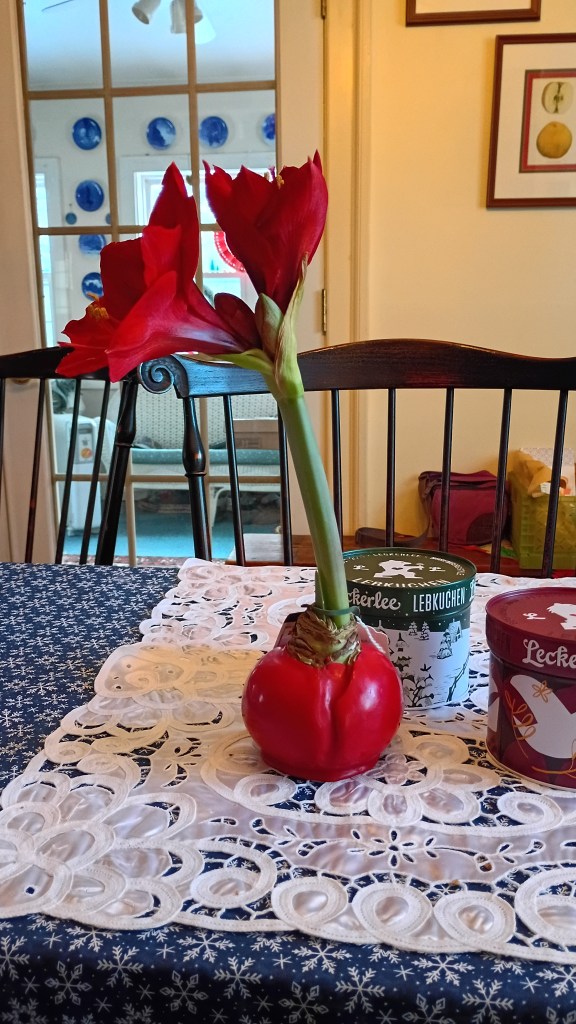
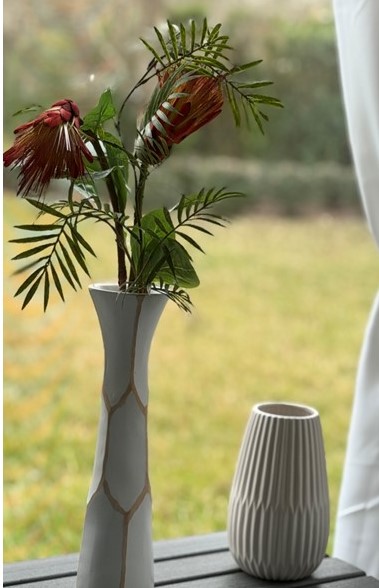
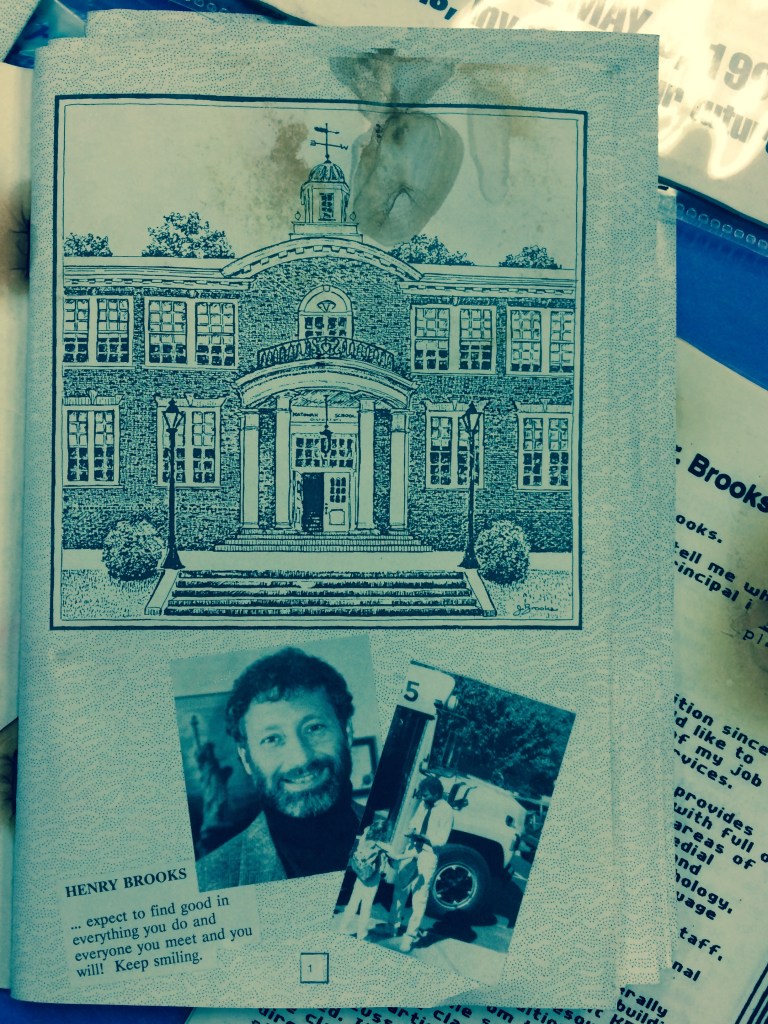
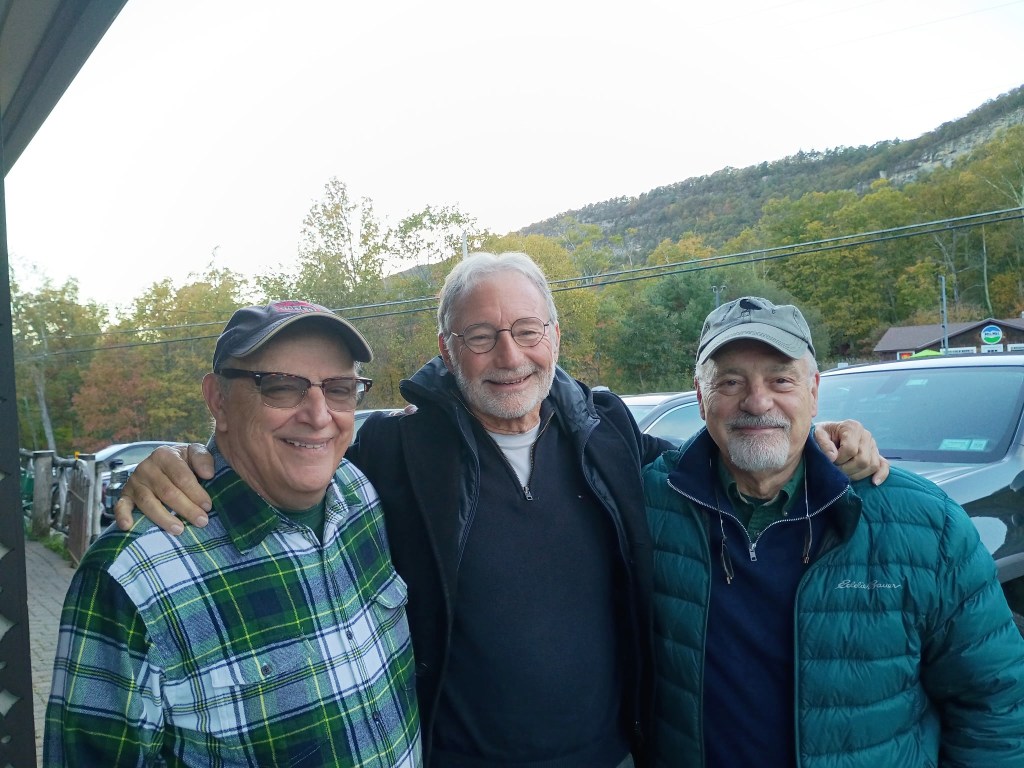
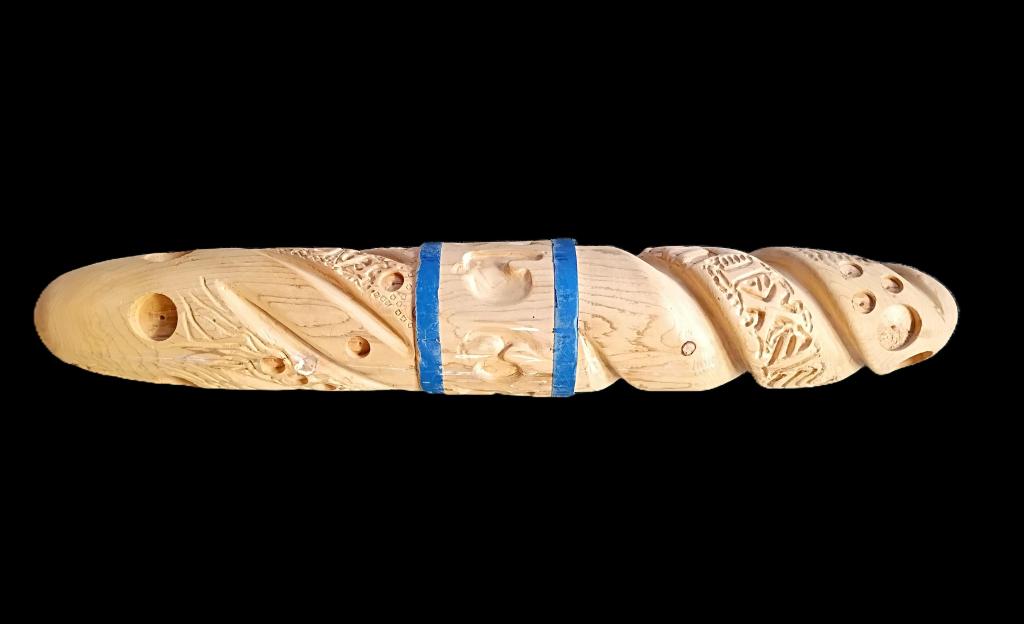
 Three Old Guys Walked Into A Bar